May 1, 2026
Opinions
Opinions
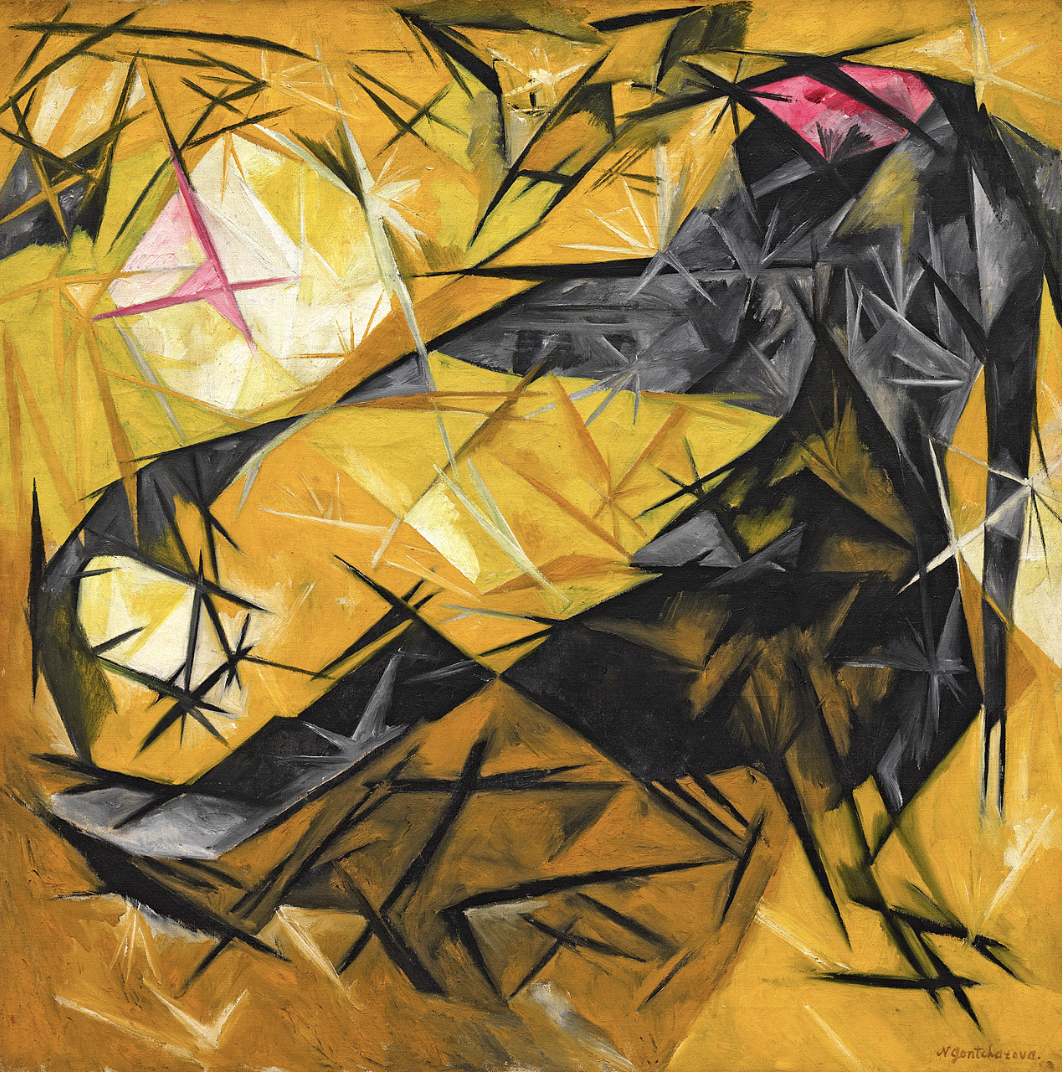
Cara explores how Natalia Goncharova redirects the ambitious, often technologically oriented rhetoric of Russian avant-garde abstraction toward an intimate and playful subject: domestic cats.

“Hokusai: Inspiration and Influence” exhibit opens at the Museum of Fine Arts, Boston.


I see The Great Wave off Kanagawa everywhere—on tote bags and T-shirts and shoes. Each time, I trace my eyes over the familiar shapes. I submit to the feeling of being consumed by water, powerless and imbalanced yet in awe of nature and its strength.
When Katsushika Hokusai released his “Thirty-six Views of Mount Fuji” woodblock print series in 1830, each print was so well-received that he created an additional ten. However, only The Great Wave is still recognized as a global icon of Japanese art. It yields 3.6 million search results (the same number as Michelangelo’s Sistine Chapel) and has its own emoji: 🌊.
Sarah Thompson, the curator of Japanese art at the Museum of Fine Arts, Boston, proposes that “One of the reasons [The Great Wave is so famous] is that it means many different things to many different people.” Indeed, it can either be a story of triumph or disaster depending on whether a viewer believes that the fishermen survived. To climate activists, it is proof of the power of nature and the dangers of climate change. Some, like me, think that the print is an evocative snapshot of struggle whose conclusion remained uncertain even to Hokusai himself.
Until July 16, 2023, The Great Wave will be on display at the MFA, Boston in the “Hokusai: Inspiration and Influence” exhibit. Aside from this iconic print, the exhibit will showcase over 100 other woodblock prints and paintings by Hokusai, including The Ghost of Oiwa, which tells the story of a murdered woman whose ghost returns to haunt her husband through inanimate objects, like lanterns, for the remainder of his life. The exhibit will also feature art from his contemporaries, Utagawa Hiroshige and Utagawa Kuniyoshi, 19th-century American and European painters inspired by his work, and contemporary artists like Yoshimoto Nara.

The largest exhibition section is dedicated to The Great Wave and its persisting artistic legacy. Roy Lichtenstein’s Drowning Girl (1963), John Cederquist’s How to Wrap Five Waves (1994-1995), and Jumpei Mitsui’s Lego recreation of The Great Wave (2021) will be featured alongside the print.


Be sure to reserve your timed-entry general admission tickets to see Hokusai’s work. Tickets are $34 for adults and $17 for youth aged 0-17.
Cara explores how Natalia Goncharova redirects the ambitious, often technologically oriented rhetoric of Russian avant-garde abstraction toward an intimate and playful subject: domestic cats.
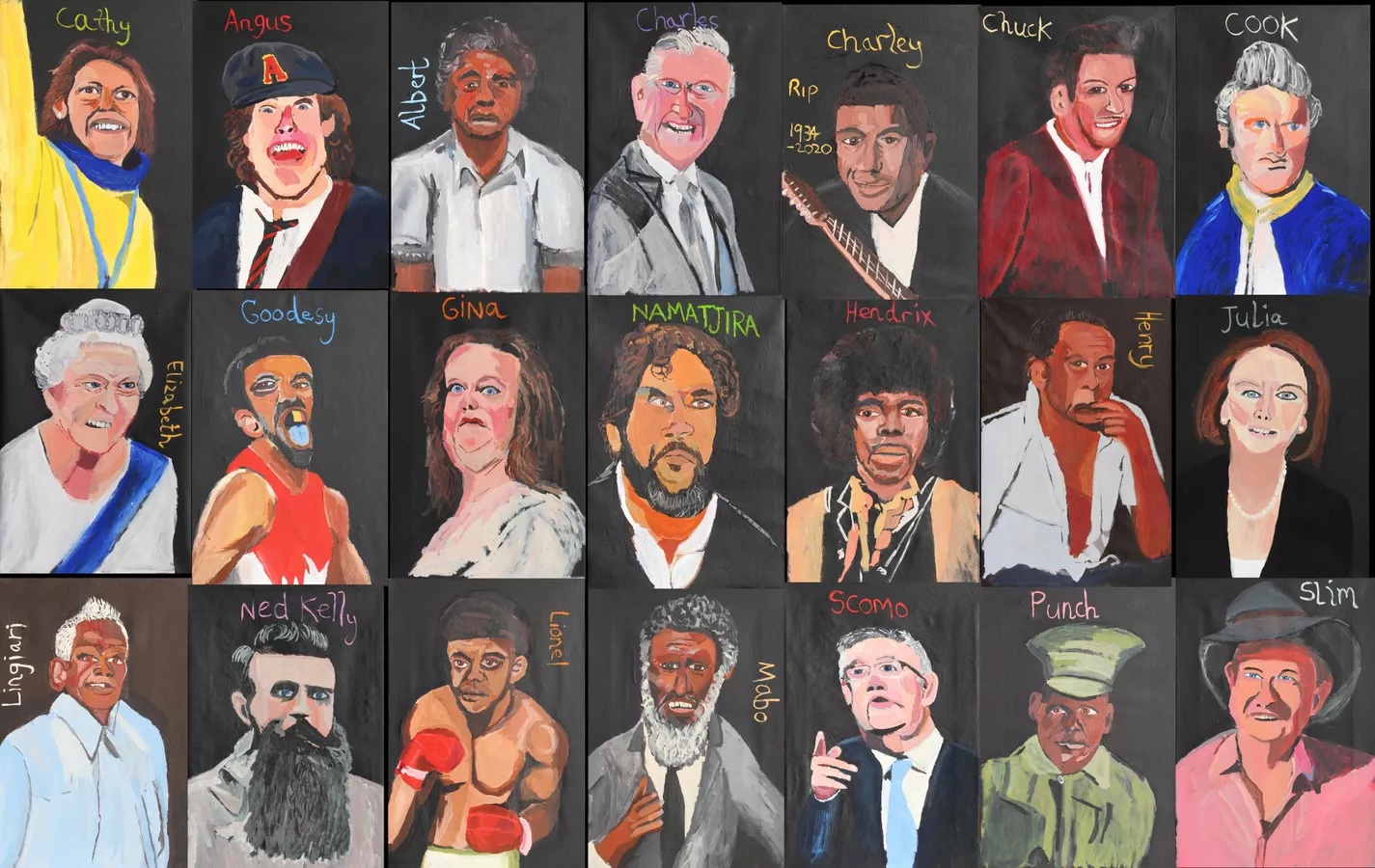
Kate explores how Australian artist Vincent Namatjira redefines portraiture to confront the legacies of colonialism while envisioning a more inclusive future—one expansive enough to embrace all Australians.

Clarke Reynolds (Mr. Dot) talks with the Art Review about interactive art, changing the narrative around blindness, and creating a world where art is more accessible for all.