November 9, 2026
Interviews
Interviews
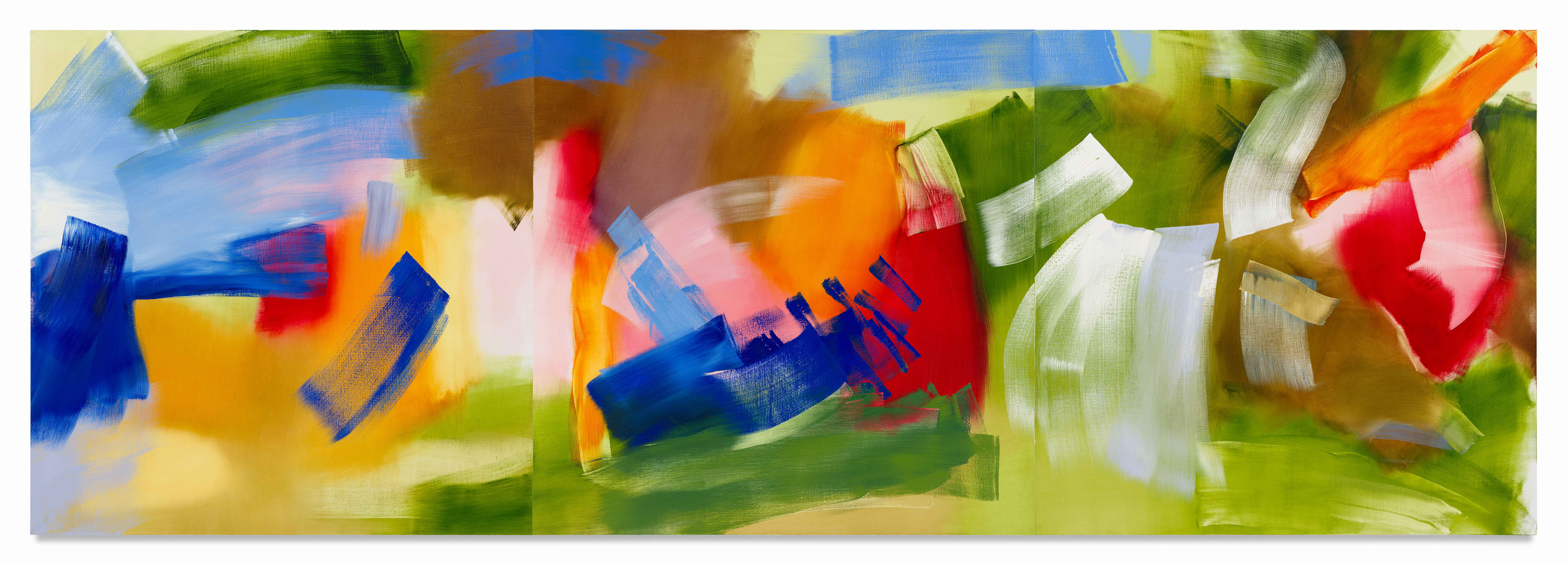
Elise Ansel talks with the Brown Art Review about her experiences at Brown and engagement with art history within her work abstracting Old Master Paintings

Elise Ansel talks with the Brown Art Review about her experiences at Brown and engagement with art history within her work abstracting Old Master Paintings

Elise Ansel ‘84 is a painter and Brown alumna living and working between New York and Maine. She engages deeply with some of the most iconic Old Masters, from Titian to Bellini, deconstructing their paintings by focusing on color, structure and gestural abstraction. Her work accomplishes an “interruption” of the traditional narratives their paintings depict, prompting others to probe more deeply into visual communication through historical re-consideration. Her paintings have been displayed recently at Miles McEnery Gallery in New York and are currently on view at Cadogan Gallery in London. I talked with Ansel about the experiences and influences upon her practice, from her coursework at Brown to artistic influences, which range from the Renaissance era to the postmodern. The following conversation has been edited for clarity.
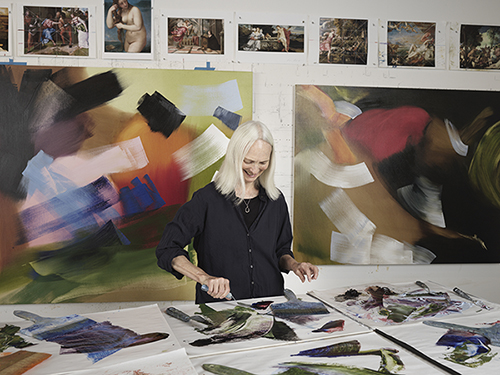
Anne Mesiarik: Thank you so much for meeting and discussing your work. When you first got to Brown, did you envision yourself pursuing a career in art?
Elise Ansel: Not at all. I came as a person who identified as a reader and a writer. I was interested in pursuing things in that direction. At the same time, I was interested in creativity and pursuing all of the opportunities the open curriculum presented.
AM: I was wondering if you had any undergrad experiences, classes you took, extracurriculars, or professors that would later on become influential with your practice and philosophies?
EA: I took Comp Lit. classes with Arnold Weinstein, who became my concentration advisor. I was in his freshman seminar, “Order and Chaos in the Universe.” Later, I took “Proust Joyce and Faulkner.” James Joyce’s Ulysses was particularly influential. The idea of a modern reworking of a classic text was impactful. When I began to identify as a visual artist, I became interested in figuring out how this idea could be applied to the visual arts. I took photo at RISD, which was also influential. I had a wonderful teacher named Keith who was a grad student at RISD. I took Painting with Wendy Edwards and Color Theory with Roger Mayer in the Visual Art department at Brown; they were terrific. I took modern dance with Julie Strandberg at the Ashamu studio. I would say, everything I studied at Brown—Semiotics, Literature, Film, Dance, Religious Studies, Feminist Studies— but also everything I’ve done or thought about or cared about, in general, feeds into my practice as a visual artist.
AM: And so my next question was, what did your journey look like, getting into visual arts?
EA: I was always interested in creative practice but wasn't sure exactly what my medium was. I took classes in visual art, creative writing, photo, film/semiotics, feminist studies and religious studies. During my freshman year at Brown, I took “Intro to Eastern Religions” with Donna Wolfe. She took us to the Providence Zen Center to meditate. I had a very powerful experience there. I took a leave of absence after my freshman year and studied/practiced Zen Buddhism to try to understand what that experience was about. When I decided to move away from Buddhism, the spiritual energy flowed into creative practice. I had a burst of creative energy. Even though I was a Comp Lit major, and I was studying literature, I had a strong impulse to do creative work.
AM: That goes along pretty well into my next question, if there were any authors or thinkers that you find yourself referring to in your practice?
EA: James Joyce was profoundly important; particularly the final Penelope/Molly Bloom chapter in Ulysses, that was told in a single stream of consciousness sentence “in a female voice.” That impacted me, because it was the first time I had heard an author acknowledge that there is a female point of view or voice, a different point of view, and that it can have a different stylistic presentation. It echoed with something inchoate I had been feeling, and it gave me a framework to think about ideas having to do with point of view, feminine subjectivity/objectivity, and the creation of a language that could communicate that point of view. The idea of multiple stylistic approaches within a single work was also influential. And, of course, the idea of translating something from the classical era into a very contemporary idiom was impactful. I’m also influenced by the American transcendentalists. I like Whitman, Emerson, Thoreau, Self Reliance, and Leaves of Grass; I first read The Palm at the End of the Mind by Wallace Stevens at Brown. I’m interested in examining shifting representations of the spiritual in art. Many early modern paintings depict stories having to do with the Christianity. I’m an artist of Jewish descent, so I had the experience feeling a little boxed out by the sexism and also by the religion in historical art, and at the same time finding myself attracted to the visual quality of the paintings. I wanted to find a way to make the masterpieces more universally accessible.
AM: And in regards to figuration and abstraction, what do you see the merits of your approach to be in translating these ideas?
EA: Old Masters paintings are narrative and figurative, so I try to make my paintings non-narrative, non-pictorial and nonfigurative. My “translations” gain traction because of the tension or opposition between the historical and contemporary approaches to making paintings. If I was doing a figurative interpretation of a figurative painting, it wouldn’t have that tension. Initially, I approached this project from a visual, formal point of view. The idea of feminist reinterpretation slipped in as I began to realize that many of the amazing paintings I was working with were told from a male point of view and were embedded with messages that were anathema to things I cared about and believed in. Abstraction helped me celebrate what was beautiful in the paintings, while interrupting or overturning some of the more difficult narratives.
AM: I wanted to talk also about some of your work featured in a recent exhibition at Miles McEnery Gallery, which I believe drew inspiration from a lot of Titian's masterworks. Could you speak about some of the works in the show?
EA: The exhibition focuses on translations of paintings by Titian, Bellini and Giorgione. It’s an homage to the great Venetian masters of color. Venice was a gateway to the East; an important center of trade. Venetian painters had access to incredible pigments. There’s a remarkable emphasis on color in Venetian paintings; they are spectacular. I’ve always been attracted to them. The lineage goes from Bellini through Giorgione to Titian. Bellini was the teacher of Giorgione and Titian. The exhibition at Miles McEnery opens with a series of works that springs from Bellini’s Madonna and Child Enthroned with Saints with Donor, 1505 which is also known as the Cornbury Park Altarpiece. I’ve been working with this painting for years. In this show, I feel like I had a real breakthrough where I was able to completely abstract it. The series is comprised of increasingly distilled interpretations of the painting. Bellini’s painting is an iconic Christian image, I wanted to create something that was more universally accessible, not doctrinaire.
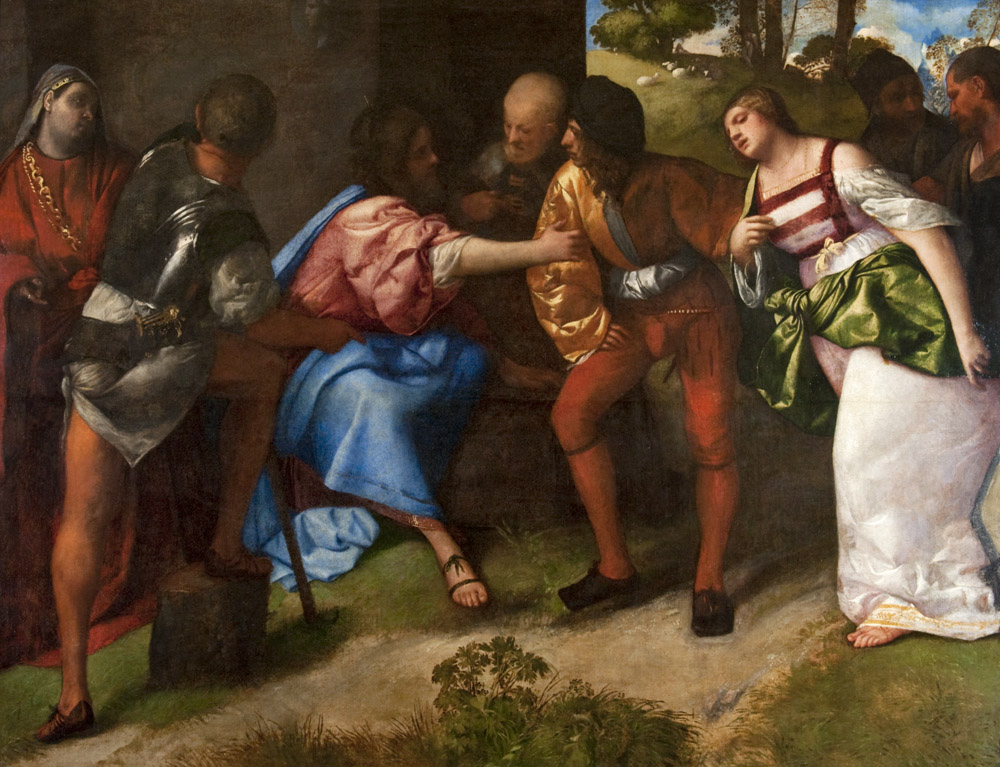
The interpretations of Titians include my translation of Christ and the Adulteress, c. 1508-10. It’s a colorful, beautiful, visually dynamic painting, but it’s a difficult image, because it depicts a woman being dragged by her husband; she’s about to be stoned to death. It's known as the story of Christ saving her life by saying, “Cast not the first stone.” It's a beautiful spiritual message, but it's specific to Christianity. I was trying to find a way to communicate a more open, universally accessible message. So, I abstracted it. And then I started thinking about the Wallace Stevens poem, The Palm at the End of the Mind and its image of “the fire fangled feathers dangling down.” The feathers commingle with the palm fronds. The idea articulated in the Wallace Stevens poem is that “it is not the reason/that makes us happy or unhappy.” You could interpret this as a reflection of the Buddhist idea of the “before thinking mind.” It’s about being away from your thinking mind, and realizing that's where happiness dawns. The abstraction interrupts and erases the subjugation of this woman. And so does the reframing of the spiritual message. I wanted to maintain the spiritual message, but I didn't want it to have a gender bias, so that was how I did it.
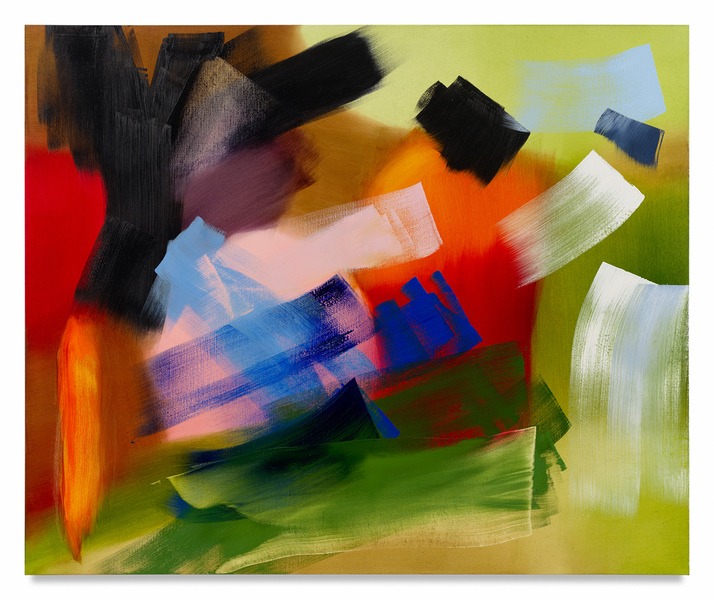
There was also Tarquin and Lucretia. It depicts the moment in the disturbing story of King Tarquin when he’s about to rape Lucretia; she fights for her honor, and in the end, she kills herself and by destroying herself becomes a heroine. It’s a violent story. Titian’s painting reflects that violence while at the same time being a dynamic and powerful painting. I dealt with it by turning it upside down. I empty the narrative of content and maintain the color. Later I created a value inversion of that painting and used it in the large Green Going triptych wherein I was stringing together multiple paintings to create a narrative, much like the predellas on the bottom of altar pieces, or a film strip or story board. This reflects an interest in cinema that began at Brown. Titian is a very cinematic painter. He’s telling profoundly cinematic stories. In the triptych, my ‘value inverted” transcription of Tarquin and Lucretia is on the right side. Bacchus and Ariadne was the springboard for one of the other panels. That’s another spectacular Titian painting that I’ve been working from for years, it’s very much about dance, the two central figures or protagonists are swirling dancing figures, in contrapposto positions. You know, it’s not like you can improve on these paintings, per se, but you can participate in their energy. And that one has a lovely message. I wanted to join in the energy of it.
AM: Are there other artists that you have found particularly interesting or inspiring with their engagement with art history?
EA: Two giants of 20th century art who engaged with art history were Gerhard Richter and Frank Auerbach. They’re both German. Frank Auerbach was from a Jewish family, so he was brought over to England on the Kindertransport, and he went on to become a very renowned British painter. Richter had a differently, difficult upbringing. They were both very impacted by World War II and they both developed distinct original styles. Both of them have worked from the Old Masters. And I think it was their work from the Old Masters that caused me to start to think about transcriptions of historical paintings as legitimate subject matter for contemporary art, because they were such powerful contemporary artists.
AM: How do you see those connections over hundreds of years? What is your thought process working with these Old Master paintings?
EA: I think that they are about timeless truths. A lot of these paintings, the best of them, are about something that continues to be relevant and present. Whether it be about love—Bacchus and Ariadne is about a woman who was abandoned by her lover and then finds another lover—or religion. These are the kind of stories that could find a hook in any moment and a lot of them are timeless. The ones that are spiritual contain a more obvious kind of timeless thing, but also some of them are very deeply human. Stories are timeless. They feel alive and of the moment. I find it fascinating that somebody could have been painting something long ago, and that it could still be relevant now. Also, sometimes I have an uncanny experience of being in contact with these artists, and it’s a very exciting piece of the creative process wherein I’m involved in a creative collaboration in order to highlight everything spectacular about historical art and also give myself a point of departure to do original work of my own. It’s transformative. I’m transforming their paintings, but also, it’s a transformative experience for me. The idea of working with somebody so talented and so intelligent, it’s uplifting.
AM: And my last question is, what do you hope to achieve with your work, and what are you hoping that viewers will take away?
EA: My greatest hope is that viewers can take away a sense of hope, joy, and most importantly, agency, so that there is a sense that they have complete agency to transform whatever narratives they encounter, to change and turn them into whatever they want. I'm trying to leave viewers with an uplifting sense of joy and a sense that this is everybody's heritage to do with as they want. It’s fluid. It's not set in stone, even if it was once carved in stone. It's an equal dynamic relationship. It's not a “they're the master, and you're not.” I think that's a powerful thing to communicate. And also, there’s the idea of active engagement, as opposed to being a passive recipient. I'm trying to create the awareness that there's room for an actively engaged and critical interaction with visual culture. I hope that’s a takeaway for people that is positive.
Cover Image: Elise Ansel. Green Going, 2025. Oil on linen, 60 x 180 inches. (Image: Miles McEnery Gallery)
Elise Ansel talks with the Brown Art Review about her experiences at Brown and engagement with art history within her work abstracting Old Master Paintings

Through their personal experience, Alex guides us through a vision for a personalized way of appreciating art, demonstrating that the value of art is not in the work, but in our hearts, joyfully entangled by context and life.

As Frieze London returns, transforming Regents Park into a marketplace for contemporary art, one questions whether the experience of appreciating art has become increasingly indistinguishable from luxury consumption. When it comes to art fairs, how much do we value art for what it actually communicates and how much for what it is worth to us as a commodity?