May 1, 2026
Opinions
Opinions
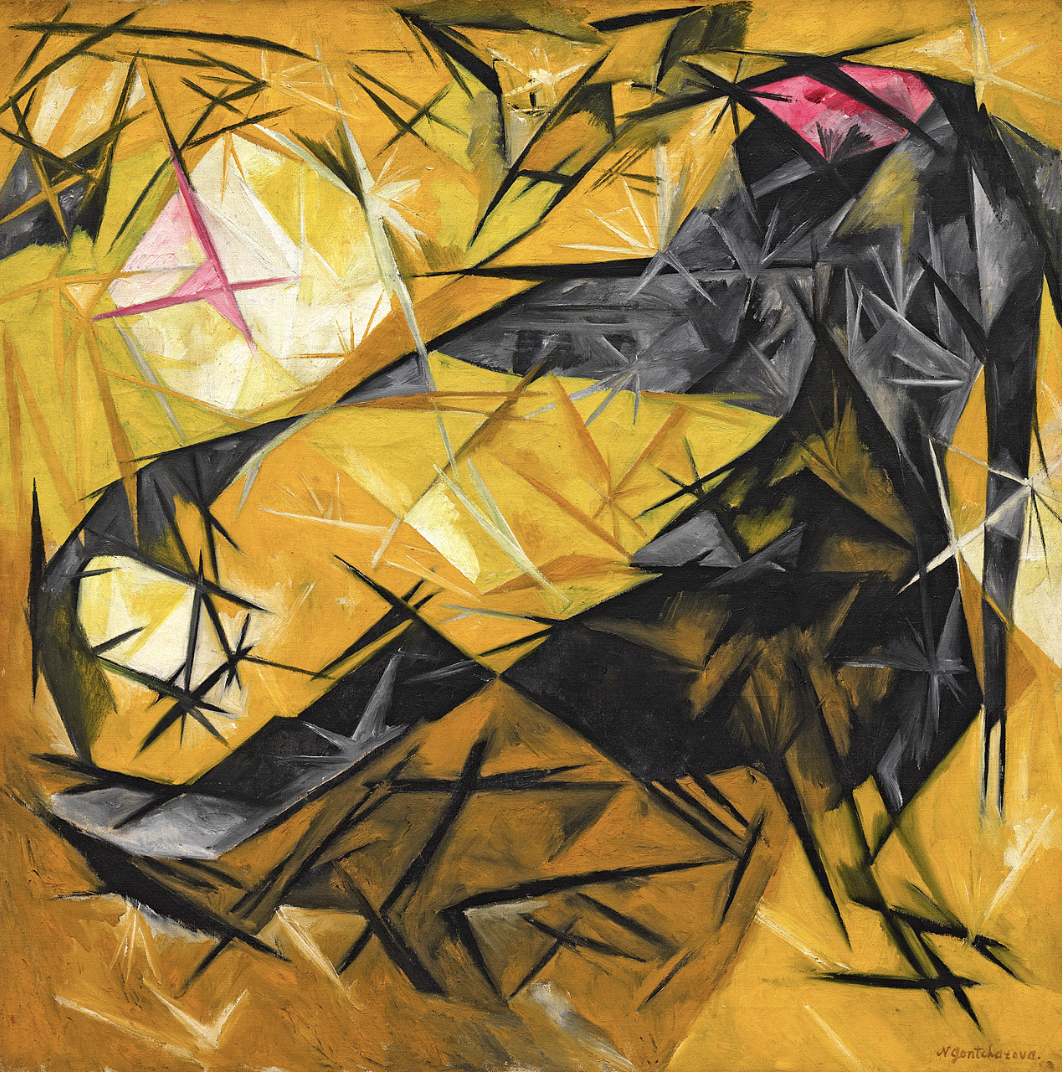
Cara explores how Natalia Goncharova redirects the ambitious, often technologically oriented rhetoric of Russian avant-garde abstraction toward an intimate and playful subject: domestic cats.

TikTok-star-turned-RISD student, Camila Salinas, discusses the evolution of her self-portraits through the pandemic, internet stardom, and art school. She reflects on authenticity, the impact she hopes her work has on viewers, and the legacy she’s beginning to build as a young artist.


“Camila Salinas (b. 2004) is an American painter based in Texas, and currently pursuing her BFA in Painting at the Rhode Island School of Design. Her practice engages with themes of nostalgia, memory, and identity through the means of self-portraiture. She primarily uses acrylic and oil paint to capture intricate details from her current and past life experiences. Camila works from imagination, memory, and photos, using realism as a way to document and archive her life through painting.
Apart from being an artist and full-time student, Camila has amassed over 2.4 million followers across platforms from documenting her painting process and personality. She began to gain traction on social media through her pieces about teenage life during the Covid-19 pandemic in 2022, and since then her work has been showcased in several exhibitions nationally.” Camila Salinas Biography
Margarita Fernandez Pereira: Hi!
Camila Salinas: Hi, how are you?
MFP: I'm good. How are you?
CS: Good. Thank you so much for helping me [by making the interview on Zoom instead of in person.]
MFP: No worries at all! Thank you so much for agreeing to do this interview. I'm so excited.
CS: Yeah, of course.
MFP: And you look just like your paintings! This is crazy. [laughs]
CS: I'm glad, I'm glad! [laughs]
MFP: But yeah, so you're at RISD right now?
CS: Yes.
MFP: That's so nice. You're just down the hill.
CS: I know! So close.
MFP: So you started posting your paintings online during the pandemic. Is that right?
CS: Yes. Yes.
MFP: What made you decide to take that first step and post online? And how did you react at that early stage when so many people were engaging with your work?
CS: Well, I had actually already been posting online, but it hadn't been anything serious like a self-portrait or something like that. It was just little drawings here and there. But then, obviously, during the pandemic, I started to paint a lot more, and I already had this little [following], I had 500 followers. I thought, “I'm just going to post it here” or whatever. I posted, and I remember not telling any of my friends, any of my family, because doing a self-portrait for me was just so out of the blue, and honestly, kind of humiliating at the moment. I remember not telling anybody. Then I started this TikTok account, and it started to blow up a little bit as well. Again, I didn't tell anybody, but obviously, people started finding out and having people coming up to me, like at school or something, and being like, “Oh, I saw your TikTok. I saw your TikTok.” It was so embarrassing.
MFP: What made it feel embarrassing?
CS: It was embarrassing because I was putting myself out there, and it was a very vulnerable part of me because I was really trying to do something. So that was one part, but then the other part was being online, having millions of people watching me, recognizing my art, complimenting me, and giving me all this advice and stuff like that. That was super overwhelming, but also really rewarding at the same time because I felt like I could actually, you know, do something with my art and pursue something.
MFP: Yeah. Do you think it was because it was a self-portrait, and it was so realistic that it made it feel more vulnerable?
CS: No, yeah, yeah, for sure. When I first started posting my art, it was just, you know, whatever. I don't know, I would paint like pets or celebrity portraits. And even that, I wouldn't tell my family, like “Go watch my videos!” or anything. But once it was self-portraits, it started to get a lot more real. I was like: “Oh my gosh,” like “my family is, [laughs] looking at me painting myself”. It was just very… it was odd, you know?
MFP: And in a way, you're kind of capturing this exact moment in time, and the way you look, your appearance, your surroundings, what you value the most. Do you think that your paintings have changed in the past few years with so many major milestones? I mean, there's the pandemic, there's gaining traction online, and there's going to college. I think these are big, big changes. How do you think your paintings have evolved through that?
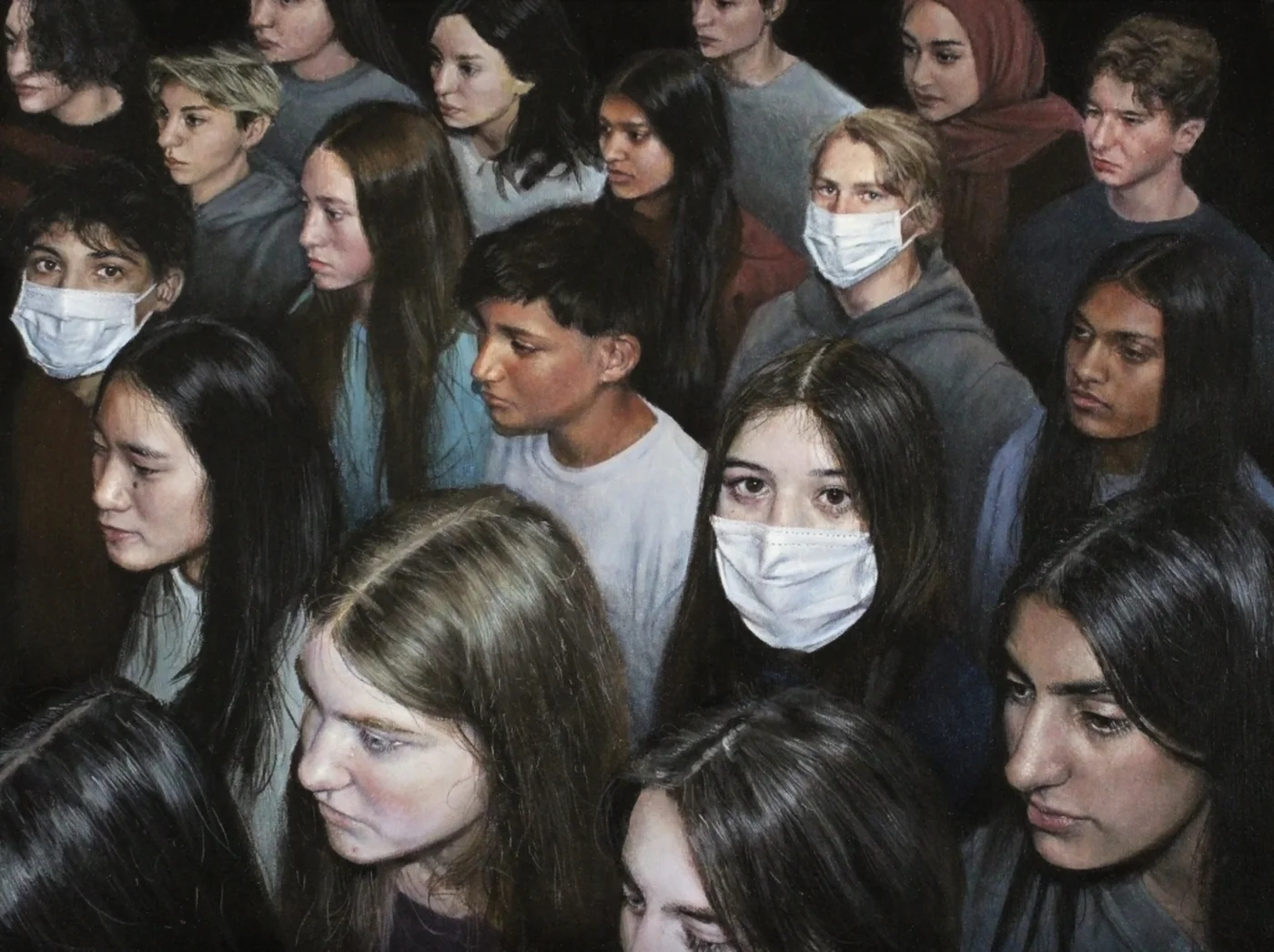
CS: Yeah, I feel like when I first started doing these self-portraits, I definitely thought of them as little time capsules. It was almost like I was documenting and archiving my life as it was. They definitely started out a lot more literal. I think a lot of them were like “Oh, this is about going to school in a pandemic,” “Oh, this is about, like, wearing a mask”, you know?
Then, over time, I think they started to become more of an embodiment of me and how I was feeling, and taking into account storytelling and narrative as well to play into these more fantasy caricatures and little worlds in these paintings. And I think, subconsciously, all of that has played into all of these big changes in my life. It just changes with what I'm feeling and, you know, what I'm feeling is always changing.
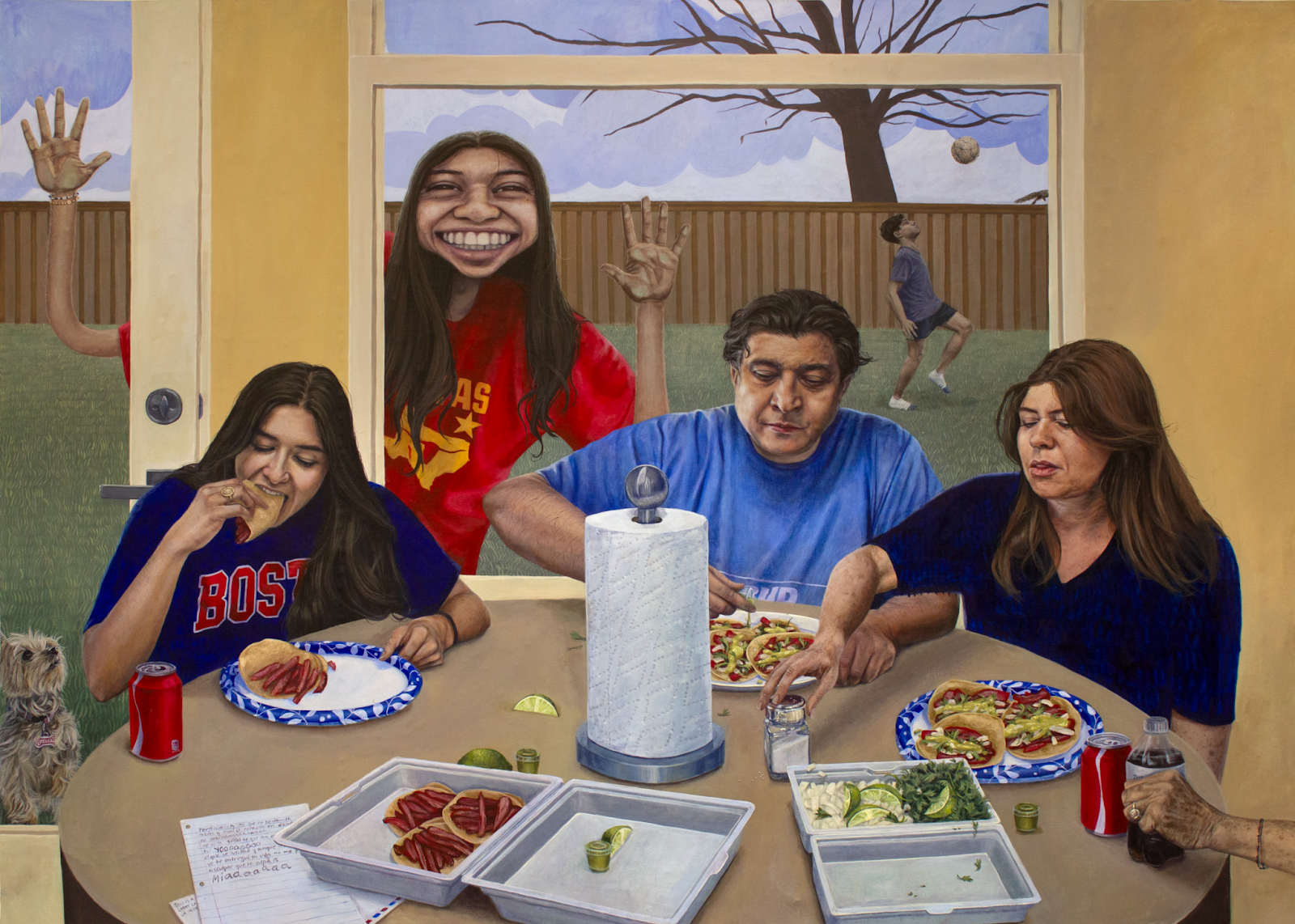
MFP: Yeah, that's true. And also, you are including a lot of different themes. You're doing technology. You're doing cultural elements. You're doing piñatas. You're doing Tex-Mex food, and those themes have definitely appeared more in the most recent years.
So I'm just wondering, when people look back at your art years from now, what do you hope that they see or understand about you and your identity through these self-portraits?
CS: Yeah, the more recent paintings really have been about home and about family, and obviously it's because of Providence.
MFP: Yeah.
CS: All the way to freaking..
MFP: ..Rhode Island! [laughs]
CS: Yeah! [Laughs] and so, I've just been really missing home. A lot of these elements from home started popping up in my paintings. They're just little things about me that you would just see: “Oh, this is her favorite food!” “Oh, she's Mexican!” “Oh, this is where she's from!” So, I just hope people can kind of see that little aspect of me. I was missing home a little bit, and I felt a little bit alone. I don't know. I just think it's nice to… I love it when people see one of my paintings and feel like, “Oh, like this really reminds me of this” or “I really relate to this”. [The painting] is about me for sure, about my identity and my experiences, but it's also a universal experience.
MFP: And it is relatable!
CS: Exactly. Yeah. That's what I really, really hope people take away from my work, even though it's not very specific.
MFP: Well, it is very specific. I was born and raised in Argentina, and I moved all the way to New York for college. And so to me, when I see a piñata, I think about my birthdays when I was a kid. And I am thinking, “Oh, you know what? I haven't done that ever since I've moved”. It's been five years, and things have changed. So it is hyperspecific, but it also forces these memories out from people who have kind of a similar background.
CS: Yeah, for sure, for sure! Yeah.

MFP: I was wondering, around 2024, you started incorporating the more exaggerated features and the sort of “big heads” like we were talking about earlier, into your work instead of the usual, more proportional self-portraits. What do you think this says about your self-perception or what message you're trying to convey through this?
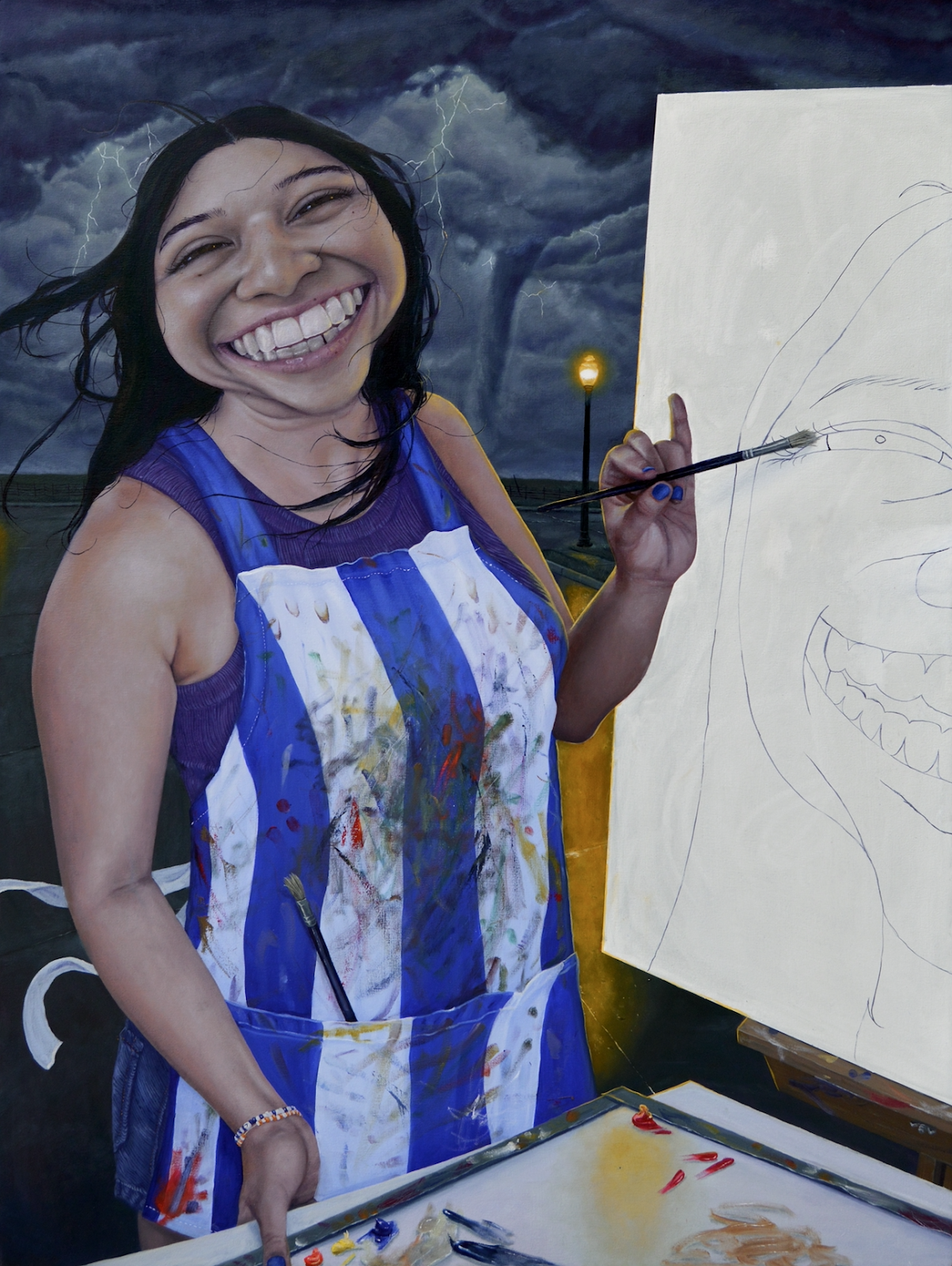
CS: I've been working on figuring that out for the past year because these exaggerated smiles started popping up in my sketchbook. They very much started as a representation of myself, what I think I look like. For the past three years or however long I've been just painting myself very, very realistically, it never felt super like me, in a way. At one point, it was like painting a random person. Like, [laughs] I was just painting a nose. It wasn't necessarily my nose or anything like that! Being at RISD, they've been pushing me to experiment a little bit more. I was like, “I'm just going to give it a shot”, you know, “paint this and see kind of where it takes me”. Now it has turned into this manifestation of myself and my biggest insecurities. I've been using this more caricature-style “me” as a character in these worlds that I'm building, and having this character interact with different objects and the more proportional “me”. And so I think that's the direction that I'm leading myself into, but it's all very much been intuition and trying to figure out what this means for me. I knew that it was something that I wanted to pursue and explore a little bit more.
MFP: Because it's definitely reminiscent of when you're looking at yourself in the mirror and you're like, “Who is that?” [Laughs] “Is that how I look like?” People are like, “yeah, that is what you look like”. And you think, “But I see myself in this way!” Or when somebody takes a picture and you think, “That's not me.” There's definitely this disconnect between what people think and how you see yourself in the mirror or in pictures. That's what I was getting from those portraits. And I saw one that was a progression from a very proportional self-portrait to the more exaggerated features. Can you tell me more about that one?
CS: That one, I think that was the first one. Yeah, that was the first one that I did with that exaggerated smile. And I don't know, this image of slowly breaking out into this huge smile came to me. I painted it not really knowing what it meant for me at the time, but now it's just an expression or a realization of my true self. I love smiling, [laughs] I love laughing and stuff like that, but if you don't know me, I'm going to be very straightforward and have a very straight face. That progression is letting people peek more into my life. Especially because I was blowing up on YouTube and stuff like that. It just kind of realized itself into that painting.
MFP: And so these representations are both the more insecure part of yourself and also the more joyful and vulnerable you, and the “you” that you only show people when they really get to know you.
CS: Yeah! Yeah, yeah, for sure. It is a very vulnerable state of myself, for sure, yeah.
MFP: And you were talking about how you started at RISD, and they are pushing you to show this more vulnerable side. In a way, the TikTok common section is similar to an art critique, but when you're facing professors whose lives are dedicated to nitpicking and pushing you a little further, how does that change the art-making process?
CS: When I first got to RISD, I was a mess because it was a really, really big change for me and I'm really bad with change! [Laughs] So it was that on top of social media and having people recognize me and telling me these different things. Then, having school and having these assignments and critiques. I had never gone to any kind of serious art class. The only art classes I took were in a public high school, you know, “Art 3” or something like that. I had never really done a critique before and had assignments this rigorous. I felt a huge insecurity because I felt almost like I didn't belong here. While creative, my art was realistic. There was a big push against that when I first got here. I was trying to do all these different things. I wasn't doing anything that I normally like to paint. I hardly did any self-portraits or anything like that. It was just, it was a little hard, but I also think it was necessary for me to do a bunch of different little things to figure out what I do like, what I don't like, in which ways I like working, which ways I don't. You know, just figuring that out changed my process in general. The critiques really helped as well. Getting critiqued on something that I didn't like and getting critiqued on something that I do like, figuring out what works with people and what doesn't, was helpful because I had never gotten critique or feedback like that before. It was something super huge and super different for me.
MFP: Yeah. You're getting pushed in two separate directions. On the one side, you're on TikTok, and all these people are begging for more of the same, essentially. They love your style. They want to see more self-portraits. They want to see more realism. On the other hand, you're at RISD where they're telling you, “No, this is the same thing,” “We want to see different,” “We want to see non-realism”. Does that ever cause any pressure? Are you thinking, “I want to post, but maybe this isn't what they want to see”, and “I want to show my professors what I'm making for TikTok or YouTube”, and maybe that's not what they want to see either?
CS: Yeah, it was a huge, huge, huge pressure for me, especially my first year, because I had everybody on the internet telling me, like, you know, “Don't go to art school,” “You don't need art school,” “RISD is going to change you,” “You're going to get burnt out,” and of course, I also had people being like, “Oh, this is going to be, like, really good for you,” “Really take this time to try things out”. Then at RISD, it almost felt like I was the butt of every joke because everybody knew that I was on social media a little bit.“Oh, like, she's the girl that always paints herself,” and so I felt like I shouldn't be doing that anymore. Then, I also had people telling me, “You shouldn't even be at that school,” “Get out of there.” You know, I really don't believe that. I feel like, “What? I was just never going to learn ever?”
MFP: The truth lies somewhere in between!
CS: Yeah!
MFP: I obviously personally disagree with any of the people at RISD who think that social media is anything that lessens your art or lessens the fact that you belong there. If that is your choice, to pursue a university degree, get critiqued, change in a certain way, and evolve as an artist, then that is your choice. Sometimes people on the internet don't know better than you!
CS: I try to think every comment on the internet with a huge, huge grain of salt because these people could be a 10-year-old telling me, “Oh, you're the most incredible artist I've ever seen,” but they also don't know anything else, really. It was just a huge, huge pressure because, man, [laughs] I really did not know what to do. I just had everybody telling me different things, and I was really missing home, and it was a really, really rough time for me in general. It was definitely necessary for me to go through this big change. I really did need a big, big change and to learn more about art history and contemporary art, and seeing how just that affects my work, for sure.
MFP: How do you think it's going to evolve in the next… You still have two, three years to go?
CS: Yeah, two years! I'm hoping it starts to get a little weirder! I know it's already weird because there's a lot of doubling and cloning with myself. I really want to start building more fantastical narratives that, yes, pertain to real life and my real experiences, but also don't make any sense whatsoever, and definitely play into this new character that I've started building. Playing more with design and colors, and putting everything that I've been learning here into my work for sure.
MFP: Have you named this character? Is it just sort of like an extension of you?
CS: I think it's definitely just an extension of me. Her name is also Camila!
MFP: Fair enough, fair enough. How do you think entering the workforce or the art world after college will differ for you, who already has this big following and this other world than most people who are graduating in the same year? How do you think that's going to change?
CS: Oh, man. I really don't know. On the one hand, I have been so lucky to get so many opportunities through social media to put myself out there. But I feel like a lot of people think that people will take me less seriously in the art world because I am on social media. Especially with me making these goofy little TikToks and videos and stuff like that. It definitely makes people take my work, maybe a little bit less seriously. I don't know what it's going to be like after I graduate. I really hope it's going to be a little bit better. But the right people will find me, the people who take me all as I am. They will be able to hopefully overlook my goofy little mess.
MFP: Well, I don't know if it is necessarily about overlooking it because it does give you this big advantage of not necessarily relying on museums or shows to promote your work or to get yourself known. I'm sure that TikTok and YouTube give some relief, so you don't have to worry about finding an audience as much as other early-stage artists. Social media followers are like futuristic patrons of the art world! You're getting, instead of one patron, you're getting two million who, through viewership, are kind of paving the way.
CS: Yeah! [laughs]
MFP: Do you ever feel pressured to stick to posting and the style that got you noticed? Or do you think that this is just one chapter of a larger artistic journey?
CS: At the beginning, I was definitely feeling pressured to keep doing the same kind of thing. Obviously, people picked up on that in the comments and even at RISD, and they're like, “You can't just keep doing the same thing”. I was like, “No, yeah, you're right, you're right. Let me switch it up”. But it wasn't even about me trying to do the same thing to keep people watching or whatever. When I was posting, I knew that I wanted it to be very authentic, and I never wanted to do anything just to get views or subscribers. I knew it was going to be something I enjoyed. At the time, I still enjoyed doing these portraits. And so when people were telling me to change, I was like, “But I like it!” I realized what they were saying now, of course. I try not to do anything to really…
MFP: …please the others?
CS: Exactly, please everybody. It's always going to be something that I want to do. If people like it, they like it. If people don't, they don't. I was also trying to make my videos on social media. Yes, it's about my art, but it's also about me. In that way, people can connect more with me as a person and as an artist rather than solely with my art. If I go through a change with my art, it's like, “You're still Camila”.
MFP: “You're coming along for the ride”.
CS: Yeah, exactly. exactly. A lot of my videos and my journey on social media have been taking everybody along for the ride, and seeing my messy journey through trying to become an artist.
MFP: You already are an artist!
CS: Right! [laughs] You're right, you're right. “I'm an artist. I'm an artist.” Yeah!
MFP: Yeah, that sounds amazing. I'm so excited to see what the future holds. Are you working on any new pieces right now? Are midterms and finals coming up? Is that taking all your time?
CS: Oh my gosh, I have a whole painting due tomorrow that I need to really hone in on. Then after that, I've been working on this huge, huge five-by-six-foot piece that's due for finals. So I think this next month is definitely going to be… focusing a little bit more on that for sure.
MFP: One thing that must have changed dramatically is that during COVID, you had a lot of time to work on whatever you wanted to work on, dedicate eight hours if you wanted to. Now, there's “Art History” and “Figure Drawing” and all these other classes that you have to produce work for as well. So you must have a lot of things going on at the same time.
CS: Oh, for sure. Dude, oh, man! During the pandemic, it was rough, but having all that time, if I didn't have all that time, I don't know if I would have continued to pursue art in this manner; you know? So, yeah.
MFP: What do you think you would have done if you hadn't done art?
CS: Honestly, I was never thinking that far ahead. When it came time to apply for colleges, I honestly, genuinely hadn't even thought before about art school. I didn't know what RISD was. I didn't really know anything about anything. So I definitely owe a lot to my art teachers, who were like, “You should apply it to these different things”. And I was like, “Yeah, I'll do it,” just because somebody told me, but I do not know what I would have done if I weren't here.
MFP: I'm glad that we don't have to find out because I know I love the paintings. I'm so excited to see what's to come. I'm sure it'll change and evolve through time, and RISD will have a big impact on it. I'm so excited, and thank you so much for talking to me.
CS: No, thank you so much. I loved it. Yeah, this was so much fun!
MFP: If you're ever in…, well, you are in Providence! But if you're ever not at the art studio, we can definitely get a coffee.
CS: No, absolutely. We have to!
MFP: Also, thank you so much for doing this! I'll let you know when the article comes out.
CS: I'm so excited. Thank you so much. It was so nice to meet you.
MFP: Thank you, you too! Have a good rest of your week!
CS: You too. Bye!
MFP: Bye!
(Cover Image: "Lucky Number Four," Camila Salinas, 44 x 63 in, acrylic on canvas, 2024 via https://camilasart.com/2024-2/)
Cara explores how Natalia Goncharova redirects the ambitious, often technologically oriented rhetoric of Russian avant-garde abstraction toward an intimate and playful subject: domestic cats.
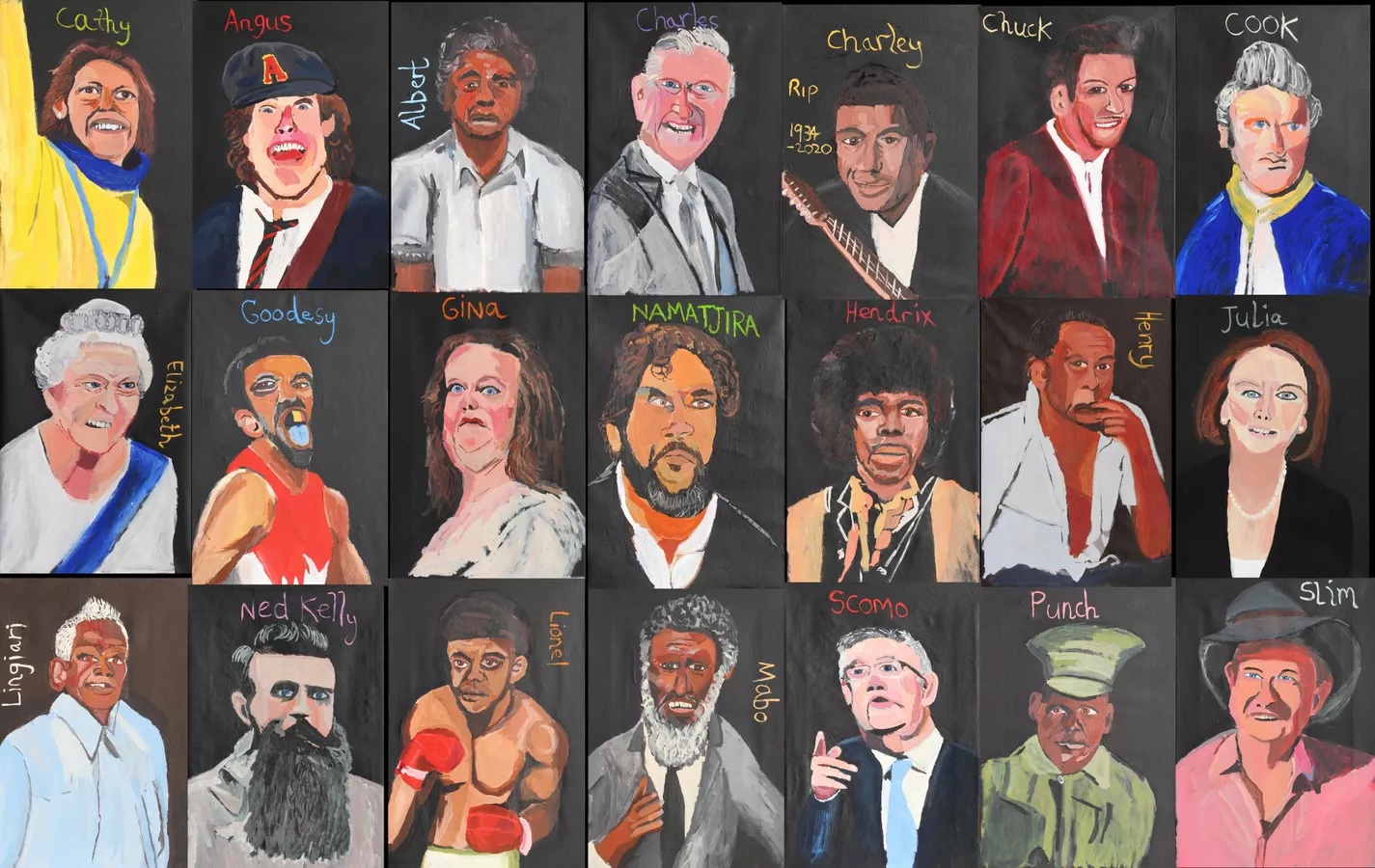
Kate explores how Australian artist Vincent Namatjira redefines portraiture to confront the legacies of colonialism while envisioning a more inclusive future—one expansive enough to embrace all Australians.

Clarke Reynolds (Mr. Dot) talks with the Art Review about interactive art, changing the narrative around blindness, and creating a world where art is more accessible for all.