May 1, 2026
Opinions
Opinions
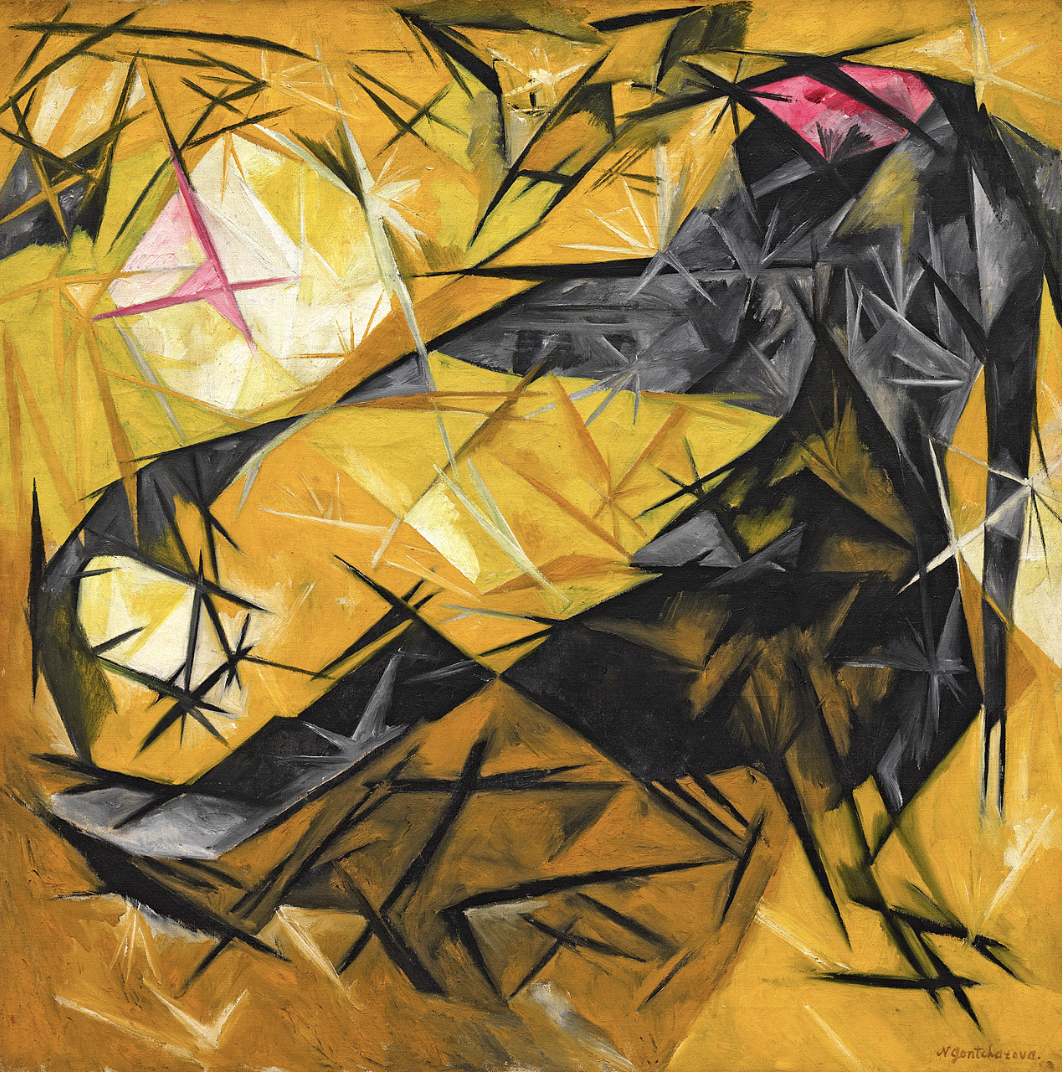
Cara explores how Natalia Goncharova redirects the ambitious, often technologically oriented rhetoric of Russian avant-garde abstraction toward an intimate and playful subject: domestic cats.

From the Art Review Archive, Spring, 2024: Michael DeLaurier talks with the Review about meditation, house parties, and the transformative power of light.
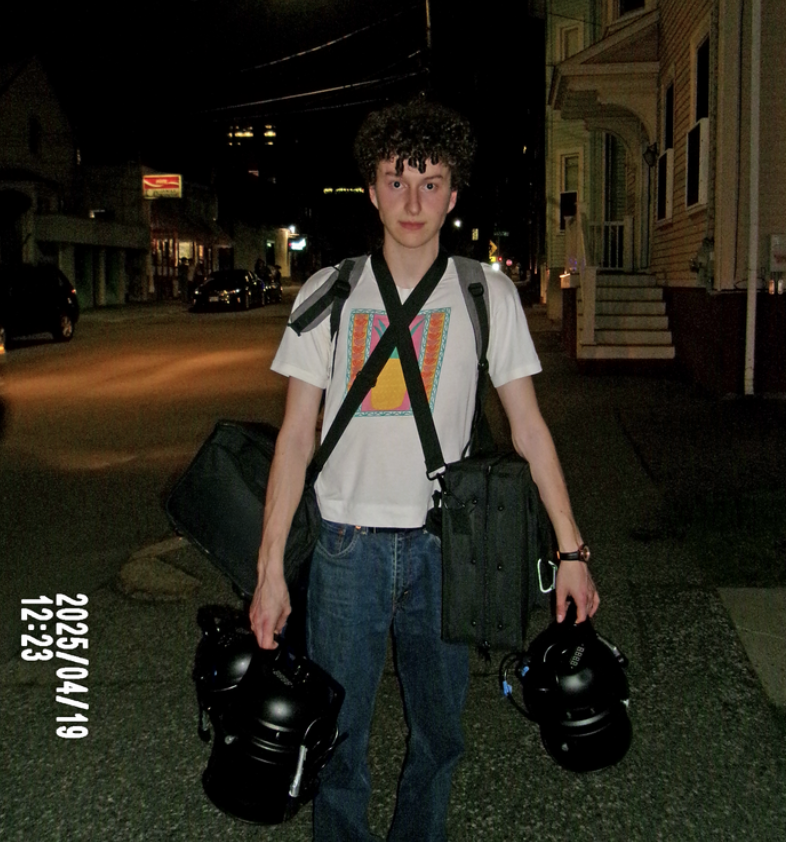

Michael DeLaurier (a 2025 graduate of Brown’s Visual Art Program) is an artist and light-based designer living and working in Brooklyn, New York. Michael’s immersive practice spans media including video, sound, projection, and photography. Michael, deeply inspired by the experiential power of thoughtful lighting, activates spaces ranging from quiet, meditative galleries to crowded, noise-filled house parties. His work saturates these sites with carefully curated light and color in order to offer audiences transformative and impactful sensory experiences. During his last semester on campus in April of 2025, the Art Review conducted an interview with Michael to better understand his practice, process, inspirations, and reflections. The following conversation has been edited for clarity.
Charlie Usadi: Hi, Michael!
Michael DeLaurier: Hi, Charlie!
CU: Thank you for joining me today! I’m so excited to speak with you about your work.
MD: The pleasure is all mine.
CU: I'd love to begin by having you share a bit about yourself. We’ll discuss your creative practice, of course, but when you’re not in the studio, what are you likely doing?
MD: I'm on my bike a lot. Usually, if you see me, I'm on my bike. I'm biking everywhere these days. Usually, to the studio or rehearsal, I sing with the Brown Derbies and The Stowaways, which is a Beach Boys-slash-Sunshine Pop cover band on campus. So, yeah, when I'm not in the studio, I'm usually singing.
CU: Or biking somewhere to sing?
MD: Yeah. And that's pretty much all I do [laughs].
CU: That's a great answer [laughs]. I’m impressed by your involvement with performance arts, but I personally associate you most closely with your visual art practice. I'd love for you to introduce that work to readers. I’m sure it’s hard to summarize, but as an entry point to a deeper conversation surrounding your work, how would you introduce your art practice to someone who isn’t familiar with it?
MD: I would say I craft environments where people are invited to experience a collective wonder or awe. I feel that the center of my practice is a gift. It’s less about me or even the physical qualities of the work itself as much as it is about sharing an experience with people, whether it's an installation or a dance party. The core question is always, how can I craft a space in which those inhabiting it feel transformed?
CU: I’m inspired by the conviction in your work; you have such a strong belief in the power of lighting and installation, which is a pretty uncommon artistic medium on campus. I’m interested in how you reached this point. What brought you to artmaking, and how long have you been working through this mode of artistic expression? Can you pinpoint any pivot points in your path? Any significant shifts along the way?
MD: I mean, I got to Brown having no idea what I was going to do. At that point, I was doing primarily performing arts. I’d done plays and musicals since I was about eight years old, but decided that I wouldn't pursue it in college. At the same time, my parents are both huge nerds; they're both engineers. So I grew up with this kind of gut impulse to go into STEM. I thought that I might pursue a computer-science-visual-art pathway. I quickly discovered that I don't want to be a computer scientist, but I’ve maintained a love of working with digital media—with projectors, with computers. So that was actually kind of my entry point to artmaking; I just love and have always loved playing with photo, video, sound, light, and projection. Ultimately, working in installation allowed me to find an outlet for that work that felt like a return to my love of performance, in that it facilitated the choreographing of collective experience as a core.
CU: You touched on this shift from work which was maybe more purely formal—playing with light, sound, and color—to a practice which is more concerned with immersion, with audience experience. I love that you describe your work as being generosity-centered. How did that shift happen? Were there key moments that affirmed your impulse to craft audience experiences?
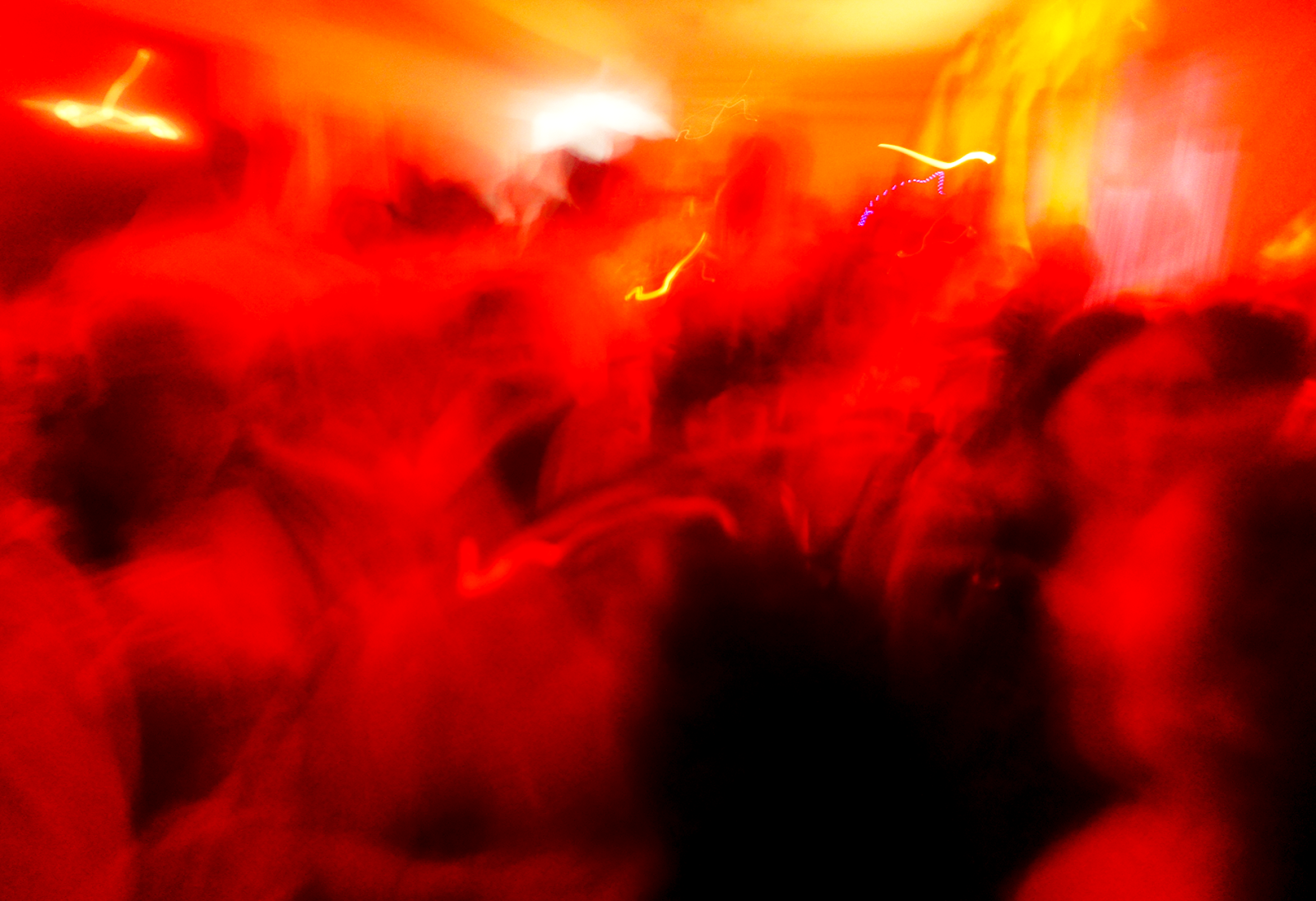
MD: For sure. I mean, the one that I can really pinpoint was when I threw my first dance party in my Governor Street apartment last fall. I set up some lights, and probably 100-150 people cycled through the place over the course of the night. I realized then that I want to make work where the act of gathering is the medium. This was a period where I’d been getting frustrated with the kind of traditional, formal, “Turrellian” light projection installations that you referenced. I was getting sick of dealing with the apparatus—of mounting projectors, hiding projectors—and working in really tedious installation spaces. In this early work, it felt like the level of effort I invested felt disconnected from the feelings I wanted to evoke. It was at the dance party that I realized, “Oh, I can very quickly adjust this work in real time.” In these spaces, just by setting up lights here and there, I can drastically change the way a room looks, feels, and sounds. And I can get hundreds of people to give me a form of real-time feedback. Club spaces have always been deeply formative and inspirational for me, but it was that moment where I realized that I could actually take the skills that I had been developing as an installation artist and implement them in a dance party.
CU: Where do you think that the impulse to facilitate experience, emotion, and contemplation comes from? Are there any roots of this impulse which you can identify?
MD: I mean, I do think it stems from my love of performance. You know, looking back, what I loved most wasn’t the singing, the dancing, or the acting, but instead the audience. I loved to see how, in performing, making a different choice could change the way a crowd responds. Then, by making a series of choices, you could guide an audience through intense emotion. Performance fosters a gathering space where, through this form of storytelling, rooms full of people can be moved all at once. It's so powerful.
Beyoncé is one of my biggest inspirations. So is Es Devlin, who designs all of Beyoncé’s stages. When I saw Beyoncé's Renaissance tour in 2023, that really solidified for me, like, “Okay, there are tens of thousands of people in this stadium right now. And because of the way this stage is designed and this visual experience is communicated, thousands of people are kind of being uplifted and changed.”
CU: Through your work, are you interested in prompting specific experiences, or are you more interested in just offering these very distinct spaces and then letting the individual have a wholly independent experience with them? Do unexpected responses excite you?
MD: Definitely. It's pretty much impossible to prescribe an experience. So instead, what I attempt to do in my installation, specifically, is to find a nugget of phenomena in light or sound that I find wondrous. Then I work to create a space that recreates a concentrated experience of that same phenomenon, and I just hope that people in the space find something from it, though I never know what it's gonna be like until it's happened. My senior show, LET THE STORM IN, was so unexpected because I hadn't shown it to a whole lot of people before it opened. When a crowd finally engaged with the space, I saw so many new things. For example, I totally didn't anticipate that watching other people interact with the work was its own kind of performance to experience. There was also an unexpected confusion; people asked me, “How is this done? What’s happening here? Are there two projectors? What's going on?” So there's a wide array of experiences in response to the work. For the more highly planned gallery installations, I at least have a general sense of “okay, here's what the general experience will be,” whereas with my lighting design, it's far more open-ended. Outside of the gallery, I create these playgrounds of light, and then I just let people play.
CU: I want to touch more closely on your studio practice, the works you're creating for galleries specifically. As you mentioned, you get to much more thoroughly curate and preplan those works. You mentioned LET THE STORM IN, which exhibited this spring, but you exhibited one prior to that in the fall of 2024. I'd love for you to talk about the roots of both of those installations, and perhaps how they differed. There's definitely a distinct overlap between the two works, but they're wildly different exhibits. Maybe we start with your fall show.
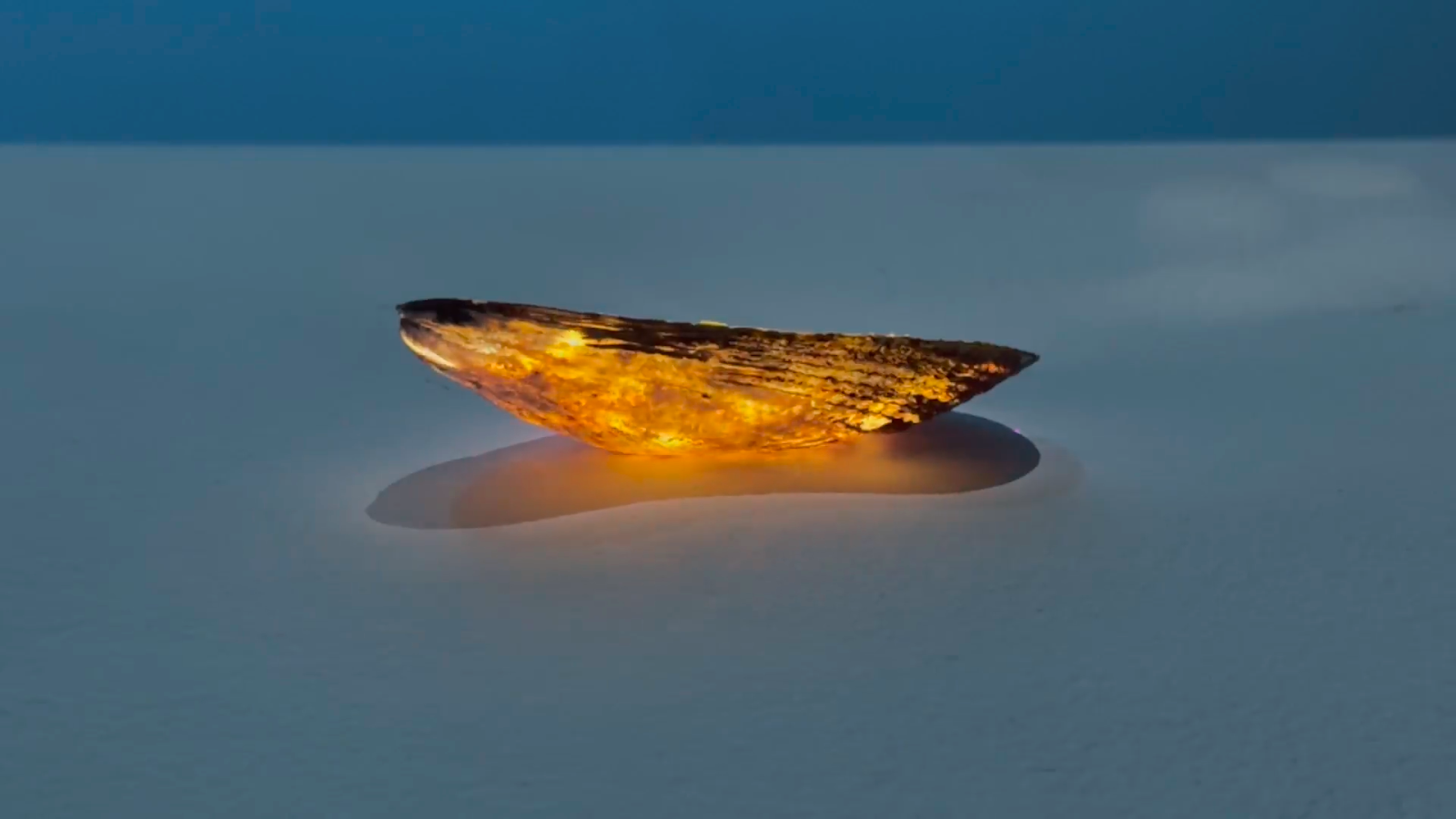
MD: Yes. UP TO OUR EYES was my fall show. The inspiration for it stemmed from a very specific series of moments of meditating, sitting, sleeping, and journaling at India Point Park. More specifically, it emerged from spending time at the water there; India Point is one of the closest bodies of water we have at Brown, and I find the water to be deeply restorative and transformative. I go there when I'm feeling anxious, lost, or ungrounded. I find that being there immediately reorients my awareness. There’s this infinite wonder that emerges from staring at the surface of water. Most of my pieces seek to kind of capture that wonder, to bring it into the gallery, and UP TO OUR EYES began with collecting little shells and rocks from the site. I would also film the surface of the water where I pulled these shells from, and I began projecting these records of the water’s surface back into the collected objects. After a process of experimentation with a series of objects, I landed on one specific oyster shell, which I put on one pedestal in the gallery space, where I hung a projector above it to reproject its context upon it. That was the work.
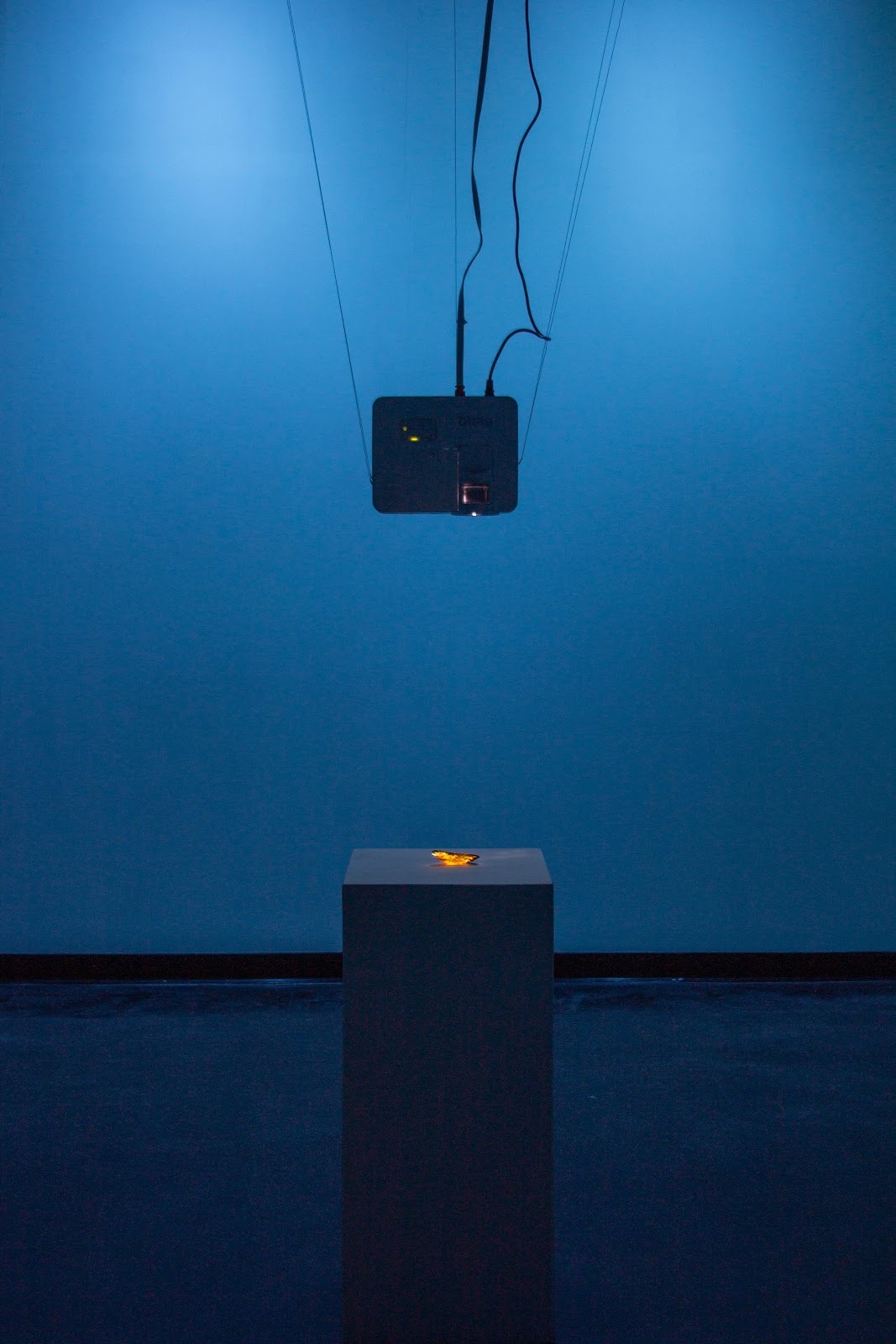
CU: What worked and what didn't? I feel like in many ways that work really primed LET THE STORM IN. They emerge from a similar point of inspiration, but their approaches are wildly different. I'd like to hear what you learned from this first exhibit and how that informed the second.
MD: Yeah, I think what was most exciting to me was something totally unexpected, seeing how people in the space interacted with the work. People gathered around the shell in a sort of circle and quietly observed this shell, which became almost a hearth. What was exciting to me about this circle of people was that not only were people experiencing the work, they were experiencing the work together. It facilitated a unique shared experience in space with the people next to you, across from you, people you don't know but who you share something with. If two people knelt to approach the work from either side, all of a sudden, they were in this strikingly intimate encounter. It became communal, which really excited me.
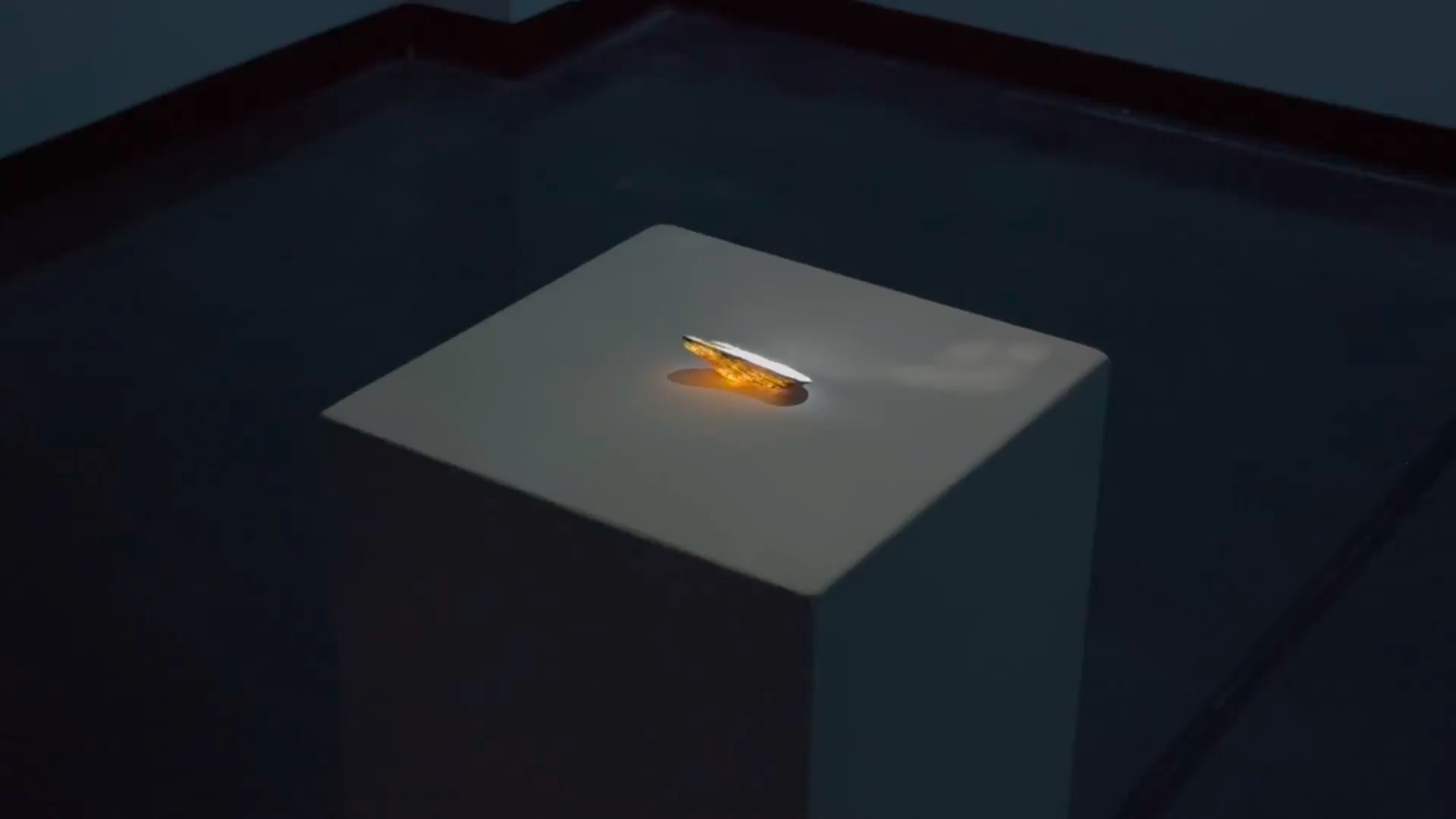
As I observed UP TO OUR EYES, I realized I wanted to push the level of engagement which the audience can access. The viewer experience felt a little too static, a little observational—removed from the work. You know, people could get close to the shell, and they could wave their hand over the projected image to interrupt it, but that's where the interactivity ended. For LET THE STORM IN, I wanted to take that same meditative, wondrous phenomena of sitting by the water and make it more wholly interactive, almost to the point where the work itself operates only through people’s engagement with it.
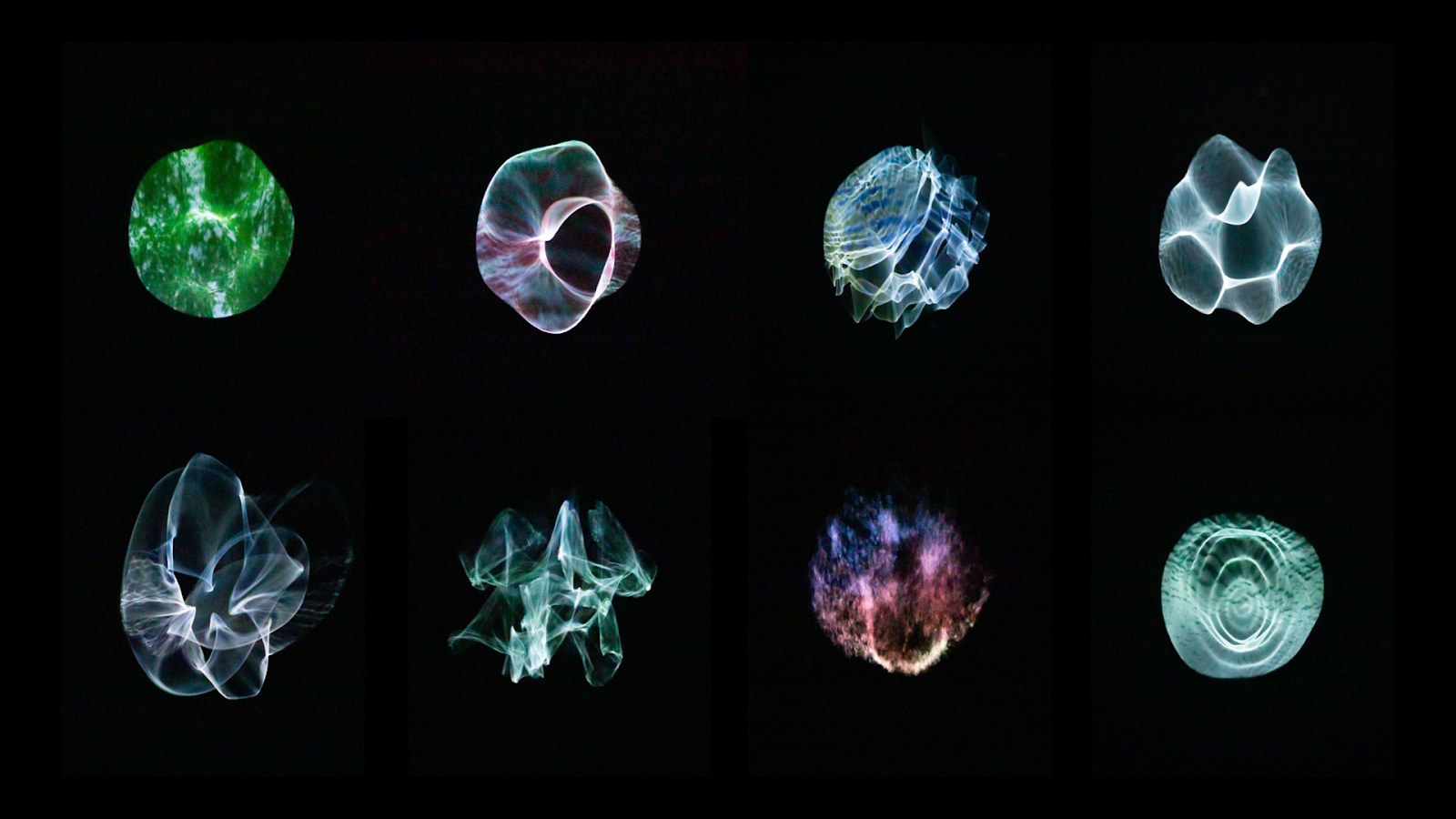
Technically speaking, LET THE STORM IN stemmed from a series of experiments I did in my sophomore year, where I projected videos of bodies of water into buckets of water. I would agitate these buckets and film the resulting reflections which appeared on the ceiling. What was fascinating was seeing the ripples of the physical water in the space interacting with the digital ripples from the projected video. I knew I wanted to play with this effect, but it’s so challenging to work with water in a gallery space. Ultimately, I envisioned a sort of wishing well. I liked the idea because it allowed me to foster that same clustering of people which worked so well in my prior exhibit.
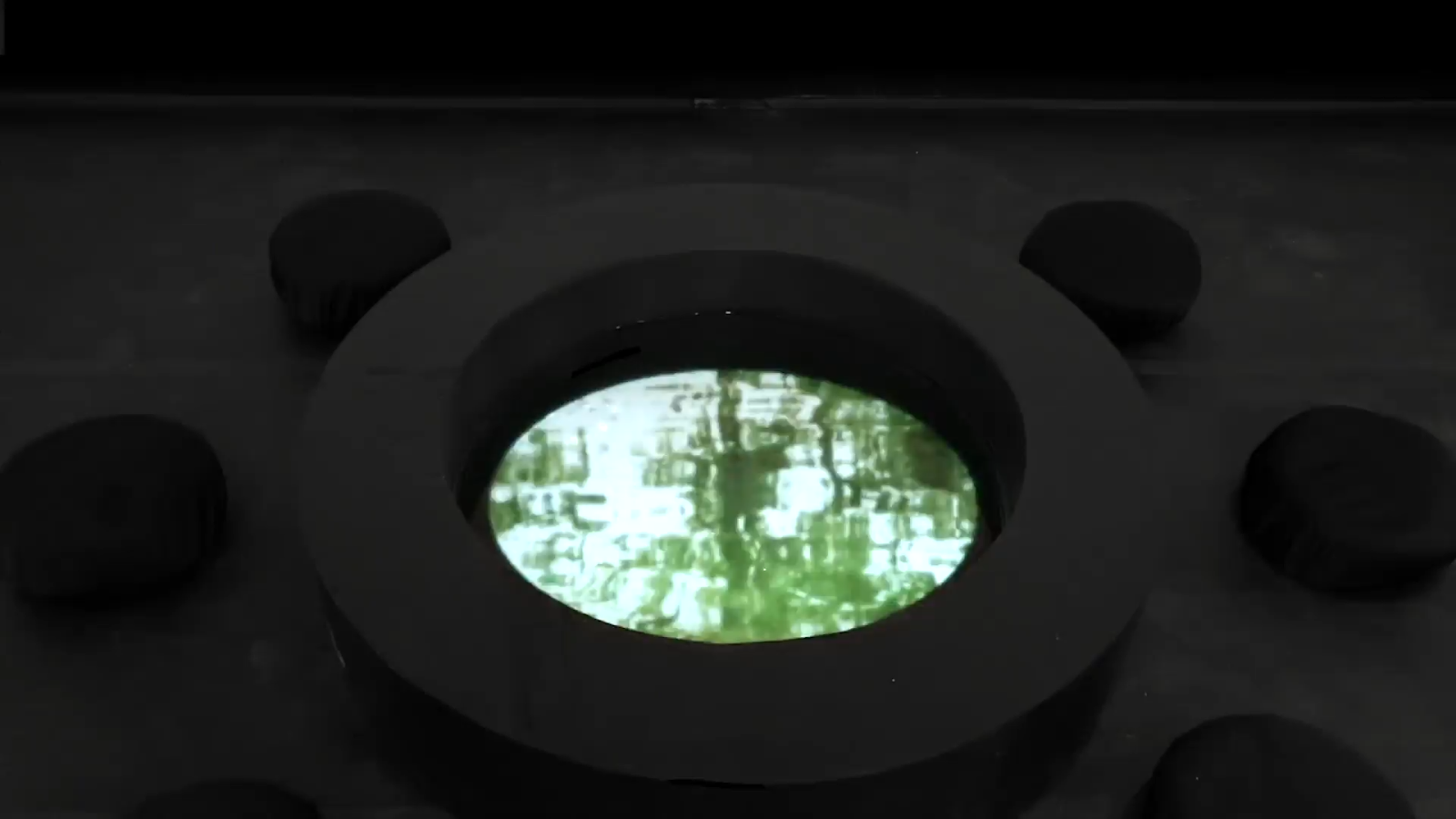
Slowly, I developed the concept of this room where you’re met with a very simple reflecting pool in the center with cushions around it, inviting you to sit at the water—to touch it. I mounted a projector on the ceiling, pointing down into it at an angle which reflected the image up onto the back wall of the space. In real time, people could interact with the water and immediately see how the ripples of their touch influenced the projected image.
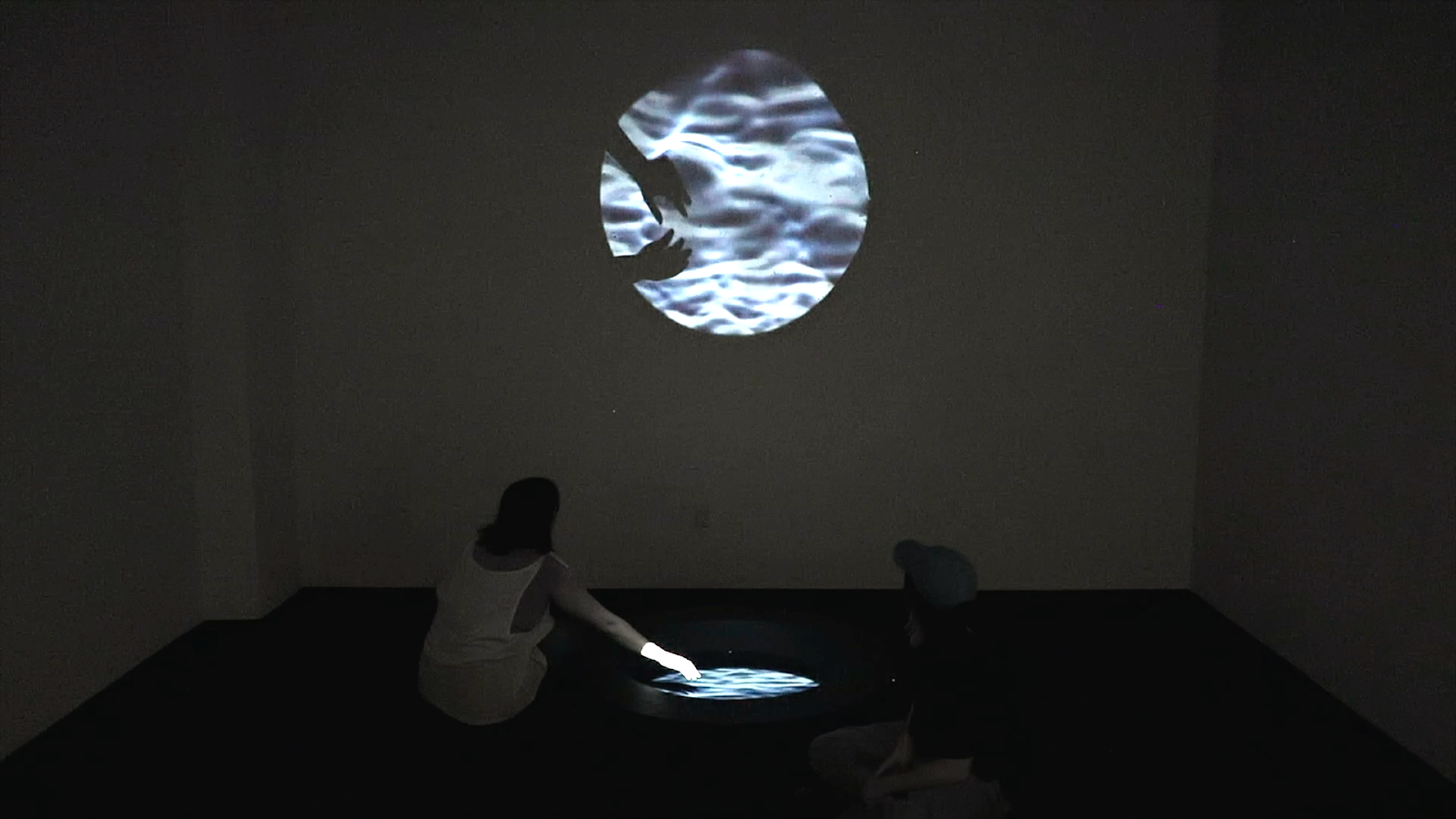
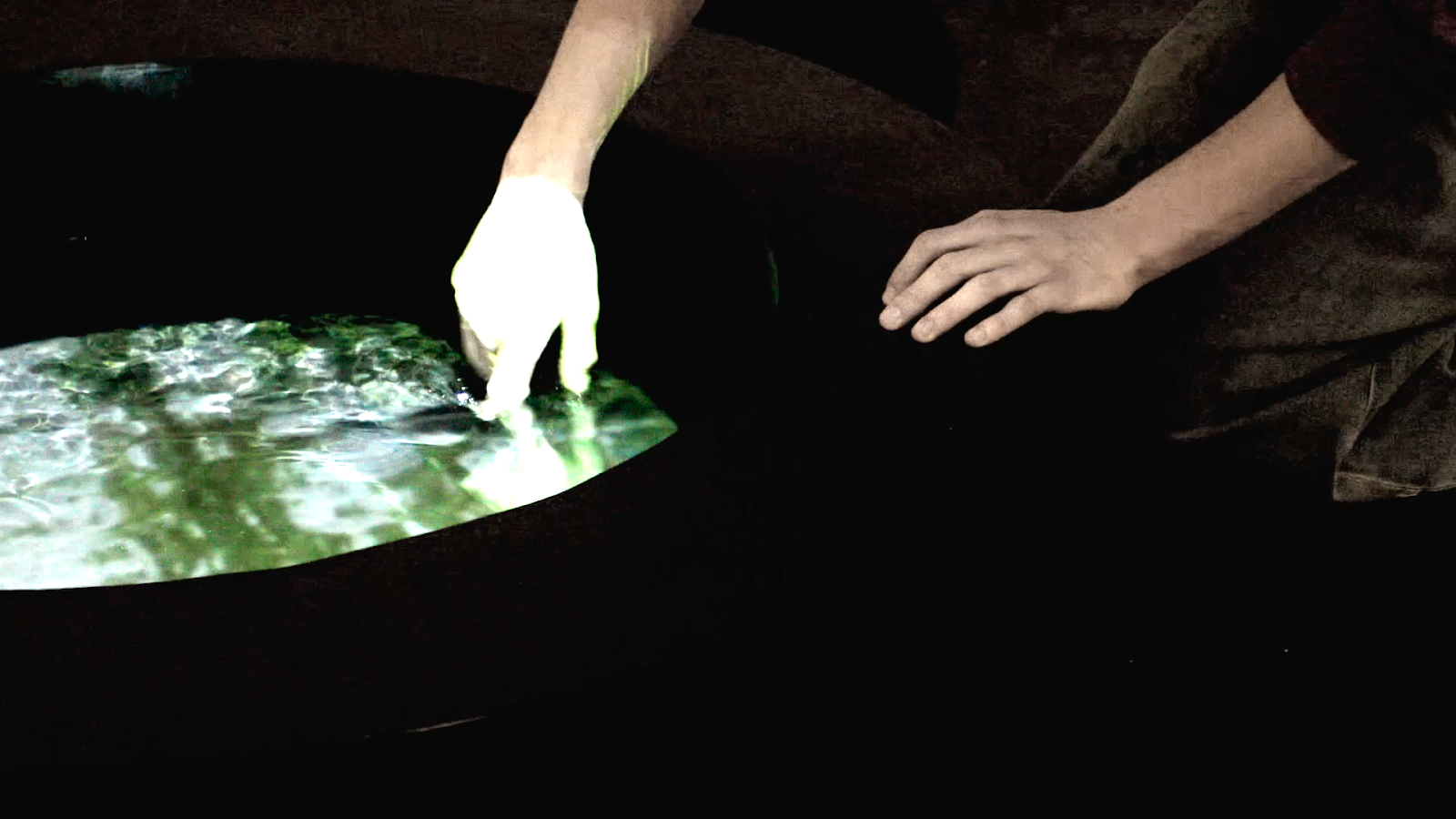
CU: Something really interesting about your work is that, on one hand, the centrality of reflection within it (literally and metaphorically) makes one think about religion and spirituality. I’m reminded of these meditative practices which seek to reach a mode of experience distinct and “greater than” the day-to-day and material. But at the same time, your work is so critically engaged with the idea of creating space, of making an audience more aware of their physical surroundings and the people around them. Are you thinking about the balance between those two impulses? Physical and spiritual? Does it come naturally to you?
MD: For sure. I mean, in the process of creatingLET THE STORM IN, I thought extensively about the spiritual. I was inspired by temples, spaces of worship, places where people enter a room to tap into a higher realm of consciousness. For me, interestingly, that form of consciousness goes hand in hand with the grounded awareness that my work seeks to foster. The title of the show, LET THE STORM IN, is in reference to my experience working towards allowing myself to feel fully. It reflects my experience of allowing myself to let in emotions and thoughts that can be scary to accept, the tactile immediacy of water and the act of meditation facilitate that process of acceptance and allowance for me.
CU: Parallel to the studio practice, your lighting design has rapidly evolved. You mentioned the first large-scale party you lit as being a critical moment for your practice, which opened a new realm of opportunity to access people and to engage them. I would love for you to speak a bit about the development of this lighting endeavor. How have you seen it develop? I’m also interested in whether it's influenced your approach to your more gallery-oriented installation.
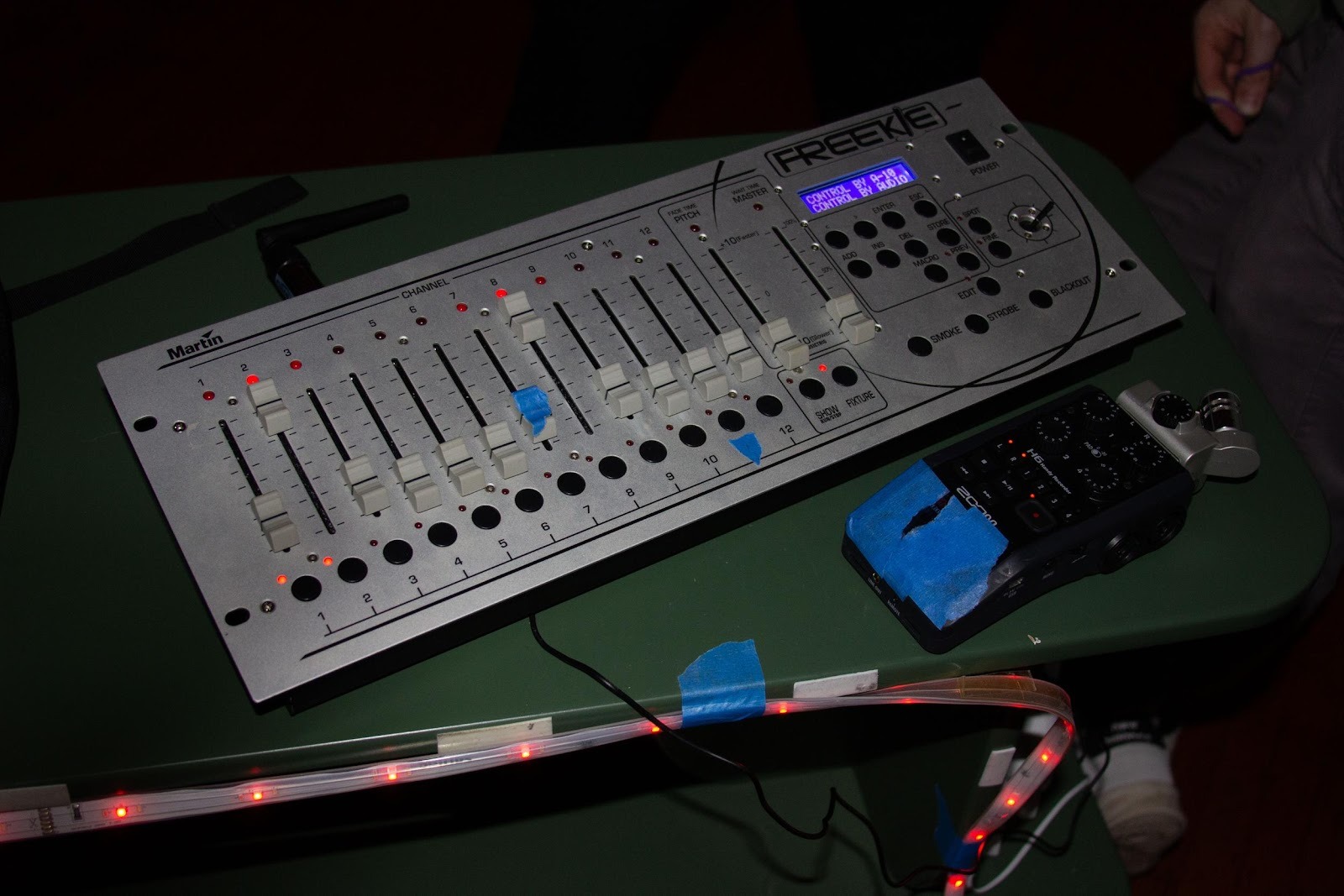
MD: Absolutely. After I threw that first party, I didn't fully understand where it would lead me, but I had an instinct that the space of “the dance party” was specifically interesting to me—these darkened rooms late at night, with a DJ playing. So I Facebook Marketplace-d a light controller, some crappy DMX lights, and some stands. I’d started by just setting these bulky lights up, and I’d stand next to the DJ and adjust the lights to the music in real time; I was kind of DJing the lights. Every time I had the opportunity to light a new party, I learned more and more. I learned what color the lights should be and when, and what effect they could have on the crowd. I learned that the position, the brightness, and color of light can either push people from it or draw people to it in a space, which was really exciting for me. I could go into someone's living room and immediately strategize, “Ok, I can only physically put a light stand here so that no one will trip on it. And if the light stands here, then where can I place my other lights?” The next question is then, “What are these lights shining on? Is it the ceiling? Is it the walls?”
Honestly, it was fun to work within this very limited design paradigm. With the installation art I make with projectors, I’m given almost infinite freedom—any image could be projected on any surface. But with this light practice, I had these built-in limitations; they can only go in so many places, and they can only be so many colors. That limiting factor was actually extremely exciting for me, because then I could go into tons of different spaces and work to completely transform them. It also influenced my gallery practice, I would say, by really affirming that the core of the work is not in the equipment but in the experience. Before beginning this lighting design practice, I was struggling with feeling like a “projector artist.” I felt that the core of my work was tied to this piece of tech. It didn't feel right to me, even if projection felt like the easiest way to produce the effects I wanted. Once I started throwing these dance parties, it solidified for me, like, “Oh, actually what's happening here is that I'm choreographing experiences, and the technology is just one vessel that can kind of facilitate that, but not the only one.”
CU: Do you see these parties as artworks?
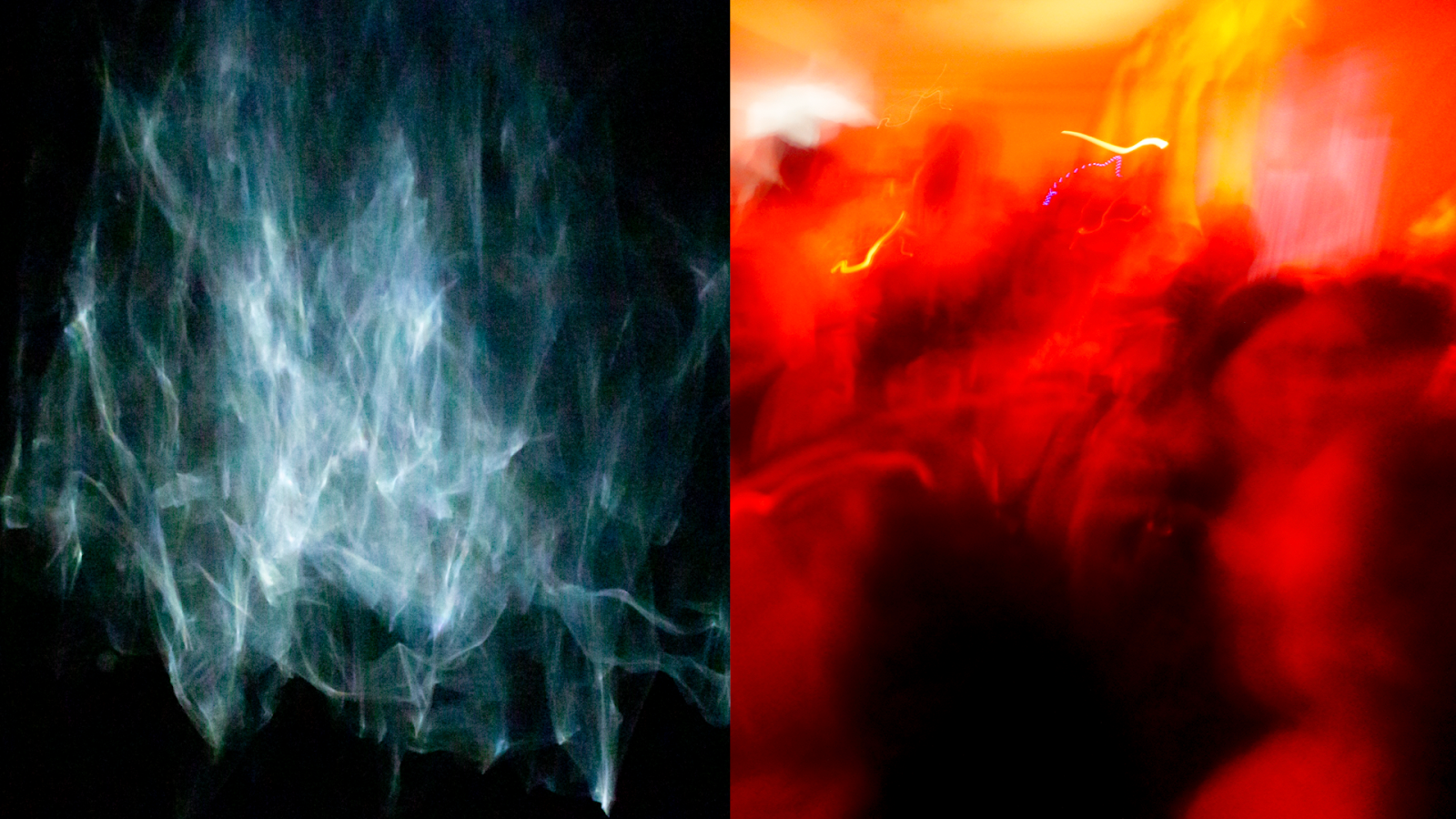
MD: For sure, yes. Especially because even though it's the same equipment across them, I'm always doing them in a different place, and the people are completely different. No two parties are ever the same, even when all the variables I’m working with are identical. They feel like site-specific happenings; each one has a different energetic trajectory. Some of them are slower, faster, more precise, more hectic, etc. Some feel like supernovas, others like nightmares. As you’d expect with college parties, some are successful, and some are total failures. I have a folder on my computer of documentation of these parties, each of which has a number. I'm at number 17 now, and each one does feel like a work of art.
CU: It sounds like you've really been thriving within the limitations of the spaces and the tech that you're using. My question is, are you thinking about how this practice might evolve? Is there a specific form of equipment you want to play with, an atmosphere you want to attain, which you feel you haven’t yet?
MD: Yes. I mean, my biggest one is fog machines. I really need to be throwing more parties with fog because, obviously, if you just have light in a room, the people and the walls will glow; whereas if you have fog in the room, the air will glow. Suddenly, the light can actually occupy physical space with your body in the room. Unfortunately, you can only use fog machines in places with special smoke detectors, which are usually club spaces or warehouses that have been outfitted to accommodate this sort of event. And so I think I want to begin working less in houses and more in these dedicated spaces where I can actually, like, drill into the walls to physically install lighting rigs, projectors, smoke machines, and lasers with fuller control over their location. For me, my next step is less about the specific equipment and more about what spaces I’m going to be creating in. The answer is hopefully ones that are actually made to accommodate club environments.
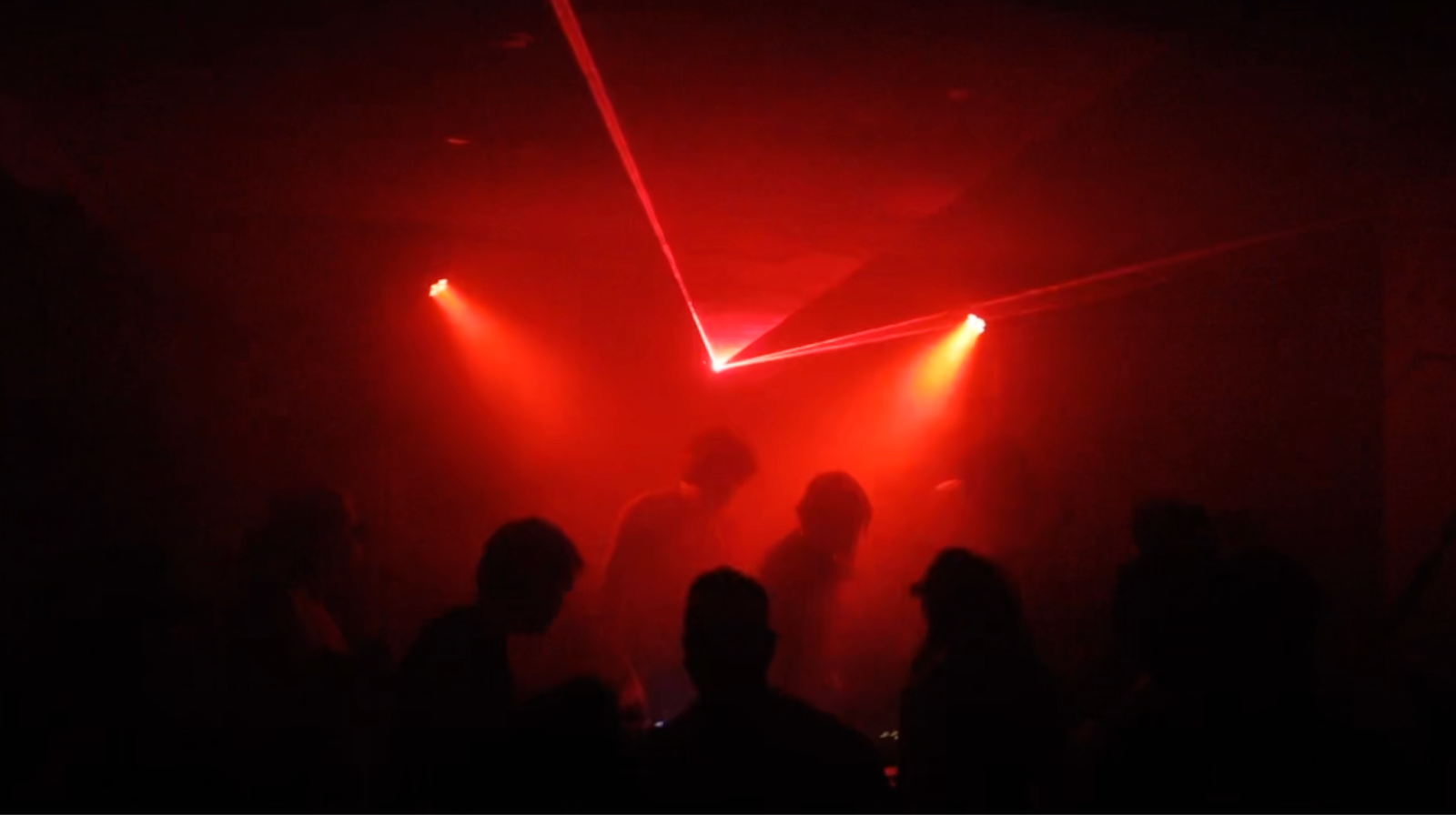
CU: So, where do you see your practice going from here? It sounds like you’re excited about focusing on the club as your canvas, as opposed to “found” sites?
MD: Definitely. I'm moving to New York City at the end of May, to hopefully work for a creative lighting studio. I'm drawn to honing this practice because it feels so immediate. It also feels really important. Especially today, I feel like the gathering space, especially the club space, will become more and more and more important. These communal spaces feel critical in a way that I don't know if the gallery space will; I don't feel the same urgency to work in the gallery space next. This medium is also so accessible; there are so many parties all the time. A big white room where I could install a complicated installation is maybe a little farther down the line for me, but right now I'm feeling really good about focusing on the party practice.
CU: I’m so excited to see how it develops. I’ve loved getting to experience your rich and generous practice, and I’m grateful for the insights you’ve shared with me. I have one final question for you. Where can readers find you and see more of your work?
MD: My website is michaeldelaurier.com, which has all of my projects on it, and my Instagram is @michael.delaurier.
CU: Awesome, thank you for such a great conversation, Michael!
MD: Thank you, Charlie!
(Title image: Michael DeLaurier. All photographs courtesy of Michael DeLaurier.)
Cara explores how Natalia Goncharova redirects the ambitious, often technologically oriented rhetoric of Russian avant-garde abstraction toward an intimate and playful subject: domestic cats.
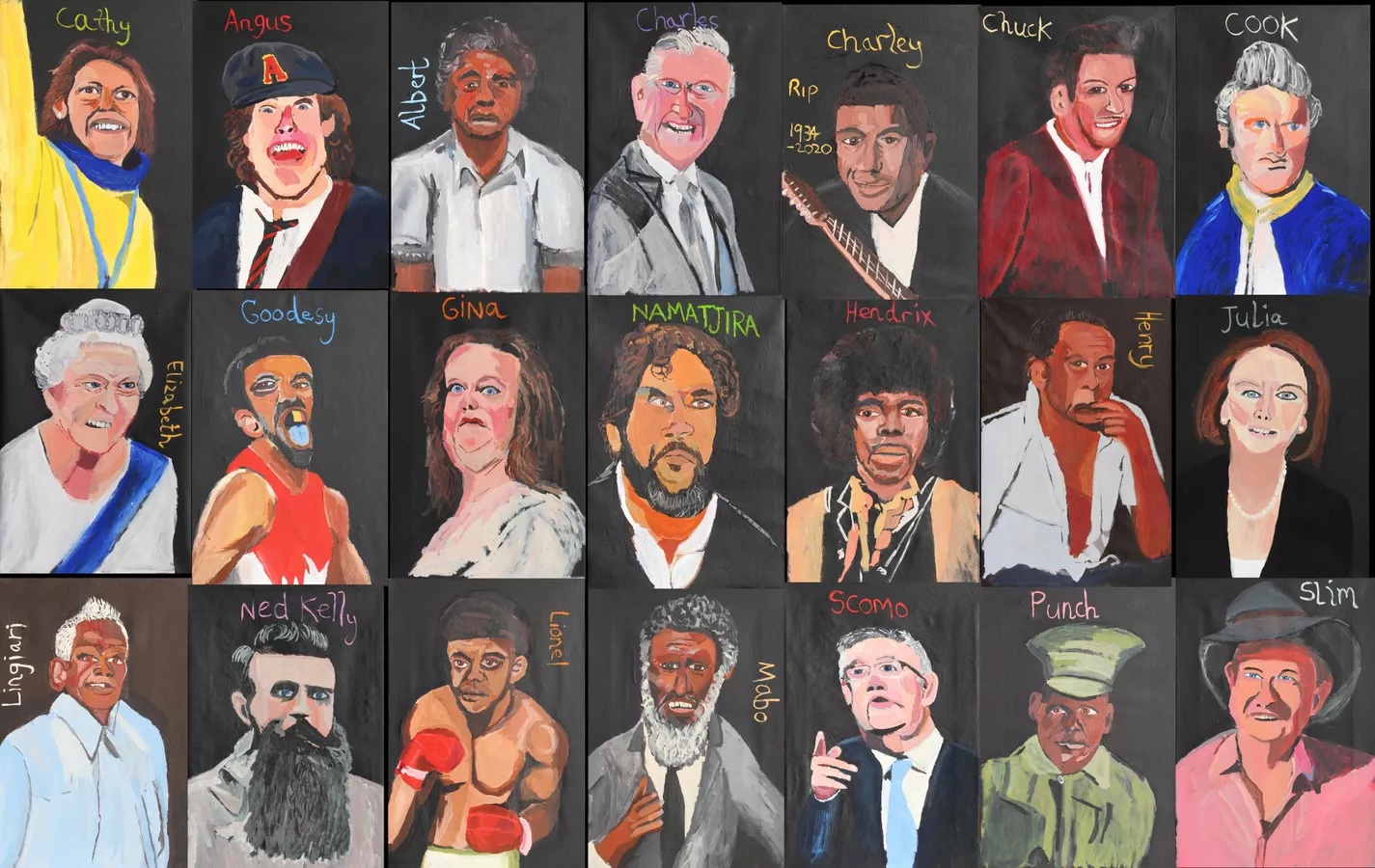
Kate explores how Australian artist Vincent Namatjira redefines portraiture to confront the legacies of colonialism while envisioning a more inclusive future—one expansive enough to embrace all Australians.

Clarke Reynolds (Mr. Dot) talks with the Art Review about interactive art, changing the narrative around blindness, and creating a world where art is more accessible for all.