May 1, 2026
Opinions
Opinions
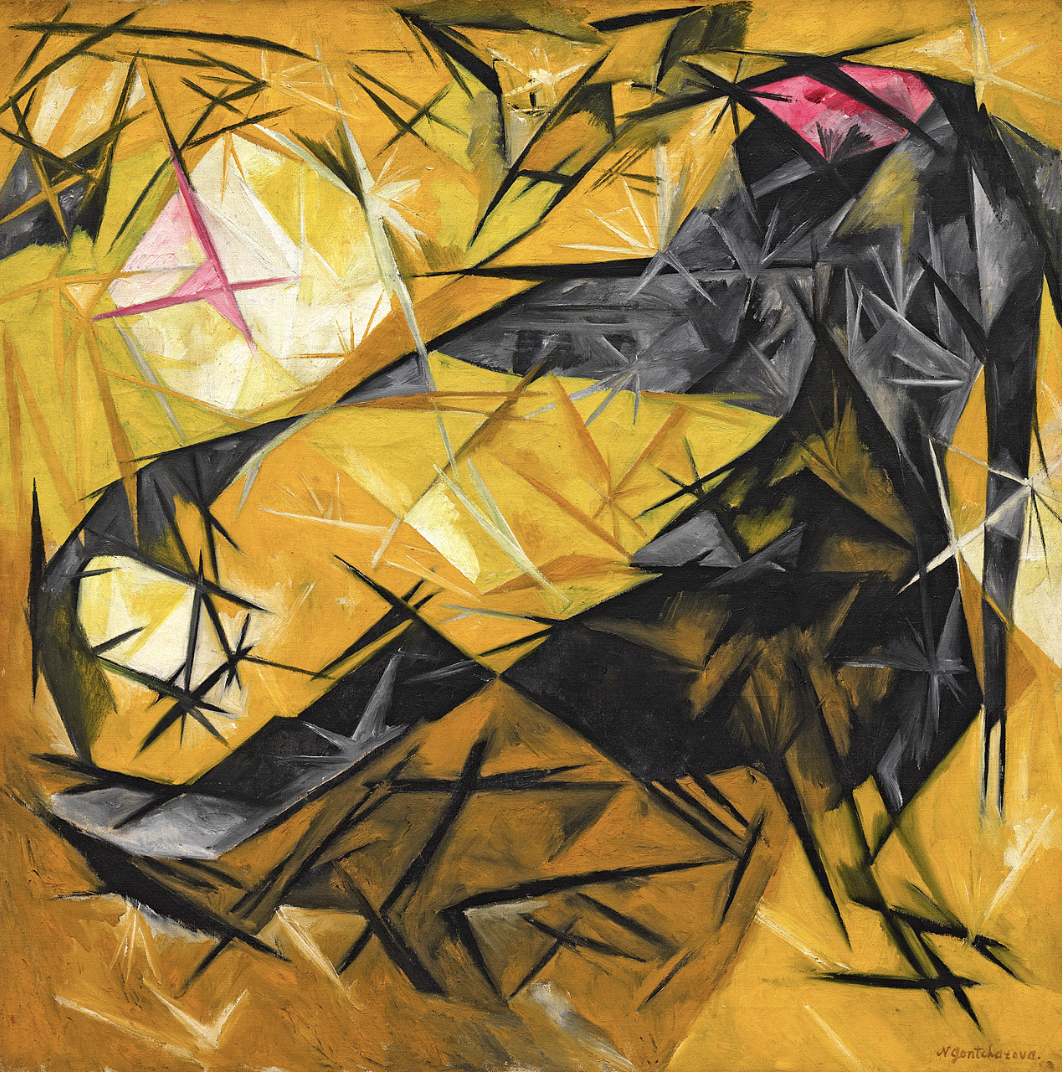
Cara explores how Natalia Goncharova redirects the ambitious, often technologically oriented rhetoric of Russian avant-garde abstraction toward an intimate and playful subject: domestic cats.

Nora talks with the Art Review about children’s books, Greek mythology, and punishing people she wants to punish (in her imagination, that is).
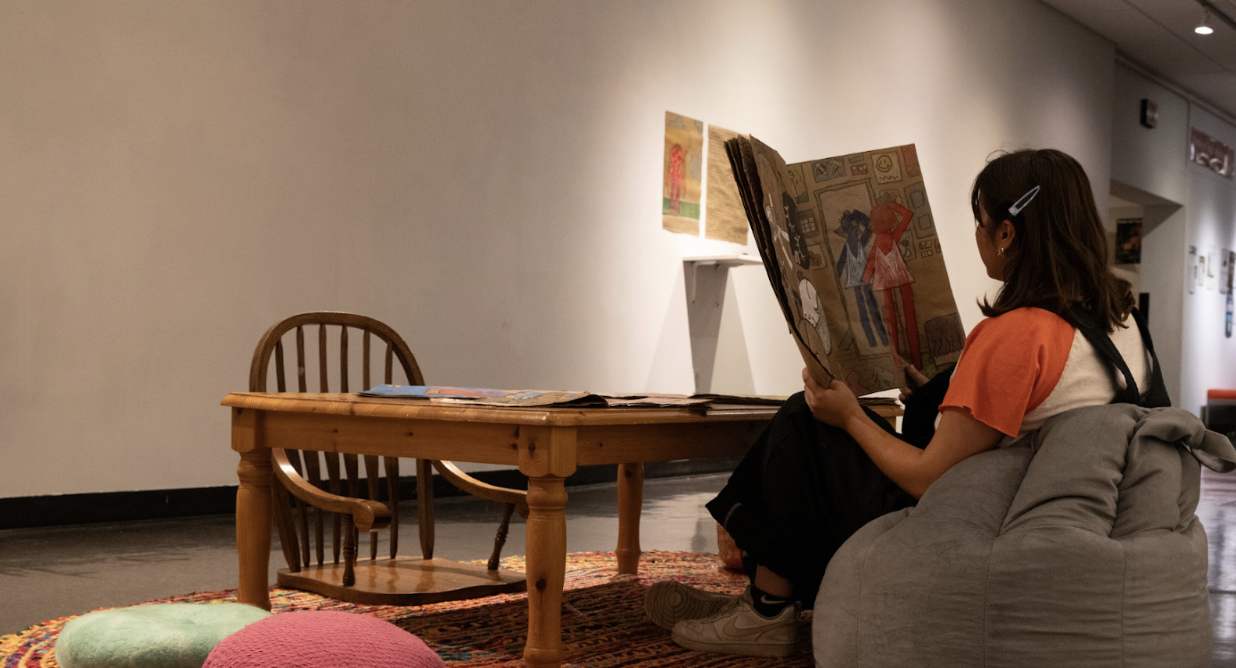

This past Spring, Nora Starhill (@starhillstudio) graduated from Brown's Visual Art program with a body of work centered on hyper-personal confession. At surface level, this diaristic practice takes the form of children’s books, but closer inspection reveals inventive, fantastically complex narratives of semi-self-portraiture that are at once compelling, confounding, distressing, and, ultimately, highly relatable. I sat down with Nora in April to discuss her thesis exhibition, how she’s developed her creative practice, and how her work balances interpretation with opacity. The following conversation was edited for clarity.
Charlie Usadi: Hi, Nora!!!
Nora Starhill: Hi, Charlie!
CU: Thank you for sitting down with me today. I love your art practice, and I've been especially excited by the direction it's been moving in. I've been looking forward to this conversation.
NS: Thank you!
CU: I’d like to begin broadly, then narrow into your practice. So, I’d love to start by letting you introduce yourself. When you're not in the studio, where can people find you? What are you likely doing?
NS: Well, I play Frisbee, that's one of my main exploits. I’ve recently been very into line dancing at the Mishnock Barn, or hanging out at my house with my roommates.
CU: And you're pursuing a Visual Art degree with honors.
NS: Correct.
CU: That’s a major commitment to your artistic practice. I'd love some insight into your relationship with art-making. How long have you been creating art, and how have you seen your relationship to it develop?
NS: I mean, I've always been into making art, but I didn’t identify as “being an artist” until very recently. I loved making little cartoons when I was in middle and elementary school. I've taught sewing classes, my grandma taught me how to quilt, and my grandpa taught me how to construct stuff. So I've always been making, but in high school, I began to focus on performance art, and I almost forgot how much I also loved visual art.
When I came to college, I started taking art classes here and remembered how fun it was, and [thought], “Maybe I should do this.” But I still wouldn’t say I was entirely serious about it until last spring, in my painting class, when I realized that the art I was making was helpful for me; it allowed me to express myself in a way that I was incapable of–or too scared of–describing in words. That body of work was very different from my current work, but it was like a slap-in-the-face realization of, like: this is great. It was then that I realized I wanted to apply for honors, so I applied for honors, and then I got really deep into it.
CU: I'm interested in discussing your influences. You mentioned your family as an inspiration. Do you identify any other key influences that have contributed to your practice today, whether they're artists themselves, philosophers, poets, etc.?
NS: I have answers, and they’re going to be strange [laughs]. For starters, a less strange example, my dad loves Renaissance painting, more specifically, he loves the histories of Renaissance paintings. Growing up, when we’d go to art museums, we would stand in front of a painting, and he’d tell us everything he’d read about it. That’s the more typical art-influences, but beyond that, I didn’t grow up exposed to much “fine art” or even art more generally. My mom isn’t an “art person,” so to a large extent, my main exposure to art was in children's books. That sort of media was definitely a key influence.
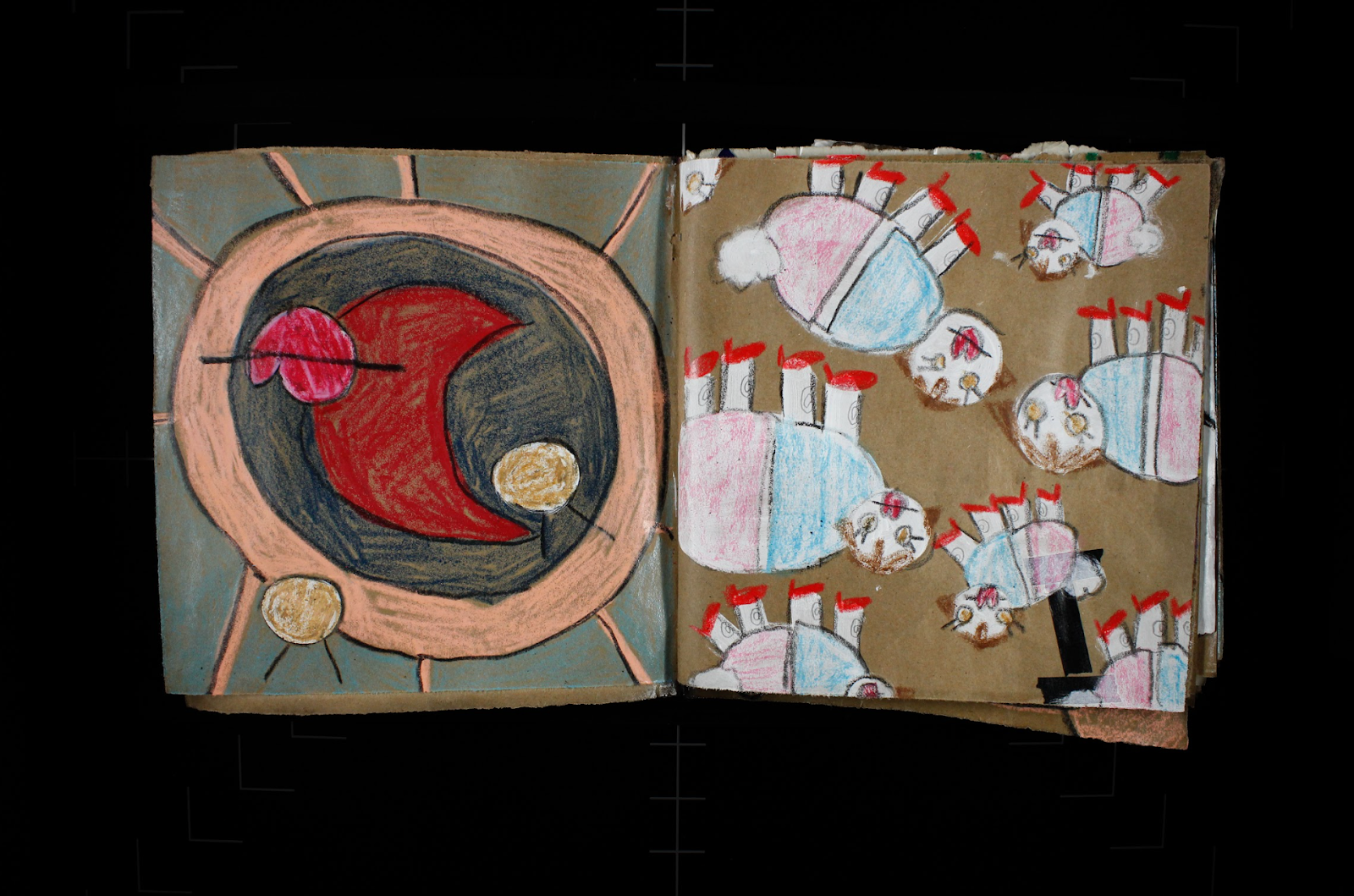
There are a few really specific influences from my childhood I can point to, which I think contributed to the style and maybe the ethos of my work. In pre-k, one of my teachers was really good at drawing cartoon cheerleaders. I loved the way that she drew these cheerleaders, and I would make her draw them for me every day. I loved the way the marker looked on the paper. I tried to draw them myself, but obviously, I had no fine motor skills at this point, so I couldn’t. That’s one of my earliest memories. Another early influence was a babysitter I had when I was still around the same age, but a bit older. Her name was Alexandra, and she lived on our street. She would come to my house, and we’d staple together construction paper to make these little books [which, once you’ve seen Nora’s work, should sound familiar]. Alexandra drew horses really well, and I loved that [laughs]. I think that's probably where it all started [laughs].
CU: The connection between those inspirations and your work today is so clear—I love it [laughs]. They all make total sense. I think it's important that you describe the work you're creating now because it's so distinct, and it represents such a drastic transition from the work you were making as recently as a year ago. What did the development towards your current practice look like?
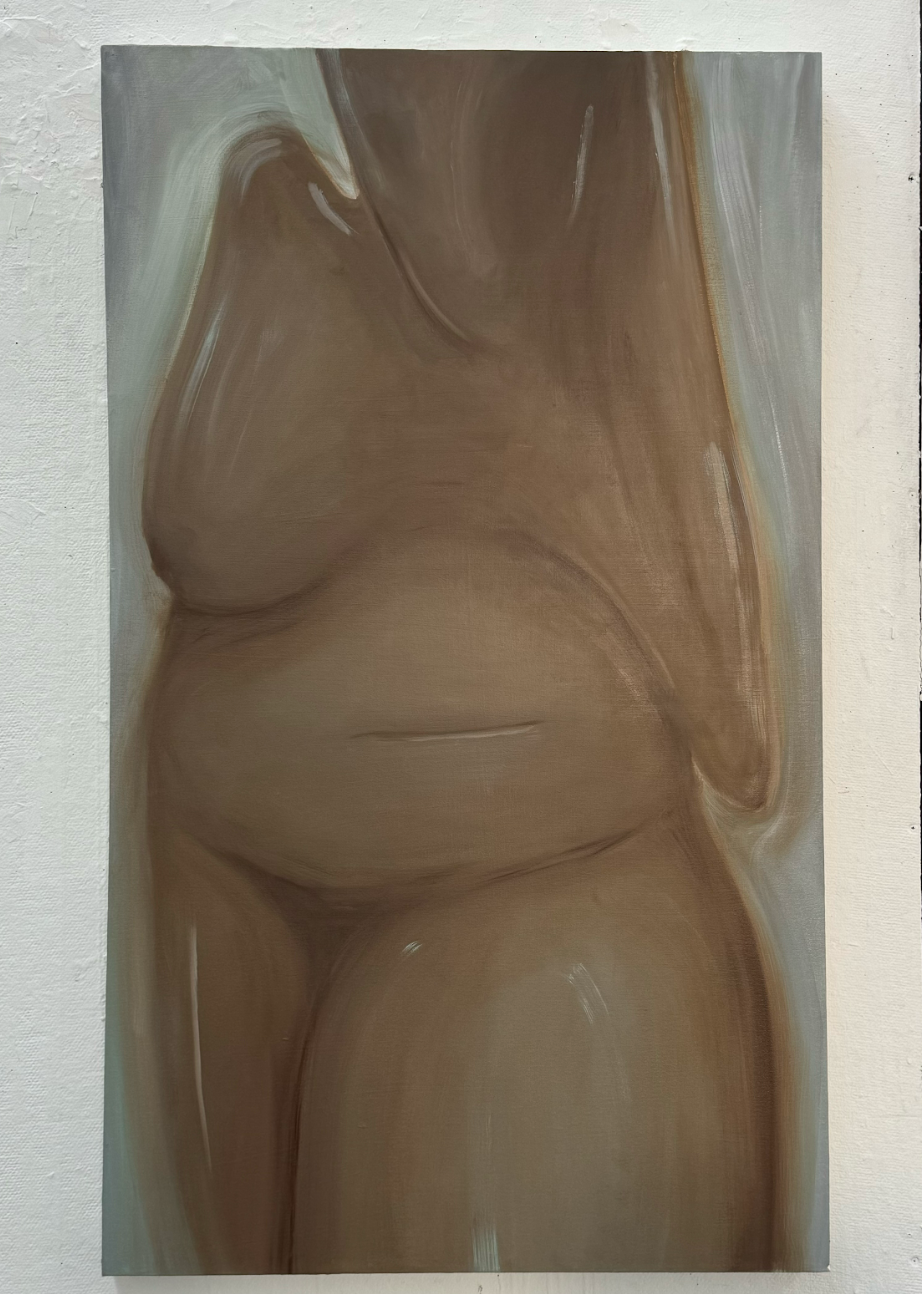
NS: A year ago, I was primarily painting, creating oil paintings on very big canvases. I was dealing with concepts surrounding self-image and self-perception. I was also working through a lens of Greek mythology, which, to be honest, isn’t so far off from some of what I’m doing now. I was painting bodies, these very big, distorted bodies, which were very interesting to me and also very cathartic. I had a lot of fun with that work, but at a certain point, I just kind of hit a wall. I tried to pick that work back up this past fall, but it just didn't feel like I had anything else to say on the matter. Painting, for whatever reason, didn’t seem to resonate with me anymore. I had two or three months where I was like, “Oh my God, everything's terrible. I have no idea what I'm doing.” And then, three things happened.
Number one: my roommates had a craft night, and since I felt like I was in a slump artistically, I challenged myself to only draw with my left hand. I was like, “I'm going to draw as badly as I can because I don't want to think about making good art.” I didn’t want to worry about composition, color, anything. I just kind of want to go ham on a piece of 8x11 paper, and I had a blast. Ultimately, what I created looked like kids' drawings. I pinned a couple of them up in my studio; that was the number one moment.
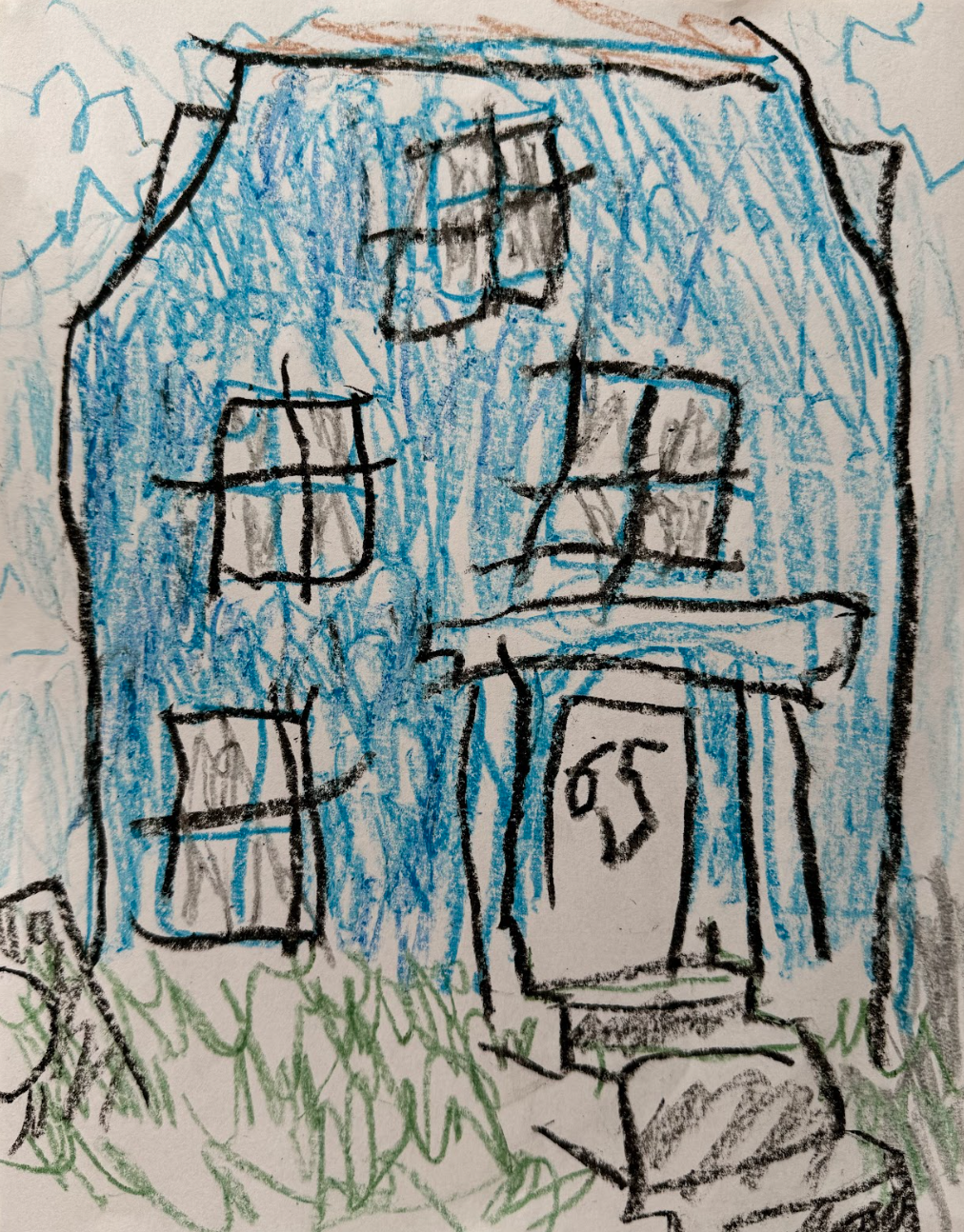
Number two was a classmate, Graham, who saw what I’d pinned up and was like, “Those are awesome. Do more of those.” I was like, “What are you talking about? I'm a painter” [laughs]. But I was so stuck at that point that I decided I might as well try it.
Thing number three was that I went home for a weekend. My parents were clearing out the attic, and they found one of those little books that I’d made with my babysitter Alexandra when I was six. On basically every single page, it read, over and over, “I love my mom, I love my mom, I love my mom” [laughs] with these little drawings of a girl.
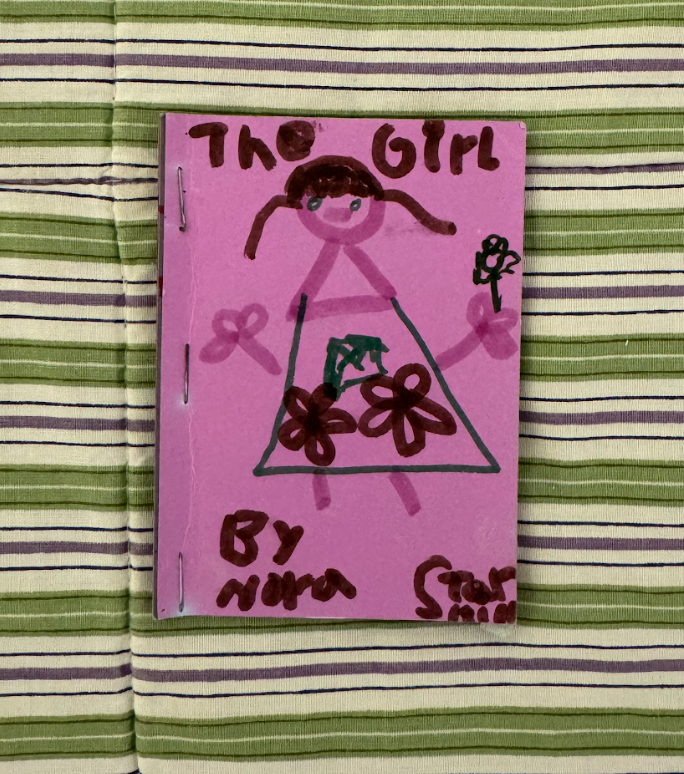
There's always been a motif of characters in my work. Like, I have this character, her name is “girl,” who I designed and who appeared in a bunch of places. I love her; she's me in the way that many of my other characters represent me.
After I discovered that book—where I had drawn “girl,” but as a six-year-old—I was like, “I should make a book with this kind of intuitive, material-driven art,” and see if it checks any boxes, and it totally checked boxes [laughs].
CU: Would you say that thematically and content-wise, maybe the work hasn't changed that much?
NC: Yeah, mhm.
CU: But the medium through which you share this content has changed completely, like a total 180.
NS: Yeah, very much.
CU: So what works about this current practice?
NS: It's intuitive, very immediate, and it's messy. When I was working on canvas, I was very preoccupied with technical perfection, with proportion, accuracy, with making “good art.” That really limited me from ever making any creative choices, from doing anything fun. When I started working on craft paper with paint, crayons, oil pastels, it was like, “Well, if I hate it, I can just start over.” Later, I developed the idea that once I put something on the page, I would never start over, but it’s still very freeing to be working with these relatively cheap materials. I’m no longer holding myself to any rigid standard in terms of technical correctness, and I'm just making things that make me happy, that represent my life.
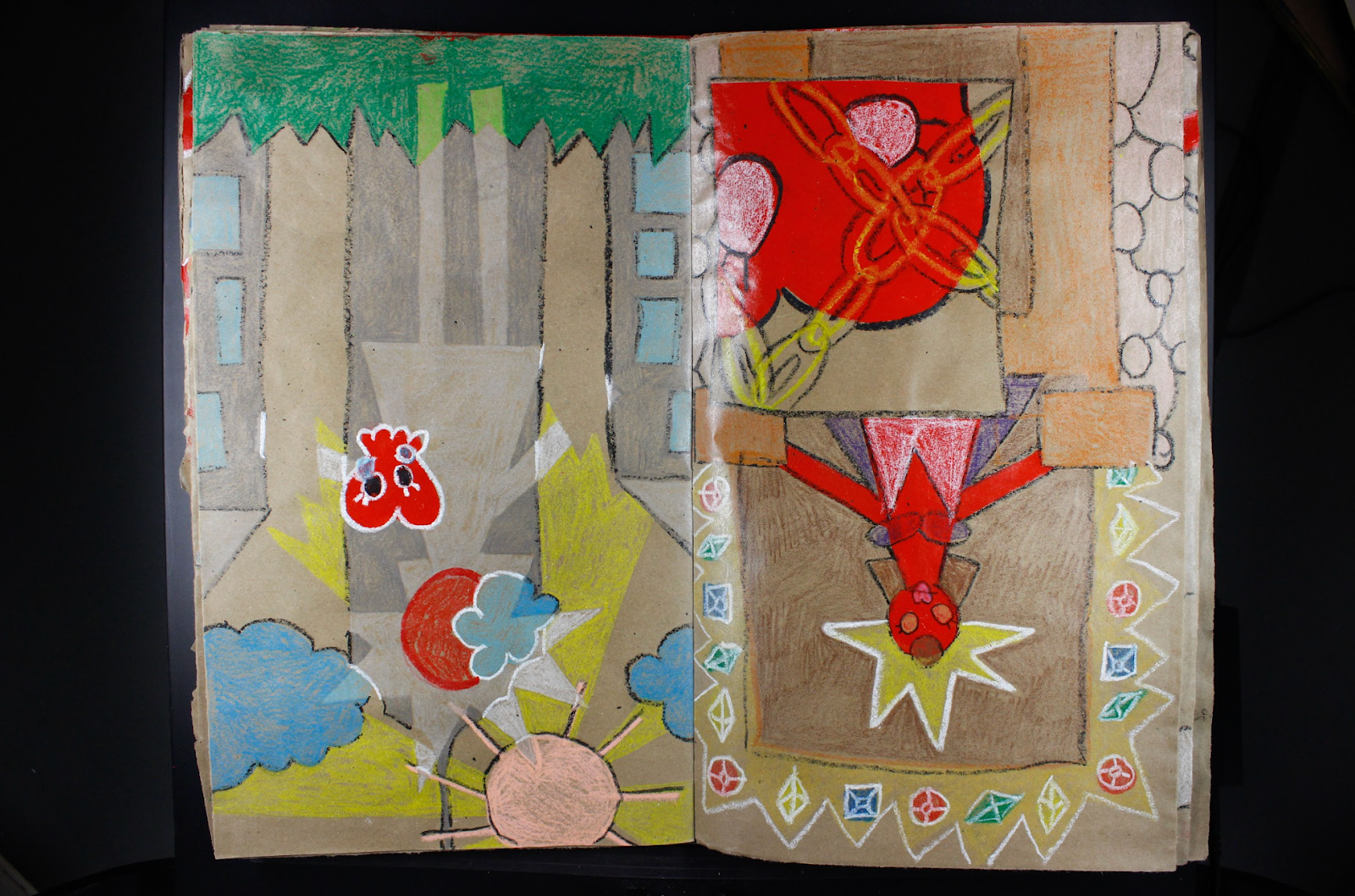
CU: Stylistically, has the children's illustration style you’ve developed been freeing for you in the same way that the material transition has been?
NS: Yeah, the style of the work has definitely gotten more refined as it's developed, but it’s marginal. I think you could look at the first book I made and the last book, and you might not recognize a difference. In the first book, I was intentionally trying to veer into children's art, being like, how would a kid draw this? But over time, it’s developed into a language that's more mine than that of a kid. Of course, to a wider audience, there are similarities between children's art and what I’m creating, but to me, it feels different.
CU: Interesting. From the outset, yes, they do read as children's art, but the more time you spend with your books, the clearer it becomes how many decisions are being made compositionally and narratively in these books. Why were you initially interested in adopting a childlike persona through your work? Why filter your narratives through this lens of childlike naivete or innocence?
NS: Throughout, it's kind of about the eligibility of it. This is where it connects to my interest in mythology in a very strange way. I’m a camp counselor, and when you look at children's art, you have to ask them, like, “Oh my God, this is amazing… what is it?” [laughs] And they're like, “It's a cat! It’s a tree!” And you're like, “Yeah, it is!” [laughs] So there's the illegibility, which was very comforting to me. In the same way that my earlier paintings were a process of obscuring myself and my feelings of confidence and bodies through not-quite-self-portraits, I could use children's art as a lens to blur my feelings, too. It’s a blurring not only in actual form (like, you might look at one of the drawings and think “What the hell is that? That's not a cow, that's a sheep with four weird legs”), but also a blurring in terms of content. It's not a 1-to-1 ratio of my life to the narrative on the page. I feel something, and then I get to translate it. That’s the connection to mythology. The thing about mythology is that they aren’t realistic stories: people turn into cows, and a classic example of transfiguration is a girl getting turned into a spider. These aren’t real stories, but you can still translate them into a vernacular that can be understood, like, “This is the moral of the story.” We can read the subtext. I think that's what my books are trying to get at, using children's art motifs as a vernacular to mythologize and translate my own feelings.
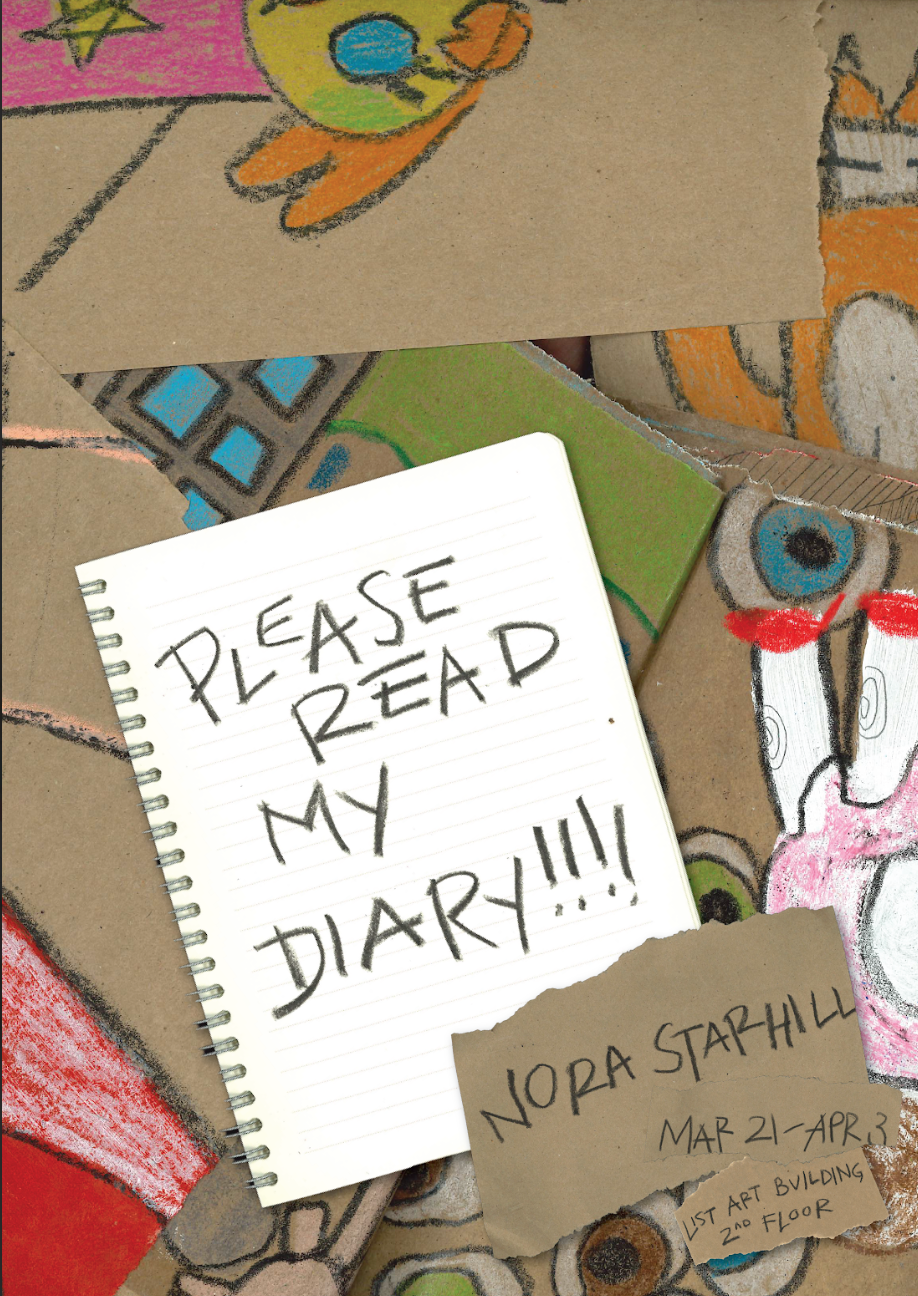
CU: My next question is related to narrative and opacity. The title of your show is Please Read My Diary!!!! I'll start with a question about diaries. In many ways, you lead the viewer to expect clear narratives in these works; the term “diary” itself infers a day-to-day account, and the format of books also leads one to expect a clear story. Unexpectedly, what the viewer discovers is confounding in so many ways, defying traditional narrative structure. I’m interested in how your narrative (or non-narratives) emerge. What does the process of developing these “diaries” look like? Is it linear?
NS: They're definitely narrative-driven, but you're right, the process of making them is not linear at all. I either start with a memory or a feeling that I have in my life which I then expand upon. I'm never storyboarding these books. I start in a place, but it’s not like I’m always starting from page one and working on from there; sometimes I’ll add pages before this initial memory as I’m fleshing out these books. The process is constantly influenced by what I'm feeling at the moment. One of the books, for example, started with a narrative inspired by someone I had a crush on, but ends up with somebody getting a lobotomy and becoming queen of the world, but then losing the magical crown. They start in a place, and they're always somewhat tied into that core memory, but there’s flexibility. It’s like I’m puppeteering myself and these other characters in this space in my head. If I were in charge of a magical world, what would I do to you to make me get what I deserve? It's like a weird voodoo doll relationship, in a way.
CU: Yeah. You mentioned that it's not a 1-to-1; these are not a traditional diary, they're almost opportunities to play out narratives that didn't actually occur.
NS: Yes, it's more of a daydream, honestly. They're like long-form daydreams. I was a big daydreamer as a kid. They’re actually really relatable to what my daydreams were like as a kid, where I’d start from a specific imagined narrative and iterate, reimagine.
CU: In terms of this iteration, there are four books in the show, and each has a different central character, represented by a color, which is a really interesting choice.
NS: The characters are all me, but also… they're not [laughs]. I still can't figure out a way to explain that any better—that they're me, but they're not me. The different characters were a product of the color change, which was more of a stylistic choice than it was a narrative choice. Color is really important to me, and I wanted to try out different colors, color combinations, and I wanted to see what kind of shapes I could add together to make these characters.
CU: Beyond the work being a personal journalistic process, the show title speaks so directly to the importance of an eventual audience. Please Read My Diary!!! directly appeals, or demands, that visitors engage closely with this work. The fact that they're books similarly invites long-term engagement. I'm interested in why it's so important for people to read these.
NS: I want people to read them because I want to be heard, and I want to feel seen, though obviously through this lens of obscurity. I mean, this is going to sound strange, but in a fairytale world, someone’s going to read these books and be like, “I get you, I get you entirely.” [laughs] And, obviously, that's not going to happen unless they are me, or unless they're, like, omniscient or something. But, yeah, I want to share about myself, to share how I'm feeling, but I want it to be only vaguely intelligible.
CU: I feel like that act of translating your experience into this confusing, confounding, and sometimes opaque language, in some strange way, actually makes it more accessible to a wider audience because it's not as specific. It becomes easier for someone to apply their own personal narrative to these stories.
NS: I think that's part of the reason why I want people to read it so bad. Not only do I want them to relate to it, but I want them to match narratives from their lives onto the work. It becomes a strange surface in which me and the audience can both pour these personal narratives onto these pages, which is only possible because of the narrative abstraction that happens in the book. We're not saying the exact same thing happened to us, but we're relating; it's kind of like a triangle situation.

CU: Is there a certain form of engagement you’re hoping for?
NS: I want people to relate to it because I think that they're relatable experiences. And I want people to say, “Hey, this cat’s evil. That reminds me of the time my cat was evil” [laughs]. On a more surface level, I want people to see them and recognize the time and thought and care that’s been put into them, into the composition and framing, even through the children's art aesthetic. It’s important for me that people see the work that went into them, too.
CU: What kind of response did you receive from the books, and was it unexpected or surprising or, I don't know, just how did you feel about it?
NS: I mean, at my reception, it was really rewarding to see people sitting down and reading the books with other people. Not just flipping through them, but asking each other, “What do you think's happening here?” Critically engaging with the stories. In my Jewish middle school, we did textual analysis of the Torah, where you would sit down with the text. You would have a sentence, like a single sentence you're engaging with, and you’d discuss the spelling of a single word. If a word is misspelled, does that mean the whole sentence is changed? What was intentional? It was this process of assuming intent and digging through it to find meaning. There’s a word for it, exegesis. That's the kind of interaction I want people to have with my work, so it was so rewarding to see it at my reception, to be like, “Oh my goodness, people are thinking about this and, like, trying to understand and translate it.”
Something I didn't expect was that a lot of people told me that I should make children's books. That was (A) lovely to hear, that feels great, and I would love to make money [laughs]. But (B), there was also a strange moment where I realized that the audience was translating the books differently than I was. I was like, “You're seeing this story about me being borderline in love with someone for years and then wanting to just forget about him forever and saying I should write a book for, like, seven-year-olds” [laughs], but I get it. I agree that the work that I’m making is engaging in a way that children's books are. I would love to make children's books, but because of the nature of the content of the books,I was initially surprised by the suggestion, though it was very kind.
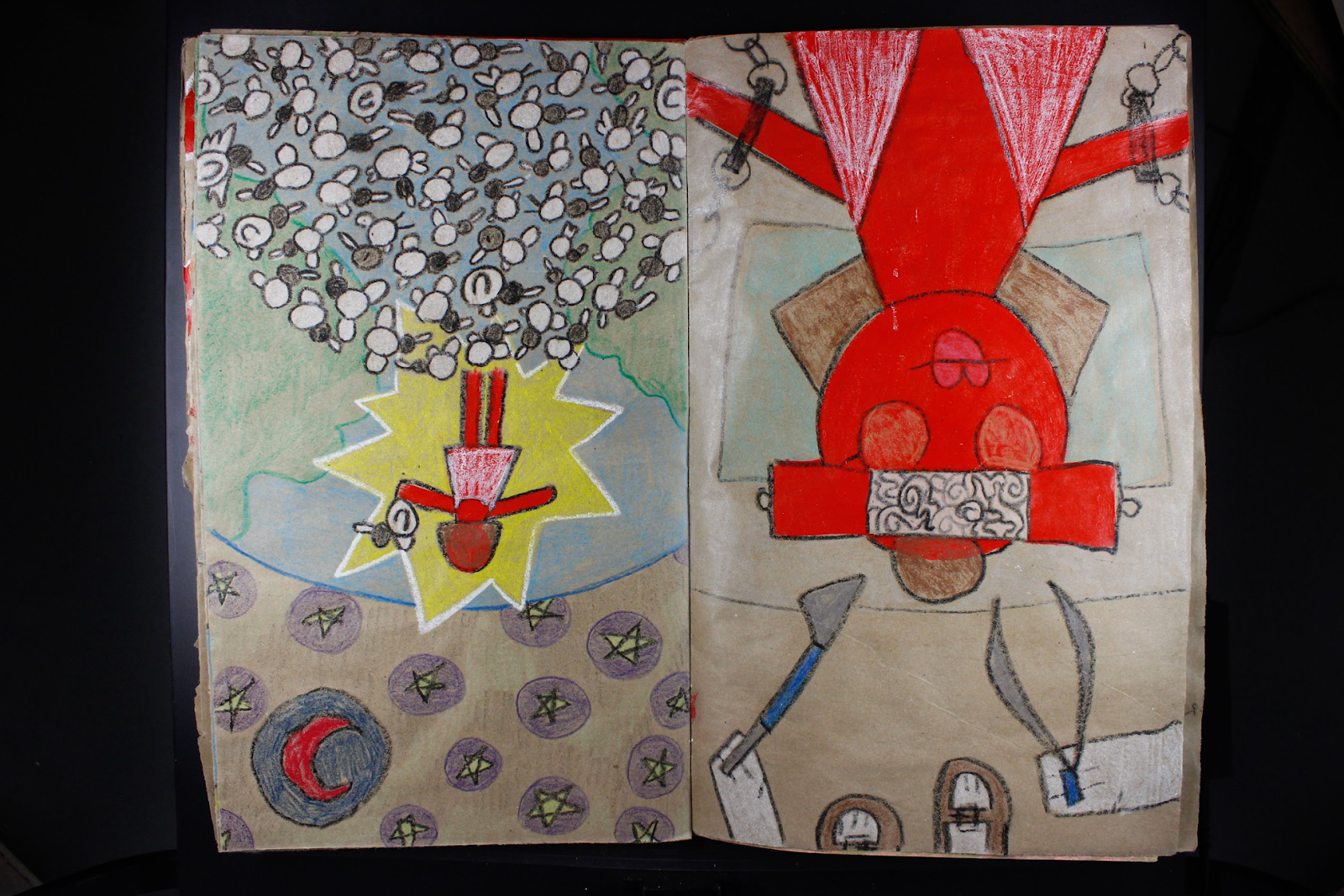
CU: Touching directly on what you just said, a lot of the content in your books is very serious, very personal. Do you feel like the medium you work through allows you to share what otherwise you'd feel uncomfortable sharing?
NS: Yes. I think in addition to the medium, it’s the language and the fantastical nature of them. The books are grounded in reality, but the obscuring that these books do helps me to feel safe to be more vulnerable. The metaphors that I'm using to describe events in my life, feelings that I have, are so far beyond the pale of reality that it makes it easier to express myself through it. In theory, people might not understand exactly what I'm saying, but they can begin to.
CU: Is it a cathartic process, creating the books?
NS: Yes. In the first three books, it was very cathartic to have this character who is me, but who doesn't exist within the bounds of reality. Anything can happen to her; she can do anything. I get to—I mean, this sounds terrible [laughs]—but I get to, like, punish people who I want to punish, to reward myself, or to express that I'm feeling desolate and lonely, but do it in a sort of whimsical, creative way [laughs].
I mean, as I got closer to the show, the last book wasn't as intimately connected to my emotions or influenced by day-to-day experience. I had more of an external pressure to finalize a book and craft a narrative for it. Because of that, it’s probably the most “children's book-y” out of all of them; it's less about me and more about creating a narrative, right? Right. There’s elements of me in the character, of course, but she isn’t wholly me in the same way as in my other books.
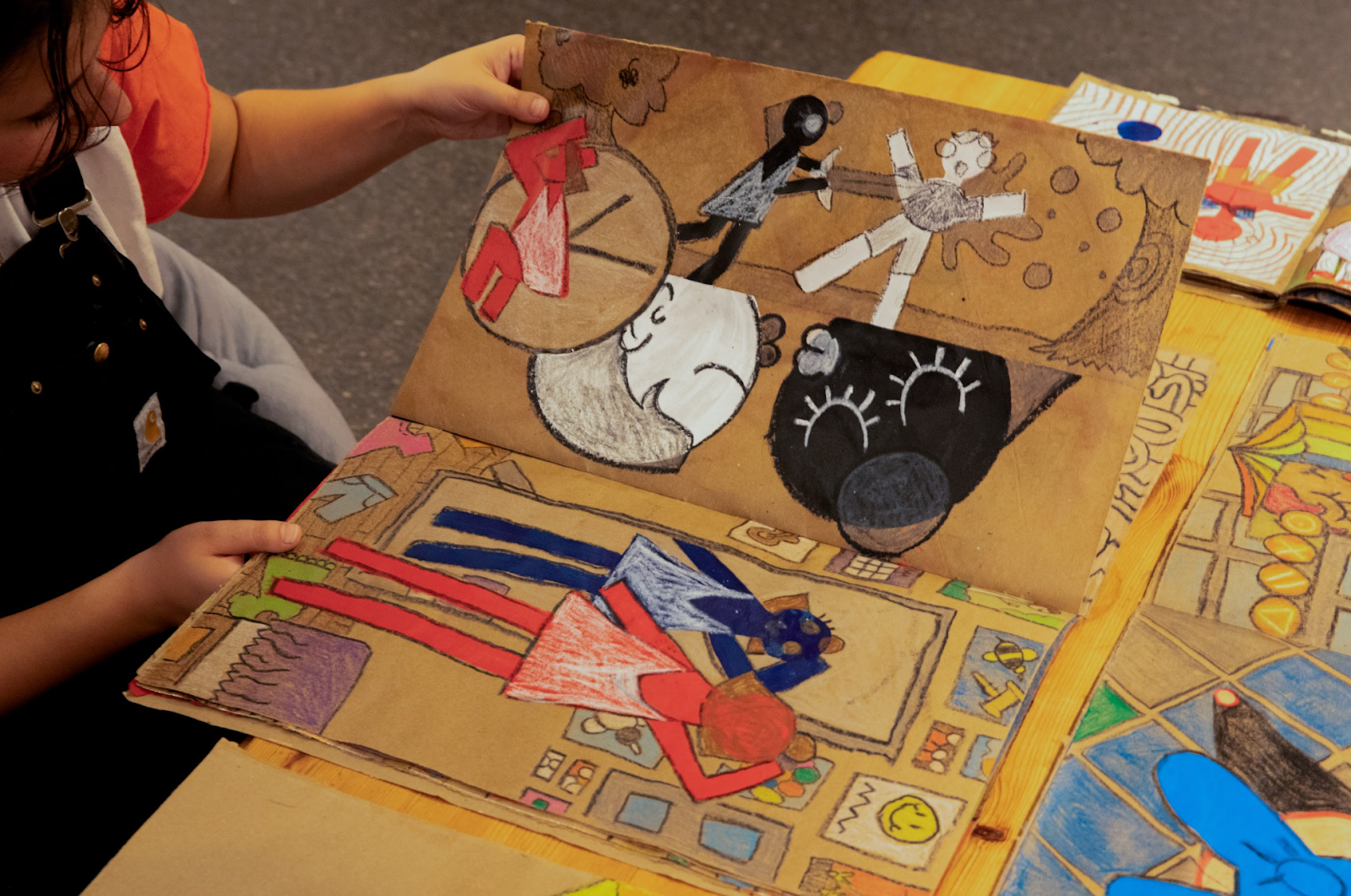
CU: You mentioned that you did a live reading of some of these books during your reception. It’s a totally different relationship with the work. Instead of the audience approaching the work independently, making intuitive associations, and applying narratives, you’re able to sit with an audience and lead a reading, applying a specific narrative. I'm interested in how these two modes of presentation work for you.
NS: Yeah, they are very different, you’re right. I haven't decided (A) if I have a preference between the two, or even (B) if I have to decide between them. But I do love how, when people view it independently, it allows more interpretation; they have to figure it out for themselves, to translate it into something they understand, which is exciting because it’s the mirror opposite of my process of creating them. It’s fun to see how elements that I thought would translate don’t map on directly, not that they’re meant to. When I ask people, like, “What do you think this is?” The answer is often totally different than what I’m expecting. I feel it’s easier to approach it independently, to relate to it with one's own life experience, whereas when I'm telling the story, the audience is more inclined to read into my experience through it. I love reading them to people because I love the moments of understanding—those “aha” moments when the audience gets let into some of the secrets. The little light bulb that goes off in people's brains, that it's like, “Oh, I see.” I think both of the approaches are good.
CU: It speaks to the fact that your practice strikes such a balance between being so vulnerable and personal while being so generous and open at the same time, which really speaks to me. One of my final questions for you is, what’s next for your work? Will you continue making these books? Working within this visual language? Do you anticipate the work will shift? Any immediate projects you're excited about?
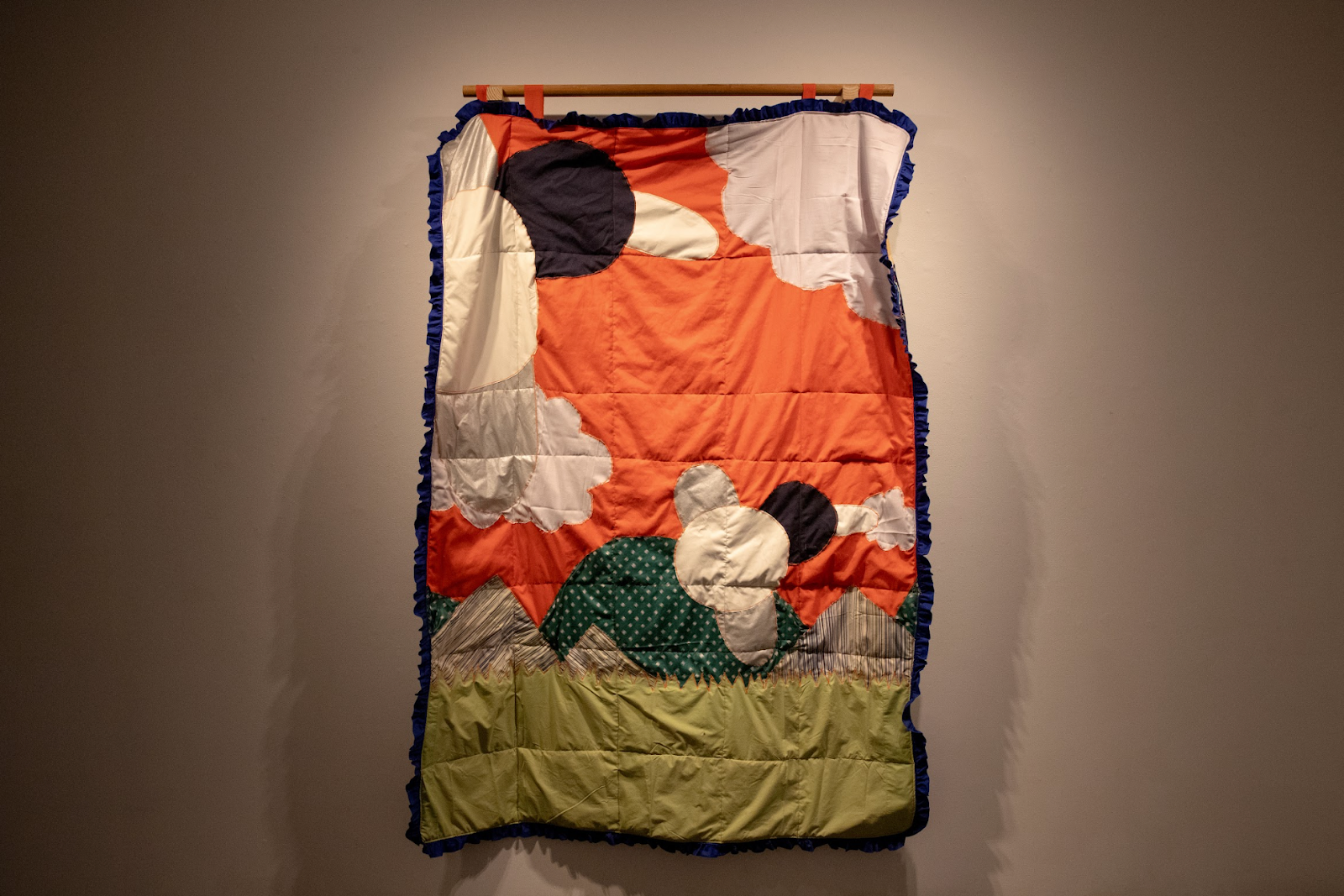
NS: One of the final pieces I created for my show was a quilt, which was a really fun way to create more of a cohesive space in the gallery. The quilt didn't have the narrative element that the books do, but it was the beginning of a process of translating the visual language of the books into fabric. At the moment, I'm interested in adding more narrative to fabric work. I'm making either a quilt or a fabric book, trying to see what works. But I would love to keep making the books, as long as I get my hands on craft paper.
CU: I want to thank you again for just being so generous with your insights and your time. One final. It's a super important question for you. Where can readers see more of your work?
NS: I have an Instagram account, @starhillstudio, and I will have a website, norastarhill.com. Thank you!
(Cover image: Please Read My Diary!!!! installation view. All photographs courtesy of Nora Starhill.)
Cara explores how Natalia Goncharova redirects the ambitious, often technologically oriented rhetoric of Russian avant-garde abstraction toward an intimate and playful subject: domestic cats.
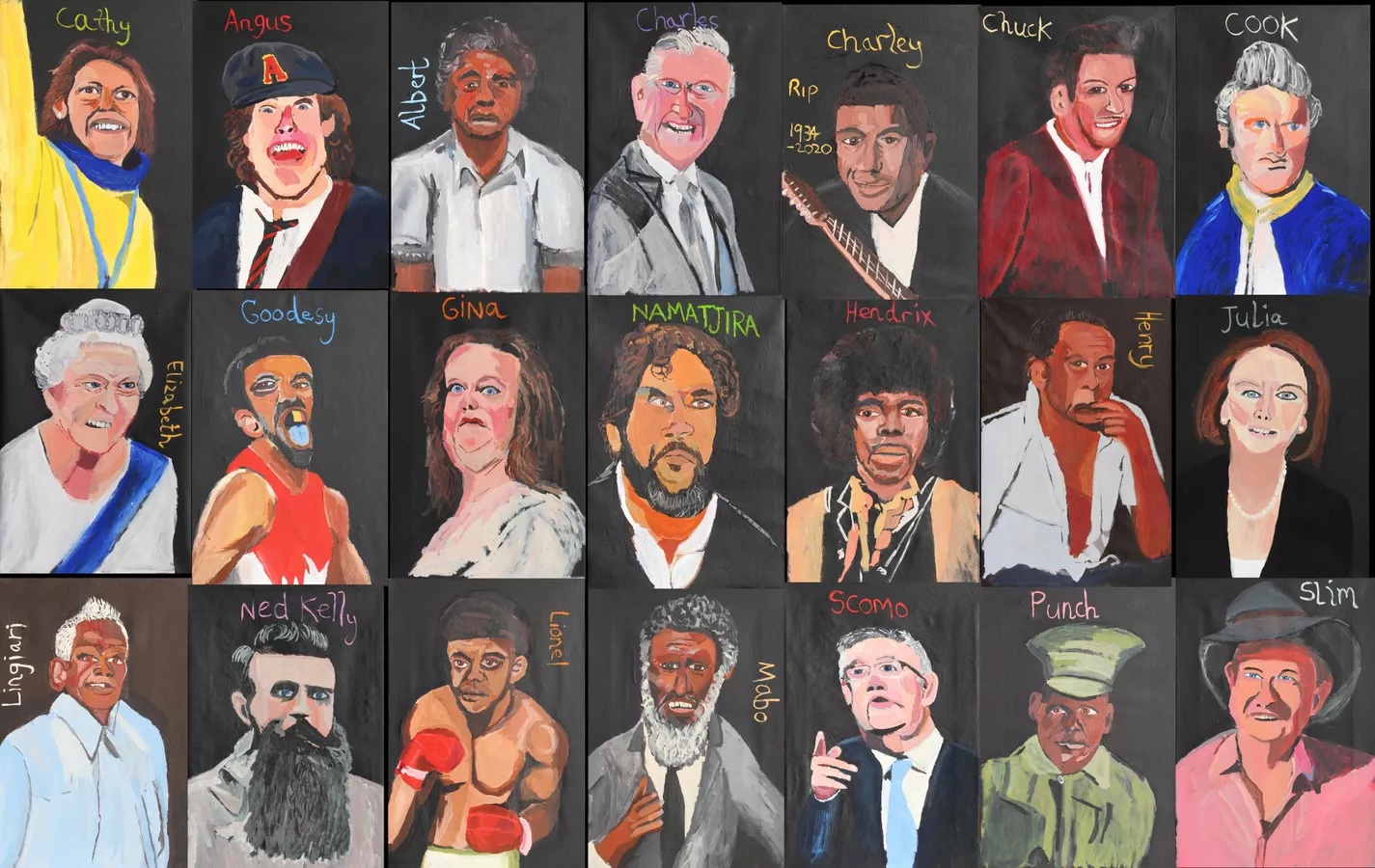
Kate explores how Australian artist Vincent Namatjira redefines portraiture to confront the legacies of colonialism while envisioning a more inclusive future—one expansive enough to embrace all Australians.

Clarke Reynolds (Mr. Dot) talks with the Art Review about interactive art, changing the narrative around blindness, and creating a world where art is more accessible for all.