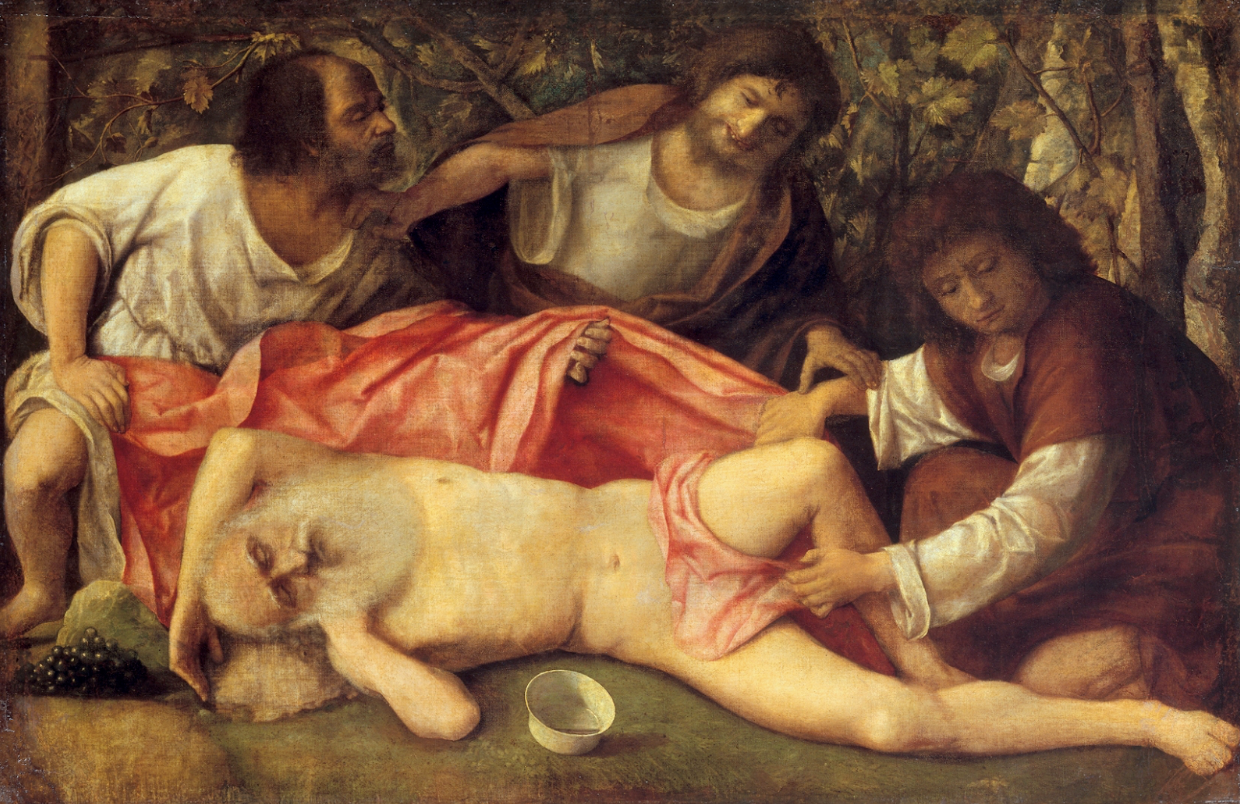
In this article, Parsa considers the legacy of a handful of great historical female artists, arguing against the claims of Linda Nochlin’s 1971 essay, “Why Have There Been No Great Women Artists.” The article begins with a refutation of Nochlin’s methodology and progresses into a discussion of paired case studies of female and male artists, showing their comparable technical skill and artistic achievements.
An examination of artist Cai Guo-Qiang’s practice on the Himalayan Plateau, tracing the ethical tensions that shape the language of land art.
In the David Winton Bell Gallery’s Spring exhibition of Julien Creuzet’s 2024 French Pavilion, plastic took center stage. To better understand why waste surfaces in contemporary art practices, the Art Review interviewed Creuzet, Max Liboiron, and Jorge Otero-Pailos earlier this year. What emerged was a critical conversation concerning the imprint of colonial legacy, capitalist development, and social stratification upon the landscape today.
Genevieve analyzes the mysterious composition of Ivan Aivazovsky’s "Lunar Night on the Black Sea" (1859) and its connections to Russia's shifting identity during the nineteenth century.
A closer look at the lives of designers Ray and Charles Eames, a couple that contributed some of America’s most iconic furniture designs and commentary on mid-century America.
Unearthing mysticism in a 1970 Arbus photograph using John Szarkowski’s concepts of the thing itself, the detail, and the vantage point.