May 1, 2026
Opinions
Opinions
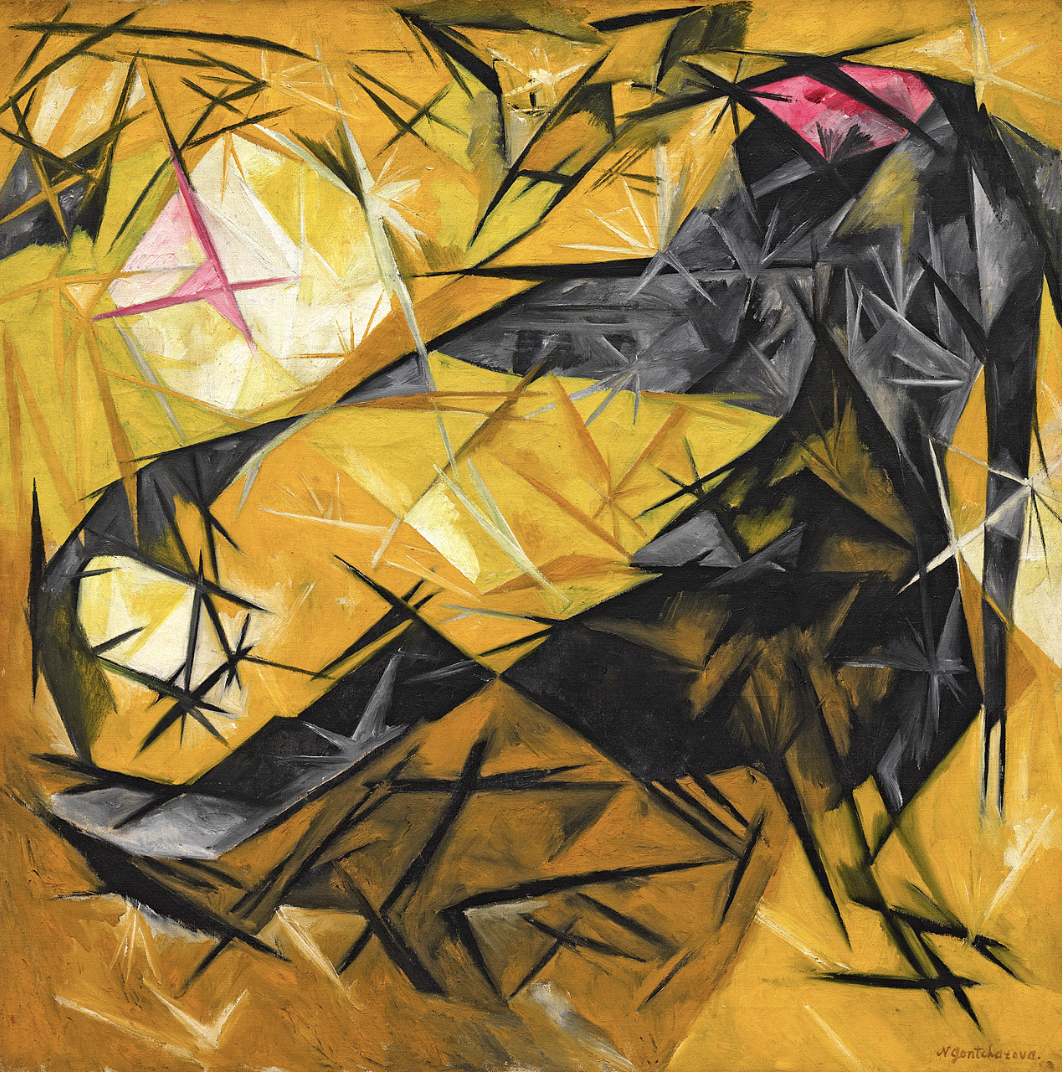
Cara explores how Natalia Goncharova redirects the ambitious, often technologically oriented rhetoric of Russian avant-garde abstraction toward an intimate and playful subject: domestic cats.

In this article, Parsa considers the legacy of a handful of great historical female artists, arguing against the claims of Linda Nochlin’s 1971 essay, “Why Have There Been No Great Women Artists.” The article begins with a refutation of Nochlin’s methodology and progresses into a discussion of paired case studies of female and male artists, showing their comparable technical skill and artistic achievements.


In 1971, American art historian Linda Nochlin published her groundbreaking essay, “Why Have There Been No Great Women Artists?” Indeed, this question would be rather thought-provoking if it were even remotely well-founded. In reality, there have been a substantial number of female artists throughout history who have displayed exceptional technical skill and achieved artistic success that has rivaled and even surpassed their male counterparts. While the beginning of Nochlin’s essay initially seems to counter the narrative of the inferior female artist, it soon becomes clear that Nochlin actually agrees with the proposition that there have been no great female artists. I’ll begin this article with a reflection on the flawed methodology employed by Nochlin in her dismissal of the many illustrious female artists; afterward, I’ll progress into a series of paired case studies of the artworks of female and male artists to show their comparable skillsets. Overall, I intend on challenging the legacy left behind by Nochlin’s influential essay and show the real legacies and impact of great female artists on the history of art.
Nochlin begins her essay with the reasonable assertion that such a question about the absence of great female artists already “falsifies the nature of the issue” by presenting the assumption about the lack of outstanding female artists as a definitive truth. While the reader may have expected Nochlin to then proceed into a list of the numerous great female artists, Nochlin decides to reject this approach, calling it the “feminist’s first reaction.” Instead of embracing the feminist’s immediate intuition, Nochlin completely succumbs to the proposition that there have been no great female artists. In her essay, Nochlin authoritatively states that “The fact of the matter is that there have been no supremely great women artists…no amount of manipulating the historical or critical evidence will alter the situation.” This claim is echoed throughout the entirety of her essay, making it clear that Nochlin truly believes that there has never been a single female artist who deserves to be called great.
While Nochlin makes an earnest effort in revealing the accomplishments of artists, such as Lavinia Fontana, Artemisia Gentileschi, and Angelica Kauffman, she still denies the title of “great” to these artists, arguing that “There are no women equivalents for Michelangelo or Rembrandt, Delacroix or Cezanne, Picasso or Mattisse, or even, in very recent times, for de Kooning or Warhol.” Nochlin’s repeated and continual dismissal of the real achievements of female artists both implicitly and explicitly devalues their truly exceptional work and relegates their accomplishments as inferior to the works of their male counterparts. Nochlin’s rationale behind considering female artists as inferior to that of male artists is truly perplexing, and, interestingly, throughout the entirety of the article, not once does Nochlin actually mention a single work of art. Instead, her assertion that there are no great female artists is based on a nebulous metric she uses about “greatness,” which she defines as synonymous with genius, which is itself “embedded in the person of the Great Artist.” Nochlin grounds her conception of “greatness” on circular reasoning as opposed to any sort of cohesive definition, allowing her to make the unfounded claim that there are no great female artists.
Nochlin claims that the reason such claims about “greatness” were able to be perpetuated is due to art historical writing. On the contrary, the discipline of art history is one of the few in the humanities where we have observable and empirical answers to questions. As opposed to a discipline like history, where we have to wonder whether historical figures were truly as great or terrible as they sound based on historical claims, in art history, we actually have the artworks the artists made. We do not need to rely on stories like those told by Giorgio Vasari about the lives of the artists in order to make vague claims about whether or not artists were “great” based on how they lived their life. We have an observable metric for the greatness of artists — whether or not the art they produced was truly great. This is a sentiment echoed by the Romantic-era art historian John Ruskin when he wrote, “Great nations write their autobiographies in three manuscripts, the book of their deeds, the book of their words, and the book of their art. Not one of these books can be understood unless we read the two others, but of the three the only trustworthy one is the last” (Ruskin, St. Mark’s Rest). Though Ruskin speaks of “great” nations, the idea remains true on the individual level as well; we have a clear and “trustworthy” account of the greatness of an artist based on the “book of their art.”
In this article, I will discuss the artworks made by female artists from the earliest stages of civilization up until the beginning of the 20th century, paying particular attention to technical artistic skill. However, according to Linda Nochlin, such an approach would not be enough to prove the “greatness” of these artists because Nochlin argues that the careers of such women are “modest” when compared to their male contemporaries. To prove this point erroneous and incorrect, I will organize this essay as a series of case studies between works made by female artists and works made by male artists from the same period to show that the artistic skills of female artists were just as technically sophisticated and complex as the skills seen in the works of male artists from the period. Alongside this discussion of the style of the artworks, I’ll also share details about the careers and selling prices of the artworks made by the paired female and male artists to show the numerous cases where art sold by women artists consistently sold for prices comparable to or higher than their male counterparts, as well as examples where women achieved equally prestigious art positions compared to their contemporary male counterparts. Through this stylistic analysis of the artworks left behind by the great female artists of history, I hope to discuss the artistic legacies of these artists, while simultaneously challenging the legacy of Nochlin’s 1971 essay by holding her claim about the lack of great women artists to scrutiny and determining the claim to be unsubstantiated by the historical evidence.
While the majority of this article will be devoted to works of art, I’d also like to take a moment to discuss the notable female artists from antiquity to show that, since the very beginning of art history, when art historians first began writing about art, there have been female artists present in prominent and substantial ways. Art historians generally agree that one of the earliest individuals to document and record works of art into writing was Pliny the Elder, a Roman author under the Emperor Vespasian who died in the explosion of Mount Vesuvius. In Pliny the Elder’s Naturalis historia or Natural History from A.D. 77, Pliny sets out to provide an encyclopedic account of the known world. Pliny’s description of the natural world ranges far and wide, describing astrology, metallurgy, pharmacology, agriculture, and more. Notable to art historians, however, is the fact that Pliny also describes sculpture and painting in his Naturalis historia. Within Pliny’s descriptions of ancient artistic achievements, we hear of the eminent sculptor Phidias, who sculptured the Statue of Zeus at Olympia, as well as the renowned painter Apelles, who was notable for his narrative realism, though none of his original works survive today. However, quite explicitly in Book 35 of his Naturalis historia, Pliny states that “There have also been women artists,” and he provides numerous examples, such as Timarete, Irene, Calypso, Aristarete, Iaia, and Olympias. These women were no ordinary artists either. Pliny explains how “No one else had a quicker hand in painting [than Iaia], while her artistic skill was such that in the prices she obtained she far outdid the most celebrated portrait painters of the same period, Sopolis and Dionysius.” Sopois and Dionysius were both prominent portrait painters from the 1st century B.C., but Iaia was so “quick” and “skill[ed]” in her handling of brushwork that she received higher payment than even the most respected male artists of her time. Indeed, this trend of women achieving higher accolades and monetary payment than male artists is not unique to Iaia either, and we will continue to see similar trends as we progress through the history of female artists. Furthermore, from Pliny, we also hear about how the artist Olympias had a pupil named Autobulus, a male artist of the period, showing how Olympias was elevated to the position of Master Painter and took on pupils in the same way Cimabue would take on Giotto as an apprentice many years later. The way Pliny discusses artists like Olympias and especially Iaia parallels the way Giorgio Vasari records the life of the artist Raphael or any other great artist from history, showing that even since antiquity, great female artists have existed.
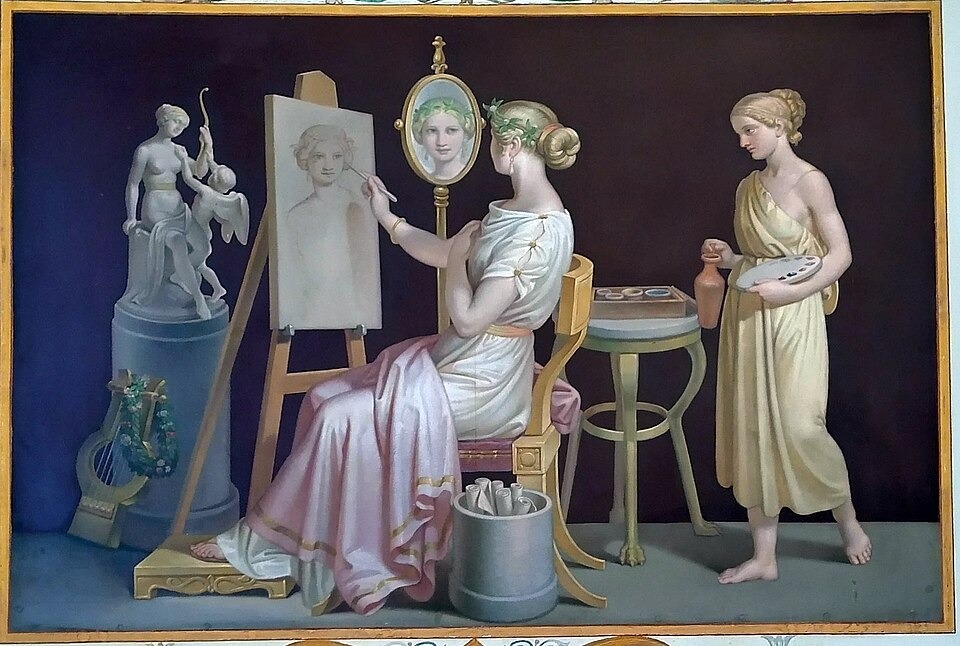
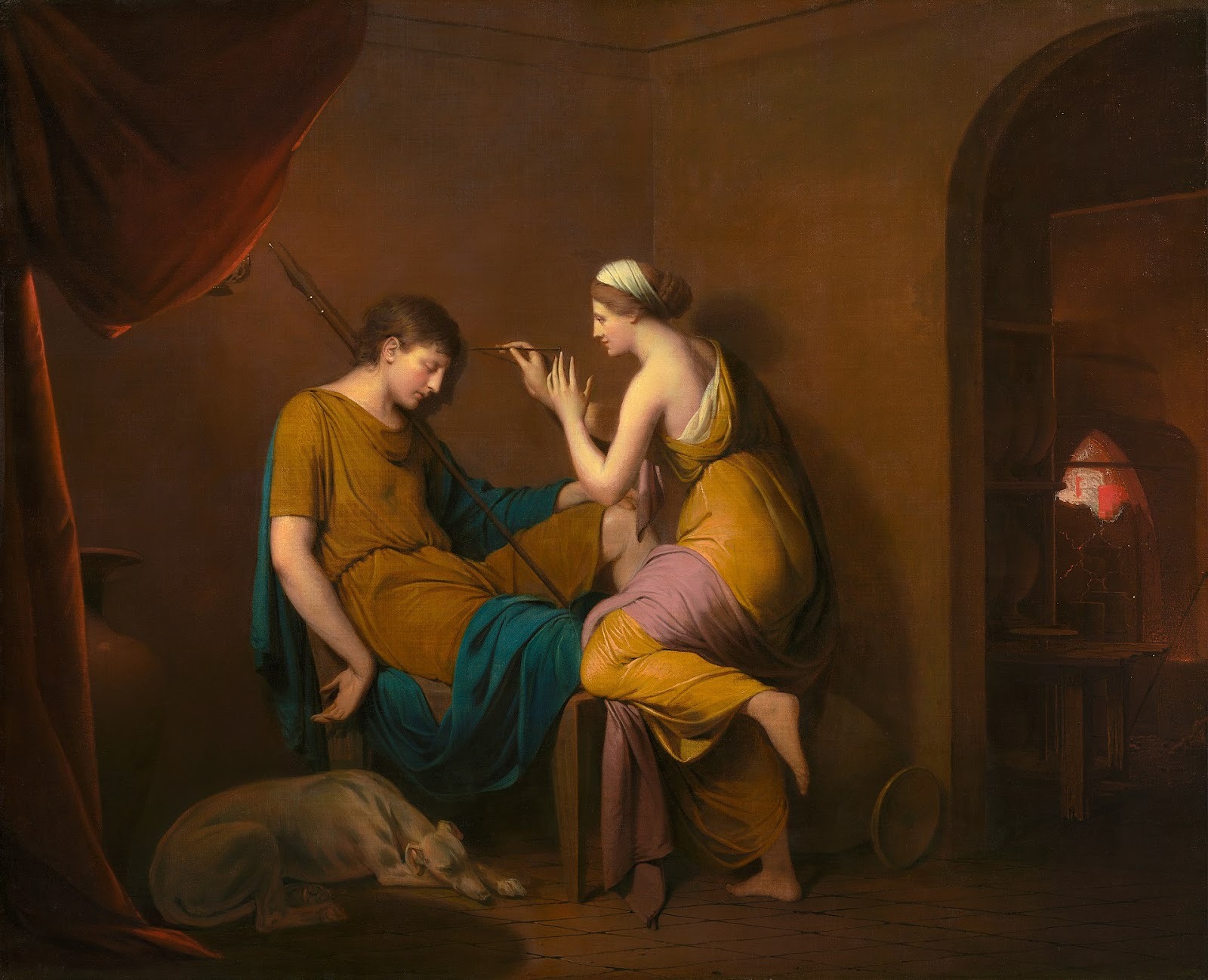
In her essay, Nochlin also pays particular attention to myth-making in the fable of the Great Artist, and in our examination of the ancient great artists, it becomes clear that female artists founded mediums of art as frequently as male artists. By myth-making, Nochlin is not referring to myths like those of Jupiter and Semele or Apollo and Daphne; instead, Nochlin is referencing how grandiose language and subtle or explicit hyperbole can elevate artists to nearly divine proportions. To what may come as a surprise to Nochlin, one of the earliest myths about the great artist does not come from a male artist but actually comes from a female one. In Book 35 of his Natural History, Pliny the Elder discusses how “The question as to the origin of the art of painting is uncertain…but all agree that it began with tracing an outline round a man’s shadows and consequently that pictures were originally done in this way." Who is this mysterious artist who traced an outline of a man’s shadow and started the tradition of painting, which was emulated by all who followed her? The person recorded as founding the art of painting itself was a woman named Kora of Sicyon. Kora was a Sicyonian girl who was deeply enamored with a beautiful Corinthian boy who had been sojourning in Sicyon for a short period of time. While longingly gazing upon the shadow of her lover, who was holding up a lamp in the darkness, and realizing that she would one day lose her lover, Kora had a sudden realization that she could trace the boy’s shadow and capture his likeness for all eternity. The person of Kora as a founding myth in the narrative of painting challenges nearly every conception of the Great Artist. The expectation is that the great artist is driven with artistic zeal after being inspired by a beautiful female muse; however, the legend of Kora reverses our post-Nochlin expectation of a great artist by showing how women artists could just as easily be inspired and driven to art by male muses. We can compare the person of Kora of Sicyon to another founding figure in ancient art, Butades of Sicyon, Kora’s father. Butades of Sicyon founded the art of relief carving after seeing Kora’s painting of her Corinthian lover and deciding to cover the outline of Kora’s lover with clay, creating the first relief carvings of history. It is important to note that not only are Kora and Butades put on equal standing, but Kora is prioritized in Pliny’s narrative. Butades’ claim to fame is dependent on the technical skill of Kora, and Kora and Butades create a narrative about how the art of the male artist is influenced and inspired by the artwork of the female artist. The story of Kora of Sicyon is also not unknown to the modern world, and we frequently see this scene of the founding of painting recreated in works of art. For instance, Joseph Wright of Derby painted an oil on canvas in 1784 called The Corinthian Maid, where an active female artist paints a sleeping youth with zeal and vigor. In the composition, one can also see a small dog lying by the boy’s side, symbolizing the fidelity and faithfulness of the two lovers, as well as Kora’s desire to portray a faithful representation of her lover in art. Likewise, the artist Benjamin West also made a print of the Origin of Painting from 1795, which depicts Kora’s task as a collaborative and reciprocal enterprise, where her lover holds up the lamp, and she paints the shadow that arises from the contrast between the light of the lamp and the darkness of the room. While a few depictions of Kora attempt to remove her autonomy and independent artistic skill by adding a putti or cupid who guides her hand, such as in Alexander Runciman’s version of the scene from 1773, the lion’s share of the works depicting the scene show Kora in an active position of painting, which can be seen in works by Louis Ducis, Jean-Baptiste Regnault, Joseph Benoît Suvée, Jean Raoux, and other artists. Thus, in both the original story of Kora of Sicyon, as well as reproductions of the story in art, we see the incredibly influential role Kora played in founding the art of painting itself, meaning that every great painter after Kora owes Kora their gratitude because her primordial greatness in art opened the door for painters like Raphael, Caravaggio, and Rembrandt to even be considered great artists.
The first comparison between the careers of two artists that is pertinent to our discussion is that of the Italian Mannerist artist Lavinia Fontana and the Flemish Baroque artist Anthony van Dyck. While I intend on comparing artists from the same time period, Fontana and van Dyck are only separated by a period of about 40 or 50 years because Fontana worked towards the end of the Mannerist era, while van Dyck began painting at the beginning of the Baroque period. The rationale for comparing these two artists in particular also stems from the fact that Fontana’s earliest biographer, Carlo Cesare Malvasia, directly compares Fontana’s work to that of van Dyck. In his 1676 book Bolognese Painters' Lives, Malvasia claims that the works by Fontana sold for the same price as those sold by van Dyck, one of the greatest court portraitists in all of history, alongside Velázquez and Hans Holbein the Younger. Indeed, Lavinia Fontana was the primary breadwinner in her family, and it was the sale of her artworks that financed her family of 11 children. Indeed, Lavinia’s husband, Gian Paolo Zappi, abandoned his own artistic career to serve as an agent and assistant to his wife and as a caretaker for the 11 children. Indeed, Fontana was considered a celebrity artist who would be recognized by passersby in Bologna. Malvasia claims that “All the Ladies of the City would compete in wishing to have her close to them…the greatest thing that they desired would be to have her paint their portraits.” Likewise, an artist who was contemporary to Malvasia, considered Fontana “rare and excellent” and a “pittore singolare” or “Singular painter.” Thus, when comparing the artistic career of Lavinia Fontana to that of van Dyck, it becomes clear that the differences in the successes of these two artists are not sufficient to warrant any difference in their “greatness.”
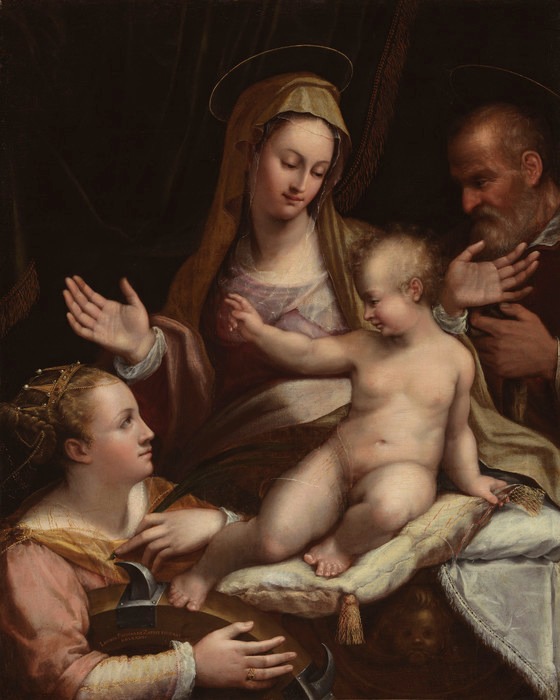
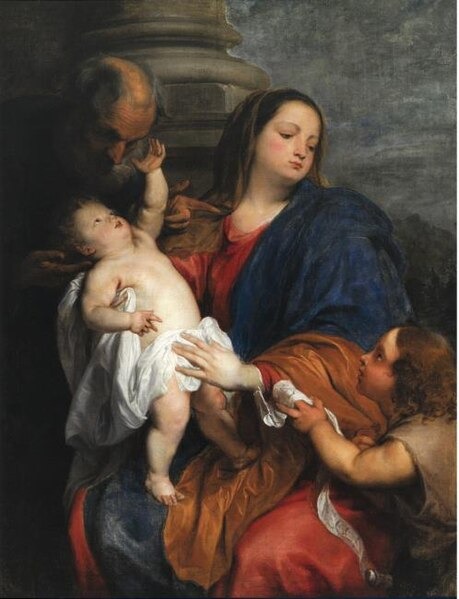
Two works that are worth comparing between Lavinia Fontana and van Dyck are Fontana’s 1581 The Holy Family with Saint Catherine of Alexandria and van Dyck’s The Holy Family with the Infant Saint John the Baptist from 1625. The two works are remarkably similar in their compositional arrangement and both depict a play of gazes between the figures and a dynamic Christ Child who engages with the saints on the canvas. In regard to the van Dyck, the artist depicts the Christ Child standing up on the Virgin Mary’s lap, as He bends his torso backwards and reaches to both see and touch the face of His adopted father, St. Joseph. In return, St. Joseph gently grasps the back of the Christ Child’s head and stares directly down into his adopted son’s eyes in a gesture of paternal affection. On the other hand, the Virgin Mary elegantly turns her head downward towards the infant St. John, and an astonished young St. John stares back at the Virgin Mary with wide eyes, mouth agape, and flushed cheeks, as if he has never before seen such a beautiful woman. Van Dyck’s technical expertise is shown in the way he expertly divides the composition in two ways. He divides the canvas vertically down the center with the locked gazes of the Christ Child and St. Joseph on the left side, and the exchange of glances between the Virgin Mary and St. John the Baptist on the right side. Likewise, van Dyck also divides the canvas with a diagonal running from the upper left to the lower right through the illuminated and curved body of the Christ Child that connects with the Virgin’s hand and picks up with the scroll of St. John the Baptist, dividing the composition diagonally into two triangular segments. Similarly, Fontana displays an analogous and comparable artistic mastery of painting with her work. As opposed to a standing Christ Child like in the van Dyck, Fontana depicts the Christ Child reclining gracefully on a sumptuous pillow, as He stares down at St. Catherine of Alexandria and blesses her with His muscular right arm. As a result, St. Catherine points to herself as she stares back at Christ, seemingly asking the Lord if she is worthy of such a blessing at His hands. Through this exchange between St. Catherine and Christ, Fontana brilliantly alludes to another subject frequently found in art: The Mystical Marriage of St. Catherine. The scene of the mystical marriage of St. Catherine refers to a vision by St. Catherine of Alexandria, where she entered into mystical matrimony with Christ at a divine wedding ceremony. The allusion of the wedding ceremony between Christ and St. Catherine is further explained through the detail of Christ touching St. Catherine’s wheel, the instrument of her martyrdom, with His foot, indicating that St. Catherine’s death, through the wheel, consummated her direct, physical relationship with God and brought her into ultimate intimacy with Christ, the bridegroom. Behind Christ, the Virgin Mary serves as the Throne of Wisdom for her Son, and she stares down at Him affectionately with her hands wide open in what is called an Orans pose. The orans posture is a gesture of prayer that can often be seen in early Christian art in the Roman catacombs, and during the Holy Mass of the Catholic Church, the priest also holds up his hands in the orans pose when leading the Lord’s Prayer, the prayer given by Christ to his disciples. Thus, the fact that the Virgin Mary is shown in the orans pose indicates that she adores Christ not only as a son but as the Lord as well. Finally, like in the van Dyck, we also see St. Joseph obscured by darkness in the background at right, which is a common and unfortunate placement for St. Joseph in scenes of the Holy Family. Likewise, Fontana also clearly diametrically divides the composition from St. Catherine at the bottom left to St. Joseph at the top right, creating a clear message about the role the saints play as intercessors in leading to Christ who is positioned in the center of the composition and connects every single one of the figures through his dynamic pose that stretches across the composition. Thus, through formal and iconographic analysis, one can understand the way in which Fontana and van Dyck are working with the same iconographic vocabulary and displaying similar artistic mastery of painting techniques, regardless of the gender of either of the artists.
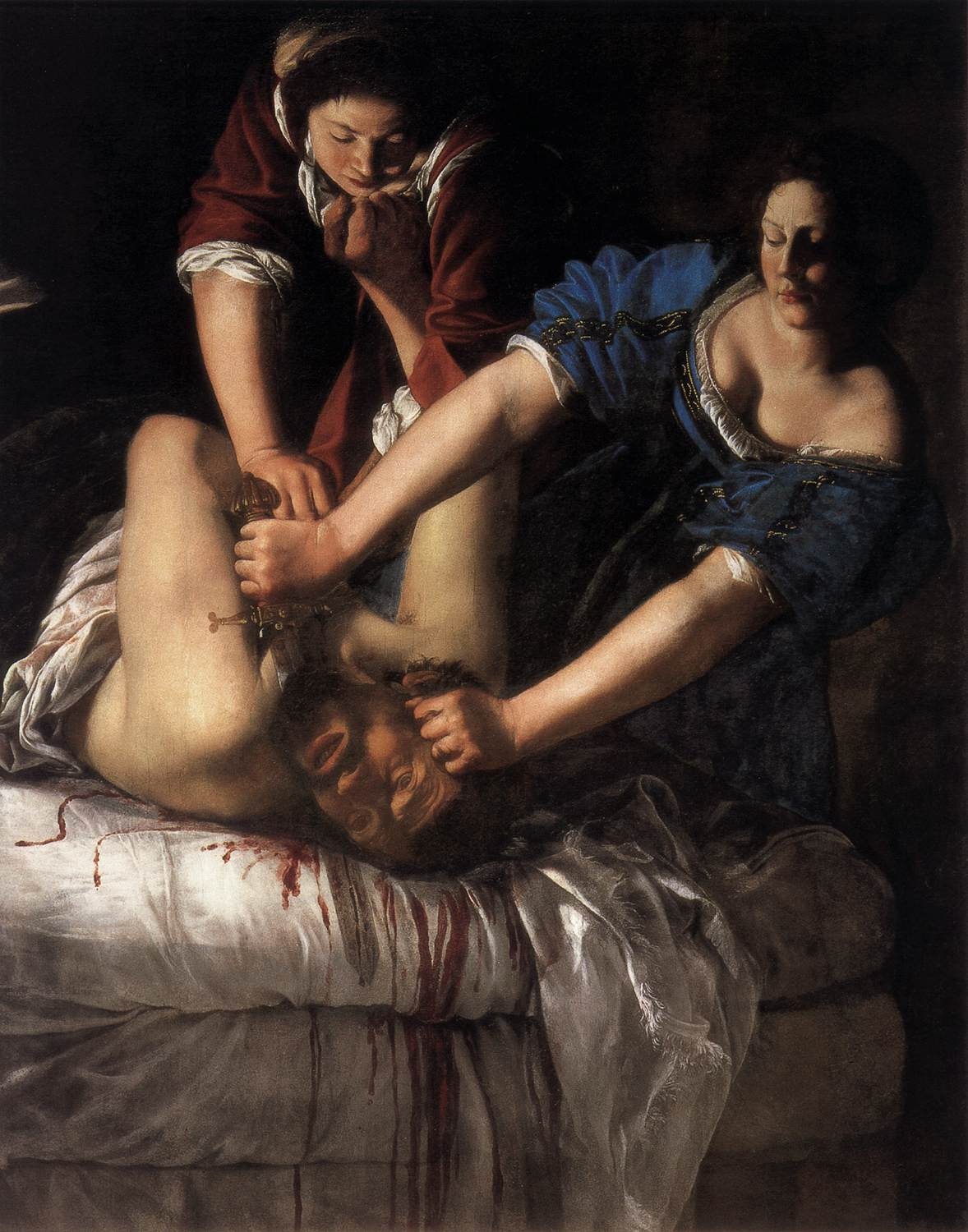
Another key comparison worth being made between two artists is between the work of Caravaggio and Artemisia Gentileschi, which are remarkably kindred in terms of their tenebristic artistic style and sense of heightened drama and emotion. In order to best understand the stylistic differences between the works of both artists, we can compare Artemisia’s Judith Slaying Holofernes from 1621 to Caravaggio’s 1599 painting of the same scene. The scene depicts the climactic moment from the Book of Judith in the Old Testament, when the biblical heroine Judith beheads the general Holofernes who had been laying siege to her native city of Bethulia. Caravaggio’s work depicts Judith holding down Holofernes’ hair with her left hand and using her right hand to hold her sword, as she slices through Holofernes’ neck and severs his head. Caravaggio creates a sense of operatic drama and emotion by pushing the figures into the foreground painting, and the only element present in the backdrop is a red curtain, which further heightens the theatrical nature of the work. While Caravaggio pays some attention to articulating the musculature of Judith’s forearm, the strength of Judith seems to pale in comparison to the overwhelming Goliath-like power of Holofernes, posing a question about how Judith is able to singlehandedly defeat such a powerful foe. The answer to this question is clear in the Book of Judith, and like David, Judith is able to vanquish a much stronger foe through the grace of God, and this can be seen in Judith’s prayerful supplication, when she prays, “this will be a glorious monument for thy name, when he shall fall by the hand of a woman” (Judith 9:15). Like Judith conquering Holofernes in the stealth of the night, I’d argue that Artemisia Gentileschi also conquers and surpasses, or at least parallels, Caravaggio’s technical proficiency in executing the narrative of Judith and Holofernes. Like Caravaggio, Artemisia also pushes Judith, Holofernes, and the maidservant into the foreground. However, while Caravaggio leaves the viewer with a sense of skepticism about whether the dainty but graceful figure of Judith could really slay Holofernes, Artemisia really brings attention to the sheer force necessary to cut off Holofernes’ head. In Gentileschi’s work, both Judith and her maidservant work alongside each other to slowly and painfully cut through the flesh of Holofernes’ neck, and one can see how the skin on the wrists of the women begin to contort as they forcefully continue cutting. Likewise, unlike Caravaggio’s work, where Holofernes’ blood bursts out like an elegant fountain, Artemisia creates this naturalistic and truly visceral account of blood splattering over the bedsheets and slowly spilling onto the ground. Thus, like Judith overpowering Holofernes, it becomes clear that Gentileschi’s technical skill in executing her Judith Slaying Holofernes even surpasses the drama and artistry of Caravaggio himself.

Perhaps one of the most compelling arguments behind the reason for how women were recognized as great artists not only during our own time but their time as well is the case study of Rachel Ruysch, whose paintings often sold for twice as much as Rembrandt’s, according to the National Gallery of Art in London. Rachel Ruysch was born to Frederik Ruysch, a notable Dutch scientist who kept an expansive collection of anatomical, zoological, and botanical specimens, and the work of Ruysch often illustrates a close study of many of the preserved samples that would have been located in her father’s collection. At the tender age of 15, Ruysch began studying as an artistic apprentice under the still life painter Willem van Aelst, where Ruysch learned to paint floral compositions with empirical precision and studied exactitude. Ruysch’s work was well received in the Netherlands, which established Ruysch as one of the most prominent figures in the Dutch artistic scene, which is especially notable given that Ruysch worked during the Dutch Golden Age, when her contemporaries included Vermeer, Rembrandt, and Jan Steen. Indeed, Ruysch was called “Holland's art prodigy” by her biographers, and the National Museum of Women in the Arts explains how Ruysch’s celebrated status as an artist and “reputation has never waned” in history. It is important to note that reputations have waned for other artists, including Judith Leyster, whose works were primarily attributed to the artist Frans Hals after her death. However, Nochlin’s claim is that there are no great women artists, not few great women artists, which would be a far more accurate claim. On the other hand, Rembrandt, who is now considered one of the greatest artists in history, was far less successful than Rachel Ruysch during their lifetimes.
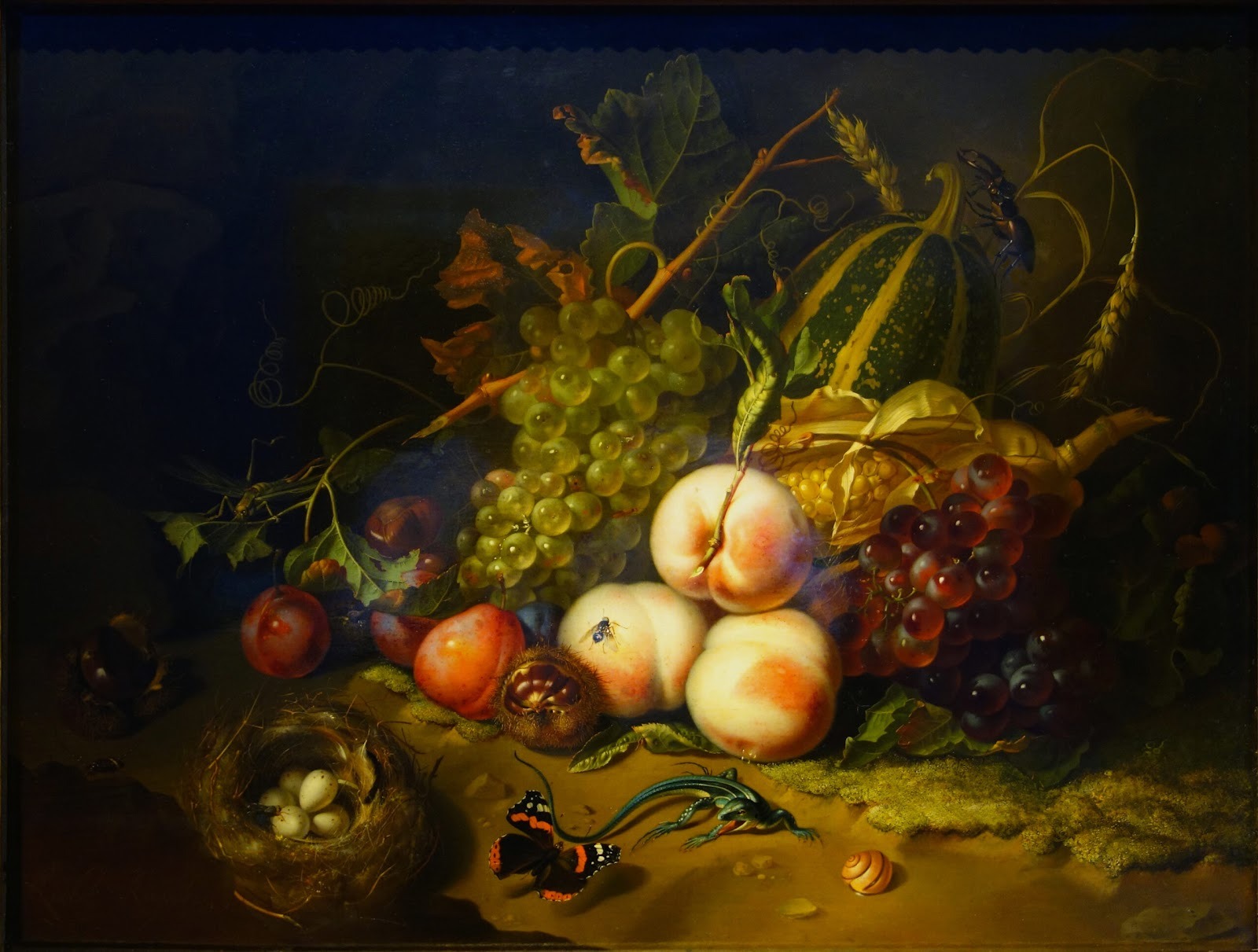
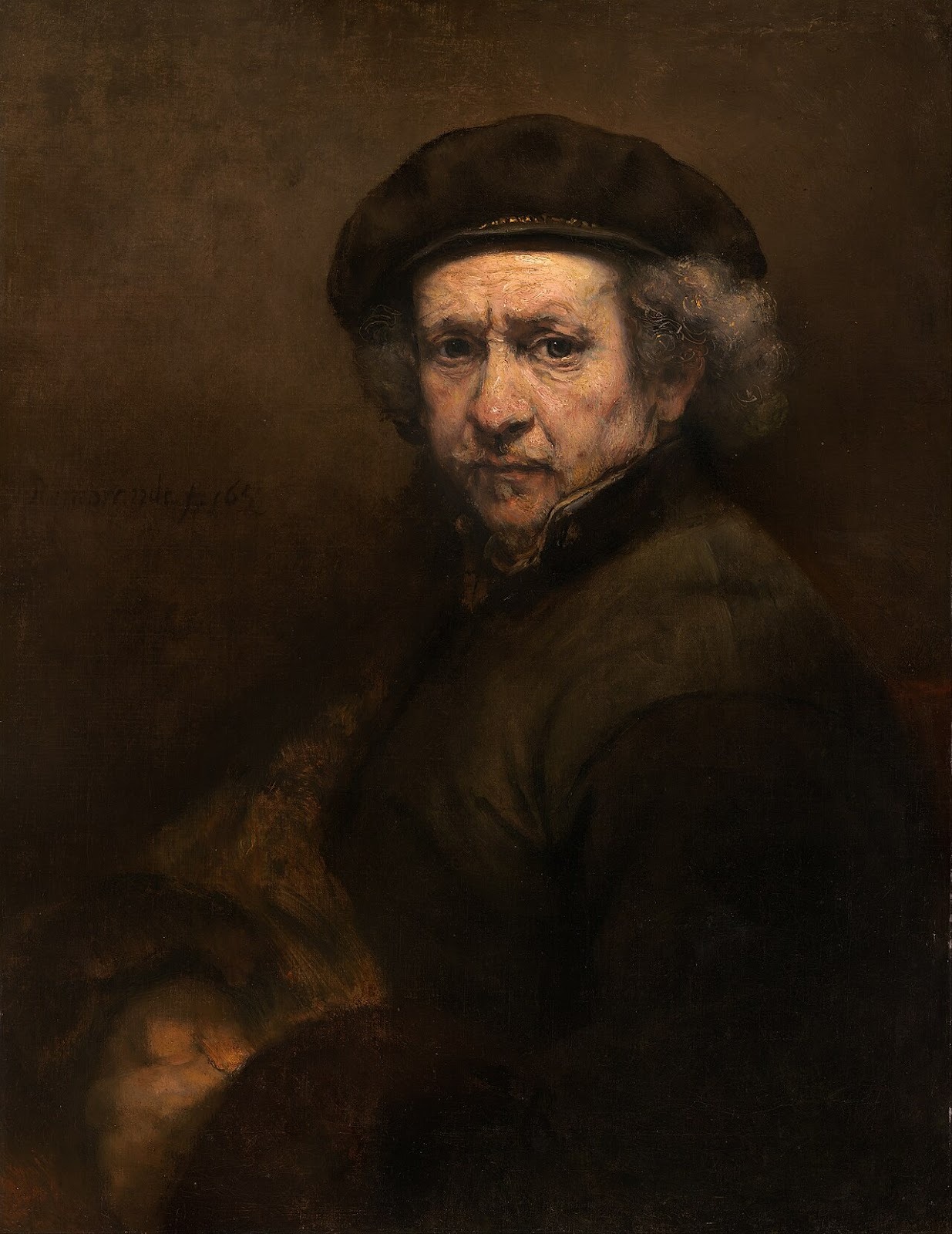
In the same way that Rembrandt revolutionized the genre of portraiture with his self-portraits in oil or etching, Ruysch revolutionized the genre of still life. To better understand the contributions of both Ruysch and Rembrandt to still life and portraiture, respectively, we can compare Ruysch’s 1711 Fruit and Insects with Rembrandt’s Self-Portrait from 1659. Ruysch’s canvas depicts squash, corn, chestnuts, and other autumn harvest vegetables. Ruysch also embeds her still life with a religious dimension with the inclusion of wheat and grapes, alluding to the Sacrament of Holy Communion. Displaying vegetables and fruits from particular seasons and embedding symbolic messages into them were all common techniques for still lives in the Baroque era, but Ruych’s real innovation to the genre comes from the incredibly close attention she pays to individual details of the still life. For instance, one can see a black beetle on the squash, a fly on the peaches, and a black-orange butterfly that appears to be preparing to flee the attack of a ferocious lizard that has its mouth agape and appears ready to pounce at the butterfly. The close attention to the dust collecting on the fruits, fuzz on the peaches, and colored pattern on the butterfly all work to draw the viewer into a lively and wondrous microcosm of the universe. In a similar vein, the lizard, butterfly, beetle, and bird’s nest also turn the still life into a Wunderkammer or cabinet of curiosities of sorts, where the viewer is invited to contemplate each of the specimens of flora and fauna and how the species relate to each other. On the other hand, in Rembrandt’s Self-Portrait from 1659, Rembrandt provides the viewer with an intimate and personal presentation of himself as a man who was weathered the slings and arrows of life, which is certainly true when considering the fact that three of his children died shortly after their births, his wife Saskia dies at the age of 29 from tuberculosis in 1642, and Rembrandt himself went bankrupt in 1656. Thus, by 1659 when Rembrandt made this portrait, Rembrandt had truly lost everything. In his self-portrait, Rembrandt emphasizes the wrinkles on his forehead, the bags under his eyes, and his graying hair, drawing attention to his imperfections and flaws. However, unlike the veristic portraits of Republican Rome that intended to bestow the Roman patrician or senator with a sense of dignity and venerability, Rembrandt does not ask the viewer to consider him with gravitas. Instead, Rembrandt requests the viewer look upon him with empathy, as he stares directly out at the viewer with large, sorrowful eyes. Whereas former self-portraits depicted the artist holding the instruments of her craft, such as a paintbrush or chisel, Rembrandt removes all the stagedrops and turns the still life into an introspective and intimate view directly into the life experiences and moral psychology of the artist. Thus, in the same way that Rembrandt revolutionized the genre of self-portraits, Rachel Ruysch reshaped the potential of the still life into a genre that could record detailed and factual accounts of the observable world.
For the sake of length and brevity, the last pair of artists I will compare are the artists Vigée Le Brun and Charles Le Brun, who were both court painters to French royalty and distantly related as well. While Charles served under King Louis XIV, Vigée Le Brun was the primary court painter of Marie Antoinette. Both Charles Le Brun and Vigée Le Brun were incredibly influential in the history of art for their ability to present French royalty as they wanted to be depicted. On one hand, Charles Le Brun uses the art of painting to elevate King Louis XIV to near divine proportions, reflecting Louis XIV’s absolutist rule and status as the “Sun King.” On the other hand, Vigée Le Brun had the opposite task—showing the humanity of the House of Bourbon by portraying their sympathetic and relatable qualities. In this sense, one can already see how Charles Le Brun and Vigée Le Brun had very similar tasks in terms of using art to portray the royals in a favorable light; the only difference was how the two artists portrayed the French kings and queens. Two works to compare the similar styles and purposes of their art would be Charles Le Brun’s Apotheosis of King Louis XIV and Vigée Le Brun’s Marie Antoinette and Her Children. In his work, Charles Le Brun quite literally elevates the king to the status of divinity, reflecting his divine right to rule. The composition depicts Louis XIV being crowned by divine Providence, as angels fight off Louis XIV’s enemies. The only figure staring directly out at the viewer is Louis XIV, and he appears calm and calculated, presenting himself as a trustworthy and holy monarch. On the other hand, by the era of Vigée Le Brun, the tides of favor had turned against the French monarchs. In her work Marie Antoinette and Her Children, Vigée Le Brun portrays the French queen as a kind and caring mother who attends to her children. Seated on the lap of Marie Antoinette is her son Louis Charles, and the queen affectionately lays her hand across her son, transforming the composition into a kind of secular Madonna and Child. To the right of Marie Antoinette is her daughter, who tenderly clasps her mother’s arm and looks up to her, both literally and figuratively. Finally, Marie Antoinette’s son can be seen to the right of the cradle, pointing to Marie Antoinette, her infant son, and her young daughter, who all come together to form a pyramidal composition of harmony. Despite being lavishly dressed in her attire and depicted around an incredibly ornate room, Marie Antoinette is present as a model of motherly virtue for affectionately raising her children to be future rulers of France. Overall, we see how the work of master painters Charles Le Brun and Vigée Le Brun both served incredibly important roles in attempting to transform the social fabric of French society to address the concerns and desired presentation of the French monarchs.


The reality is that Nochlin overplays her hand in her 1971 essay; if she were to argue that there were fewer great female artists compared to great male artists, this would be a reasonable claim, but instead, Nochlin decides to pursue the unequivocally and demonstrably flawed argument that there is not and has never been a single great female artist. No matter what conception of greatness one uses, whether it be one based on professional achievement, monetary compensation, technical skill, or public recognition, there will always be female artists who fit into every single one of these categories or any conception of greatness for that matter. If Nochlin were to retitle her essay, “Why Have There Been Fewer Female Artists Than Male Artists,” she would have had a defensible claim, but as it stands, Nochlin’s essay diminishes and belittles the immense artistic value brought about by the great female artists of history.
It has been over 50 years since the publication of Nochlin’s essay, and the time has come to challenge and overthrow a legacy that has been based on lies and myths that have been far more pernicious than any myths of history because they have masqueraded as the truth and beguiled the public for far too long. It is precisely perspectives like those expressed by Nochlin in her essay that are the reason why people tend to systematically relegate female artists as inferior to their male counterparts. This relegation of works made by female artists as inferior has brought about a damnatio memoriae of female artists within the memory of the general populace, making it seem as if the reason why so many female artists are little-known is due to the fact that there are not many great female artists. However, like Septimius Severus removing the damnatio memoriae on Commodus, my hope has been to chronicle the great women artists and show that they have existed as prominent and influential artists all throughout history. Female artists are not margins in the corner, not exceptions to the male artist; a female artist is simply an artist, no more, no less. It is time that we reconsider Nochlin’s essay that marginalizes the true accomplishments of women in art history and recognize the real legacies of great female artists.
(Cover Image: Sofonisba Anguissola, Self-Portrait at the Easel, 1556, Oil on canvas, 66 x 57 cm, Łańcut Castle Museum in Poland.)
Cara explores how Natalia Goncharova redirects the ambitious, often technologically oriented rhetoric of Russian avant-garde abstraction toward an intimate and playful subject: domestic cats.
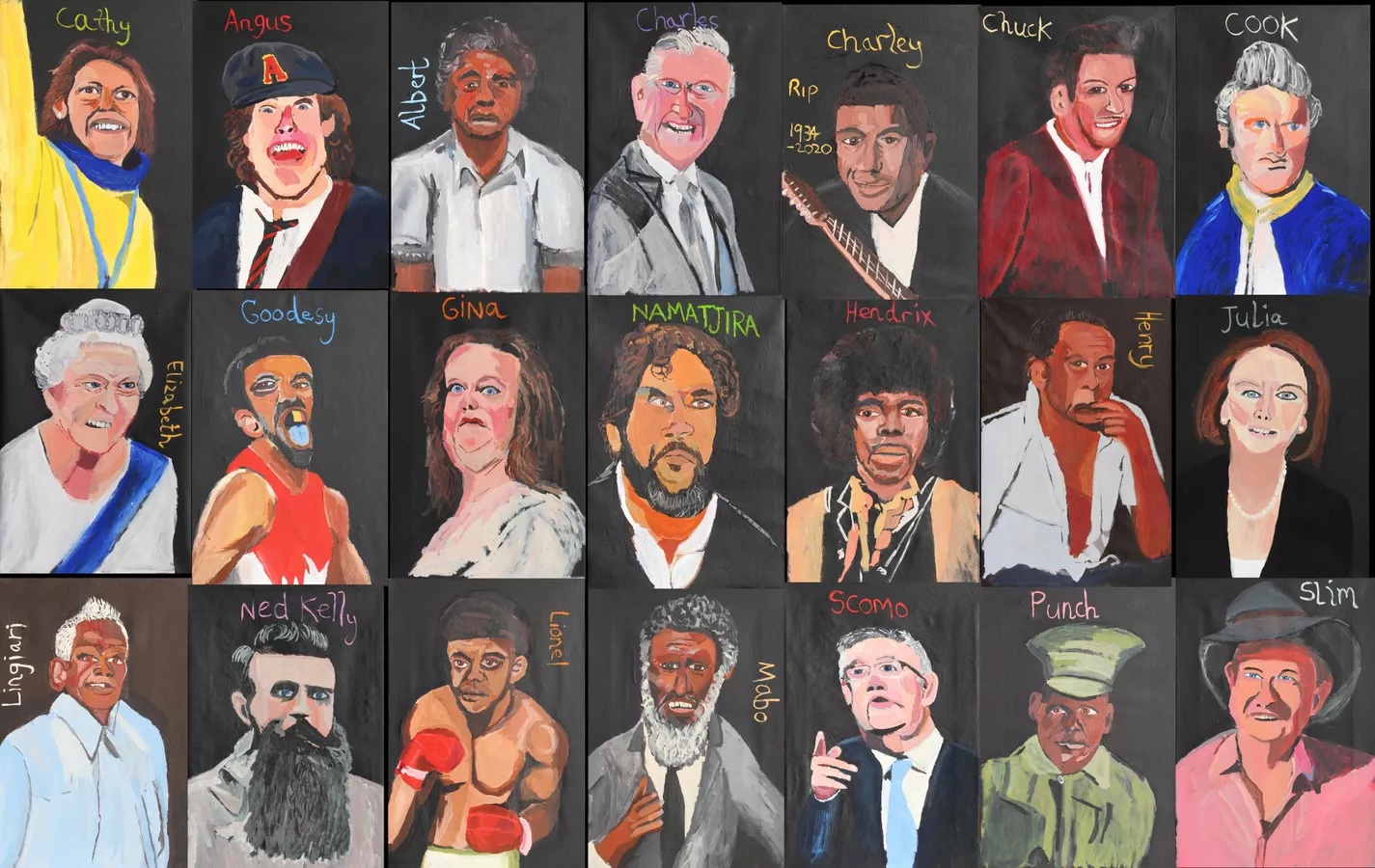
Kate explores how Australian artist Vincent Namatjira redefines portraiture to confront the legacies of colonialism while envisioning a more inclusive future—one expansive enough to embrace all Australians.

Clarke Reynolds (Mr. Dot) talks with the Art Review about interactive art, changing the narrative around blindness, and creating a world where art is more accessible for all.