
.jpg)


May 1, 2026
Opinions
Opinions
Cara explores how Natalia Goncharova redirects the ambitious, often technologically oriented rhetoric of Russian avant-garde abstraction toward an intimate and playful subject: domestic cats.

Can beards convey sociopolitical narratives? Brady analyzes the Renaissance popes’ adoption of facial hair (or lack thereof) as a means to channel the spirit of the Roman emperors.


It is undeniable that the Renaissance Popes’ facial hair sensibilities originated from the greater aesthetic acculturation of Roman and Jewish ideas into the single font of Christianity across the 1st-century Roman Empire, for, indeed, “‘beards came into the Christian world with a heavy baggage of pre-historic and classical symbolism of which the Church fathers were not unaware’” (1). Although Roman societal perceptions of facial hair were by no means uniform, the general masculine milieu surrounding it was essentially summarized by the 1st-century Roman poet Martial as “one of moderation, balancing between the excessively hairy, which is equated with ‘too much man,’ and the inadequately hairy, equated with ‘too little man’” (2). Ergo, pagan Romans viewed men with too little hair as effeminate, sexually passive, and Oriental, and men with too much hair as wild, animalistic, and barbarian (3); for the latter, Dio speculates that they wore beards for “practical purposes or because they find it fashionable,” since “[n]one of these have heard a word of philosophy” (4). Dio likely refers to the Roman intellectual associations of facial hair with the Stoics, who had an at-times absurd philosophical affinity for beards (5): the Stoic Epictetus famously pronounced that he would rather die than shave his “‘philosopher’s beard’” when threatened with decapitation (6). In sum, the Romans used beards to distinguish their moderate selves from their immoderate neighbors in the West and East.
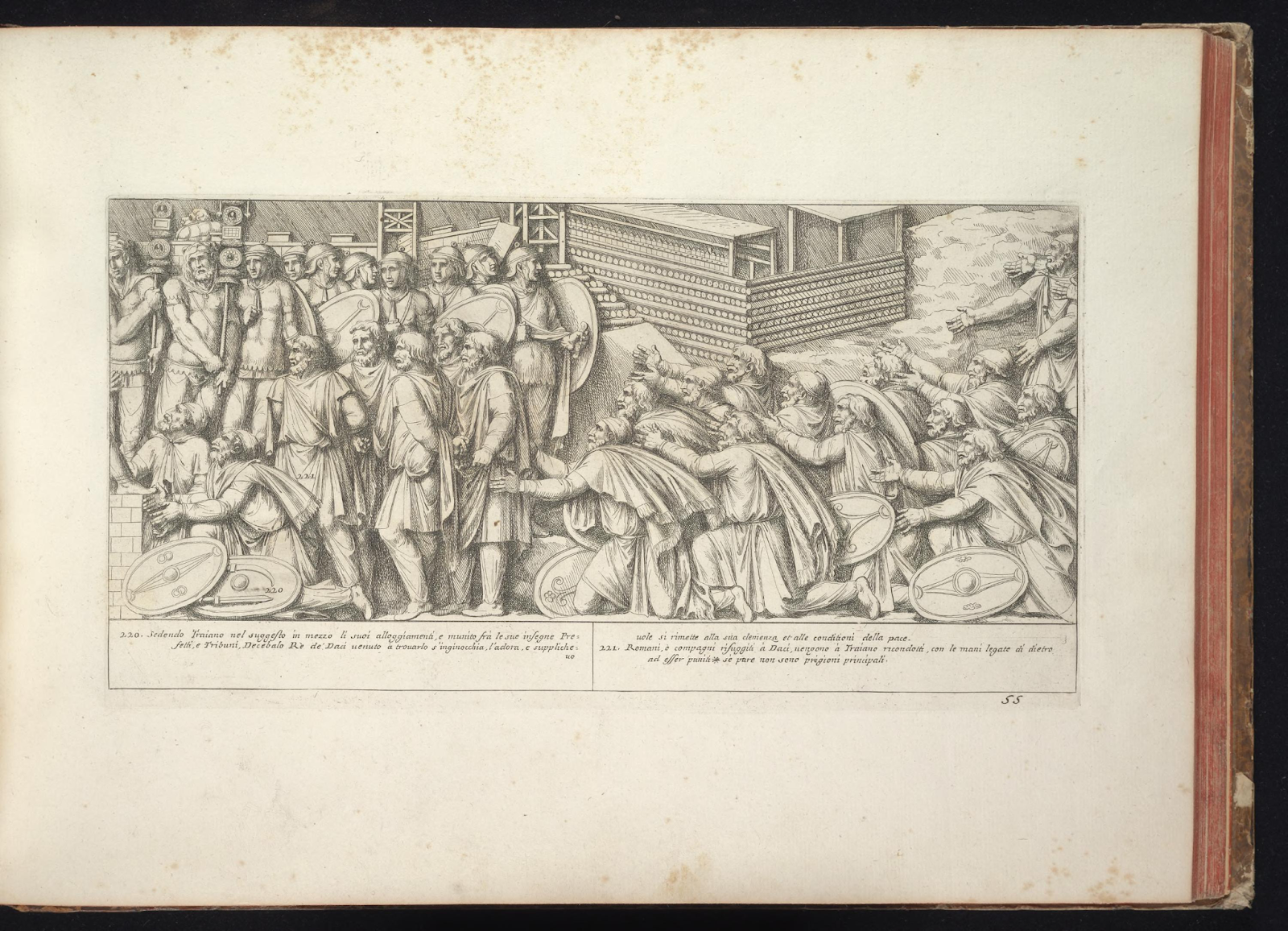
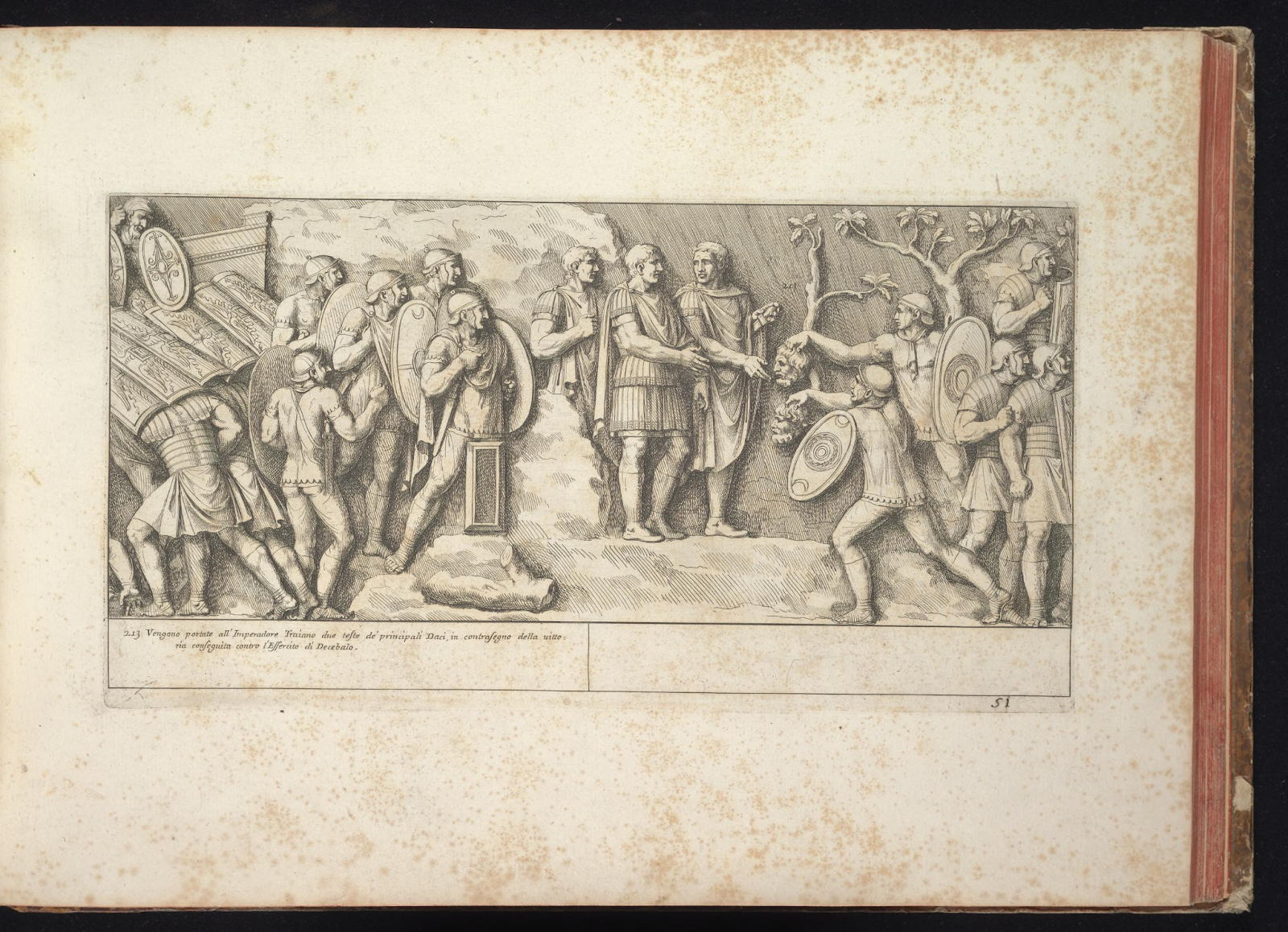
Particularly, the trend of using beards as a visual means of distinguishing barbarians from continental Romans was prominent under the reign of Trajan and is made most apparent by its frequent appearance on Trajan’s Column. In fact, before its construction, depictions of barbarians were rare, especially in permanent monumental installations like Trajan’s Column, whose novelty and sheer expanse “provided a clear break with previous practices of barbarian representation in Rome” (7). However, oddly enough, the depictions of the barbarians themselves are anything but novel. Throughout the Column, the Dacians (an Indo-European people from modern-day Romania against whom the Romans fought during the Dacian Wars) are consistently portrayed as kneeling in submission to Roman or auxiliary soldiers, long-haired and bearded, and wearing trousers (baracae), a long-sleeved tunic, and a military cloak (sagum), all of which constituted the standard Roman portrayal of northern barbarians (see fig. 1 for an engraved example by Pietro Santi Bartoli) (8). As a result, this portrayal was “first and foremost an artistic stereotype” of the northern European peoples (that was outdated even for this period) to “denote their ‘foreign’ and non-Roman character” and distinguish them from the Column’s mass of Roman soldiers (9). This is made most visually apparent in the 51st plate that Bartoli engraved of the Column’s frieze (fig. 2), in which Trajan is presented with the severed heads of two Dacian soldiers by his Roman auxiliary forces. Within the scene, the relief-carver places a clear emphasis on the strong, clean-shaven, and resolute jawlines of Trajan and his valiant auxiliaries, who, instead of joining their brethren as barbarians, have enlisted under Trajan and adopted his honorable, moderate customs, shaving their barbaric beards and receiving the Roman franchise in its stead.
In spite of these general prejudices against what was perceived to be barbarian facial hair, beardedness often appeared in Roman society in contradictory ways. For instance, in 1st-century Jewish culture under Roman occupation, shaving a beard served as a sign of grief and mourning, whereas, in Roman culture, growing a beard served the same purpose (10). Inspired by this surrogate Jewish heritage, Christians favored beards as the “quintessential symbol of masculine strength and virtue” (11). With the virility associated with beardedness in mind, the Church Fathers generally favored beardedness to beardlessness, as the latter could easily be seen as a “sign of effeminacy, the loss of comeliness, or sinful self-adornment” (12). In other words, the Fathers viewed shaving as only reprehensible in so far as it impelled one to unnatural vanity (13).
However, after the Roman Empire fell and the Middle Ages progressed, the perception of the morality of beardedness began to diverge between the Western and Eastern Churches. Although both churches saw the modesty and chastity of their priests as quintessential, they disputed whether beardlessness or beardedness better reflected this ideal; especially around the time of the Great Schism, Orthodox writers contended that the Latin practice of shaving showed their effeminacy, sexual sinfulness, and violation of the principles of the Book of Leviticus and the canons of the Church Fathers (14). Later Catholic theologians, such as Guglielmus Durandus in his Rationale Divinorum Offiorum, would conversely contend that long hair was in fact “‘symbolic of a multitude of sins’” and that priests should shave their beards to symbolize the “‘cut[ting] away [of] vices and sins’” in emulation of angels, who “‘remain always in the bloom of youth’” (15). Latin prelates thus began to forbid the wearing of beards in subsequent Councils and canon laws so as to distance themselves from the Orthodox (as well as from Jews and Muslims) and to maintain these ideological principles of purity among the clergy (16). This prohibition was so extreme and beards so negatively regarded that it arguably cost Cardinal Bessarion, a former Orthodox priest and convert to the Catholic faith, the papal conclave of 1455. Although he was assured to win, (17) Cardinal Alain from Avignon antagonized him, doubting the “sincerity of his conversion” due to his reluctance to shave his Eastern beard (18) and cease wearing his Greek habit (19). To the 15th-century Catholic Church and in the eyes of most at the conclave, a ‘“bearded cardinal was bad enough, [and] a bearded pontiff still unthinkable’” (20). Suffice to say, due to Cardinal Alain’s refusal to submit to Bessarion, whom he insulted as “‘a Greek, a mere interloper[,]’” by virtue of his beard (20), Bessarion lost the conclave to Callixtus III, a clean-shaven compromise candidate (21). Consequently, by the Renaissance, clerical beards were highly taboo and ferociously condemned, for they represented the Church’s ideological enemies.
Thus, in the same way that unruly beards symbolized the Church’s Eastern opponents, they also symbolized Rome’s barbarian enemies to the West, according to the prejudiced philosophy before described. It therefore can be concluded from the history detailed above that the Roman Catholic Church was sufficiently influenced by the trend of pagan Roman society to extol beardlessness and moderation in her own laws and canons regarding the wearing of facial hair (or lack thereof) before the papacy of Pope Julius II, which is epitomized especially by the success of the clean-shaven Callixtus III at the conclave of 1455 in comparison to the reign of Trajan.
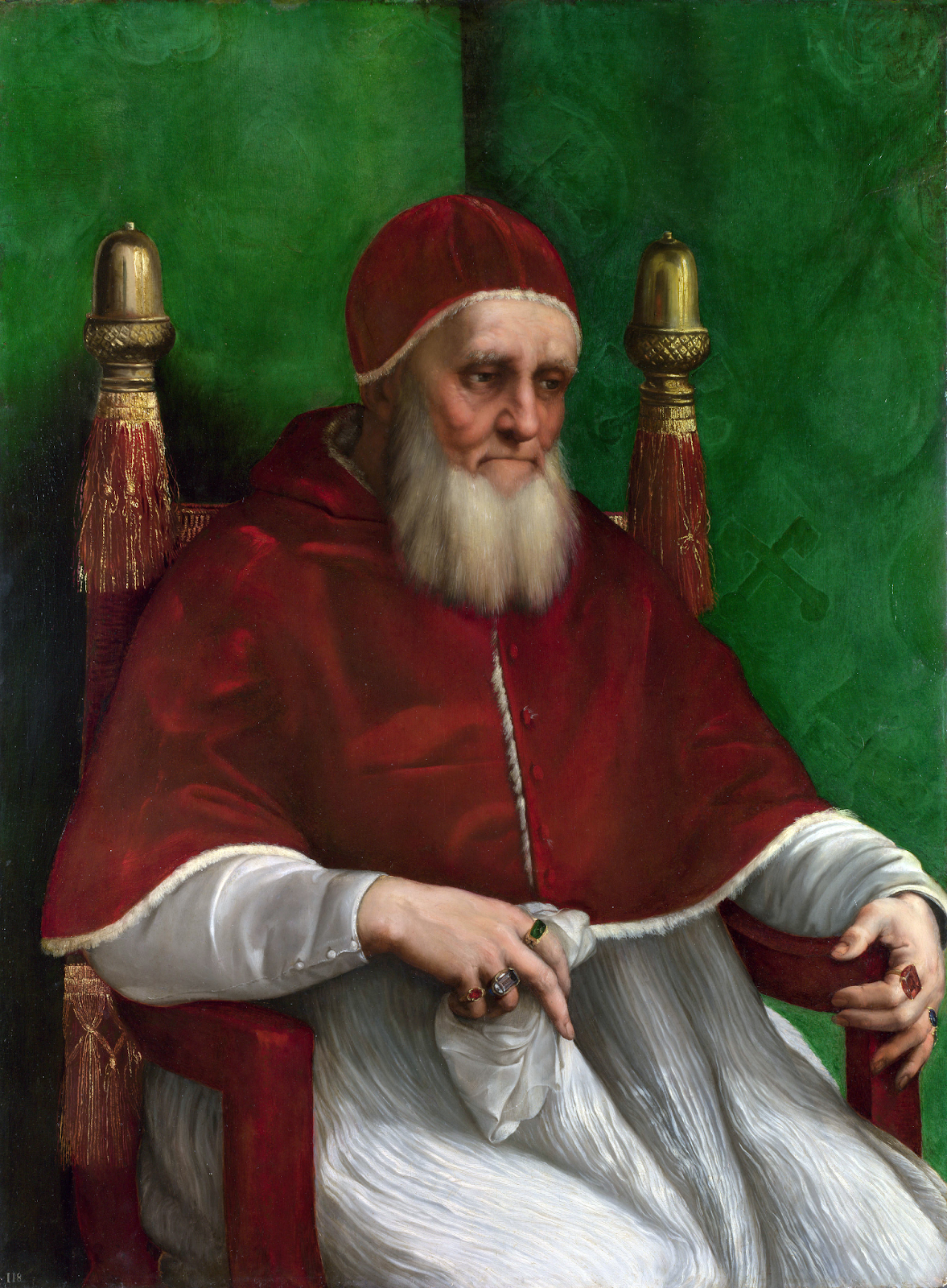
Despite the established clean-shaven precedent in the medieval to early modern papacy, Pope Julius II decisively interrupted this trend after his decision to grow a beard in 1510, which was intended to strike fear of retribution into the hearts of Italy’s invaders and project a sense of confidence in his militaristic strength to the Italian populace. As it will be shown, this decision closely reflected the behaviors of Julius Caesar and Caracalla during their respective reigns and was a concerted effort by Julius II to portray himself as the successor to such Roman rulers. In particular, Pope Julius II chose to grow out his beard as a symbolic act that signified his deeper papal political aspirations for a unified Italy in the aftermath of his military failure to recapture Bologna from the French. The beard thus acted as a “Mariner’s albatross” (psychological burden) and mortifying penance that reminded him both of the plight of his disunited Italy and his own weakness from a serious illness, hence resolving never to shave the beard off until “the hated French should be driven out of his country” (22). Antiquarian precedent also inspired Julius II to go without shaving, for, although Julius Caesar (his papal namesake (23)) typically was clean-shaven, he once grew out a beard in mourning after the loss of his soldiers in a devastating defeat (24) at the hands of the French Gauls. He vowed never to shave until they could be avenged, as related by Suentonius in his Life of the Caesars (a book which Julius II had in his private library) (25). Additionally, the Pope wished to accentuate his already imposing and virile presence, for it often struck fearful awe (terribilità) into the hearts of his contemporaries (26). In Renaissance “physiognomical lore,” a quickly grown beard served as a “sign of a fiercely determined character” (27), signifying Julius II’s goal to end the war with the French decisively. Physiognomically, a man with such a character was regarded as “‘leonine’” (28). Raphael’s Portrait of Pope Julius II (fig. 3) sought to embody this ideal, for he is depicted with the “square face and hanging cheeks, the clamped mouth and the prominent forehead” (28) of a lion and a veritable mane of a beard framing his austere face, lost in thought over the plight of Italy.
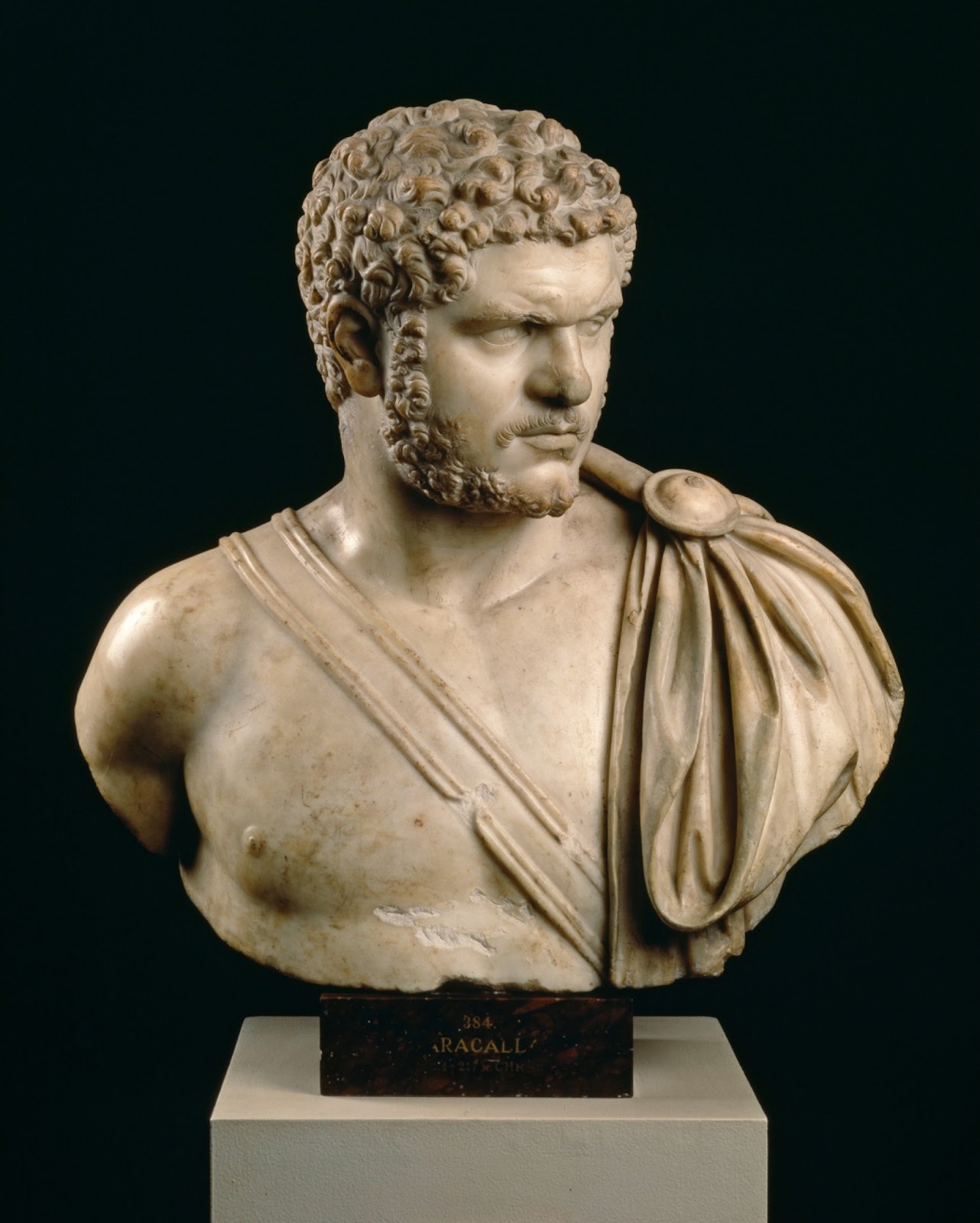
I would argue that this visceral, formidable image of Pope Julius II, with “the identity of a warrior prince and even of an emperor” (29), mirrors Caracalla’s imperial portraiture during his sole reign. Julius II strove to be the quintessential “soldier king and new Caesar” and inspired the wearing of beards as a “standard attribute of the determination and majesty proper to princes” and men of status in Italy (30). Similarly, Caracalla sought to portray himself as “soldier emperor” through his portraiture, which depicted him dressed in military regalia. In such works, he dons a short hairstyle and short cropped beard characteristic of Severan soldiers, adopts a grim and imposing scowl, and eschews the philosophical "luxuriant hair and long beards” characteristic of his Antonine predecessors (31). As with Julius II, all of these portrait elements were copied by other statesmen at the time, possibly out of emulation of Caracalla (32). Caracalla also sought to capture his virility, power, “‘brutal energy[,] and perhaps even ferocity’” through an askance pose looking over his left shoulder in his portraiture and his menacing, closely cropped soldier’s beard, which is typified by the Berlin Portrait of Emperor Caracalla as Sole Ruler (fig. 4) (33). In Raphael’s portrait (fig. 3), the imposing and virile nature of Julius II’s leonine beard and downcast, reflective pose fulfill a similar purpose.
Thus, in both the Portrait of Emperor Caracalla as Sole Ruler (fig. 4) and Raphael’s Portrait of Julius II (fig. 3), the sitters have furrowed, determined browlines, militaristic beards, and lips tightly closed into a slight scowl, indicating their determination to repel their enemies and overpowering, leonine indignation. Since Caracalla assumed the throne during a tumultuous period under which Rome was besieged by barbarians and thus wanted to portray himself as a young, strong, and capable military leader, inspiring his successors in both militaristic manner and facial hair styling (34), he mirrors Julius II, who also reigned amidst tumult and military invasion, projected virility in spite of illness, flouted facial hair precedent, and inspired a bearded papal trend for two centuries (35). In so doing, Julius II, like Caracalla, sought to use the emergent medium of portrait medals (which resembled ancient Roman coins) to “flout convention” and exhibit his brash, eccentric, and rebellious personality (36), especially shown in his decision to promulgate the “radical, bearded image” even after he shaved it off (37). In turn, when weighing these implications surrounding the reign of Julius II, it is evident that he drew clear inspiration from the Roman emperors Julius Caesar and Caracalla in his desire to inspire fear of retribution in his invaders and project militaristic strength to the Italian population via his papal portraiture.
Pope Clement VII also attempted to invoke the facial hair practices of the Roman Emperors in his imperial portraiture. However, given the different sociopolitical circumstances enveloping the papacy in the aftermath of the Sack of Rome, he instead wished to convey his interior philosophical virtues and invoke the beard as a diplomatic tool, much like the Roman emperor Marcus Aurelius. To the first end, Clement VII primarily wore a beard to serve the traditional purpose of a sign of mourning after the rape of the city of Rome, and, as a result, “many members of the clergy imitated him to perpetuate the memory and sorrow of their common misfortunes” (38). In fact, in the face of his military failure to protect Rome from invasion, Clement VII experienced something of a personal crisis, growing the beard (which was this crisis’s “most obvious external sign”) so as to imitate Julius II “in the spirit of a deeper emulation of a pontiff’s character that was so alien to his own” (39). Whilst the Medici Pope was a diplomatic tour-de-force and a respected cardinal before the Sack of Rome, who turned into a “little and despised Pope” and died with a beard afterward, Julius II was a brash, larger-than-life, and militaristic man, nicknamed “the Warrior Pope,” who was hellbent on driving the French conquerors from Italy in the spirit of Julius Caesar. His success in this respect by the time of the Lateran Council motivated him to shave his beard (40). As a result, Clement VII’s beard can be seen as an attempt to visualize his mourning for the devastated people of Rome and show his Julian militaristic inspiration.
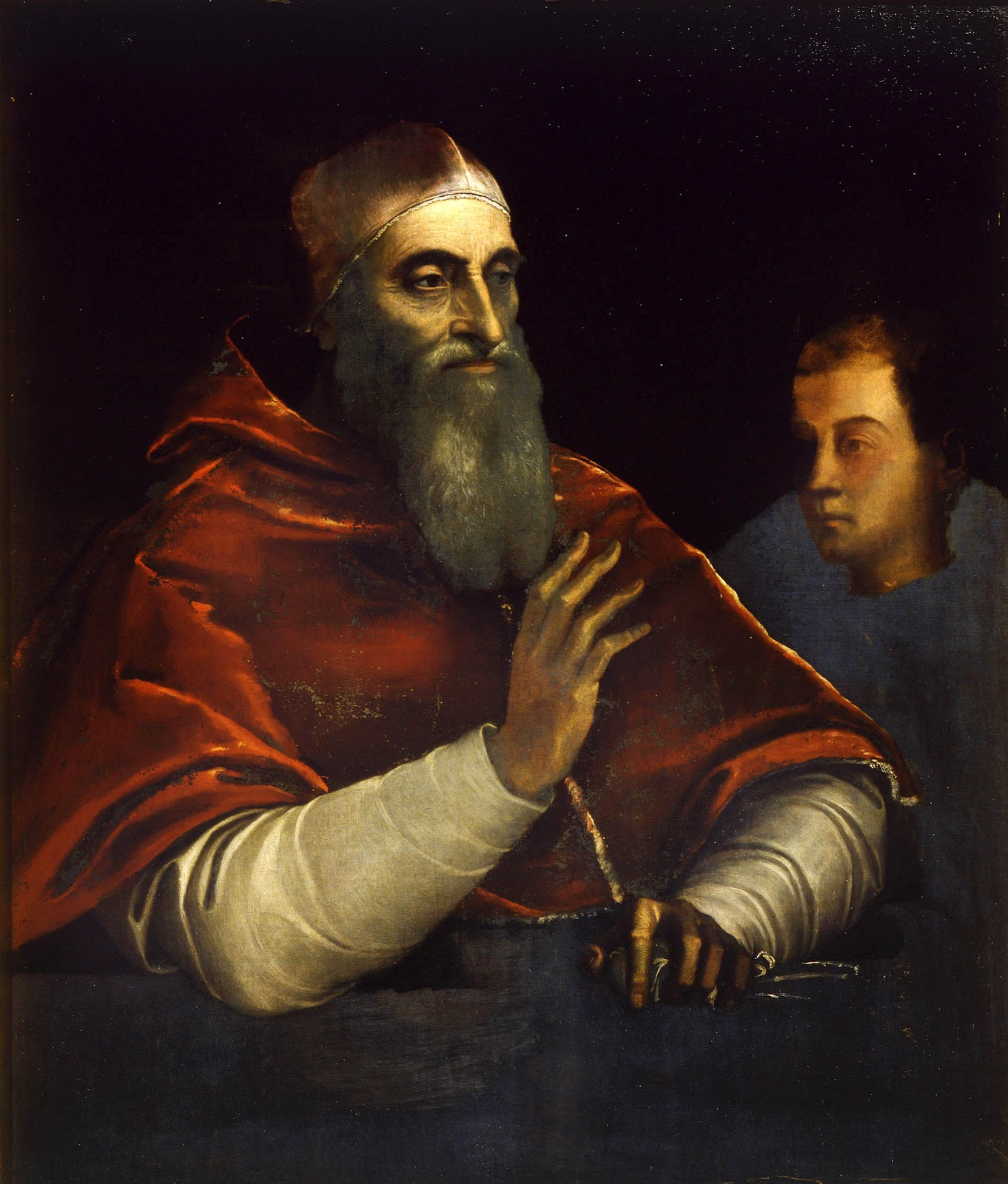
Perhaps the most prominent portrait completed of Clement VII in this bearded, defeated era of his reign was by Sebastiano del Piombo (fig. 5), who portrayed the pontiff in an “intense and noble” manner that would eventually become his standard portrayal (41). Piombo visually accentuates Clement VII’s (42) contemplative, withdrawn gaze and aloof benediction, blessing those who persecuted priests and pillaged churches during the Sack of Rome, whilst (in the words of Sanuto) his “‘long and hoary beard’” (43) serves as a reminder of the crimes that the imperialists inflicted against the Vatican, for facial hair began to adopt a diplomatic significance in the Sack’s wake. Roman Catholic priests often wore facial hair as a means of “protesting against the perpetrators of the sack, the imperialists” in the years following the event, which Clement VII could have used as a tool to propagandistically castigate his former invaders; however, he instead issued a notice that forbade clerics from traveling the streets of Rome with long beards “‘in a gesture of forgiveness towards the imperialists’” (44). He therefore utilized the symbolism of facial hair as a diplomatic tool to absolve his former enemies and attempt to establish peace on the European continent.
Similarly, Marcus Aurelius also arguably used the symbol of his facial hair as a means of highlighting his interior, noble virtues whilst navigating diplomacy and respect for his Hadrianic and Antonine posterity. Hadrian, as the first emperor to depart from the Augustinian standard of imperial portraiture, promulgated two quintessential elements in his representations that greatly influenced the depictions of his successors: his beard, which invoked “the bearded heads of the Greek poets and philosophers,” and voluminous hair with abundant tresses (45). This contrasts with earlier depictions of beards in Roman imperial iconography, which often sought to indicate mourning or a young man in the imperial family (46). Beards “did not belong to the model of what a Roman emperor looked like” and were typically only “exceptionally depicted by some artists in response to severe political situations” (46). Likewise, the Renaissance Popes only began to don facial hair in “public response to a dramatic event” or similarly severe political situation, in spite of beards “go[ing] against [the] normal and desirable appearance of an ecclesiastic” (47). Antoninus Pius further sought to underscore the stability and guarantee of his and his adopted sons’ (Marcus Aurelius and Lucius Verus’) succession by mimicking Hadrian’s beard and tresses. Following him, Marcus Aurelius continued this trend in increasingly faithful iterations as he advanced in years, both in marble portraiture (48) and coinage (albeit to a more irregular degree) (49). Eventually, he wore a long beard past the chin that conveyed a mature and experienced appearance worthy to succeed his predecessors and which invoked the philosophers even more than Hadrian did (50). Thus, although both Hadrian and Julius II were far more immoderate, Marcus Aurelius, like Clement VII, sought to emulate his predecessor’s bearded appearance to maintain a sense of stability in succession in the midst of warfare against foreign invaders.
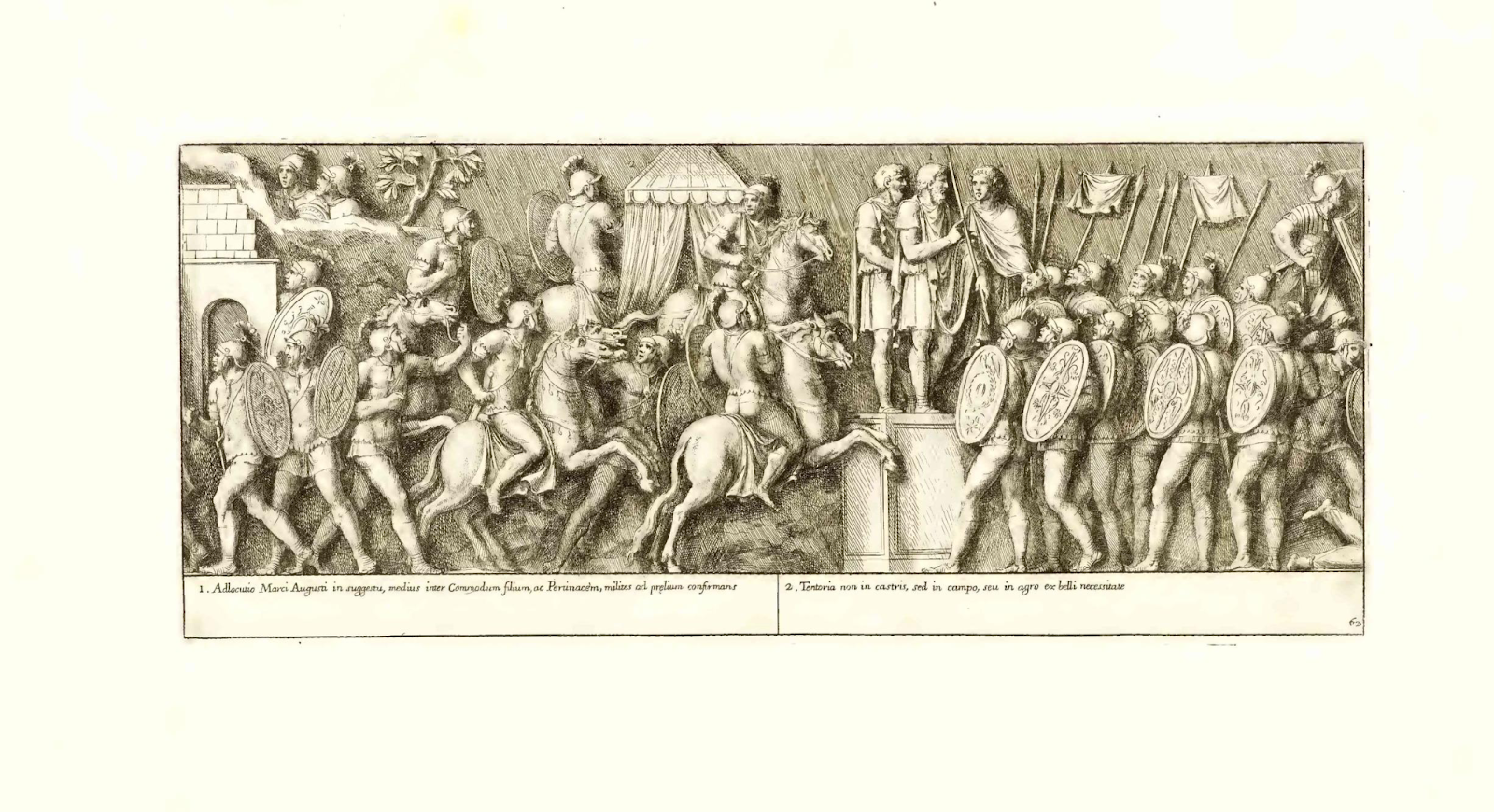
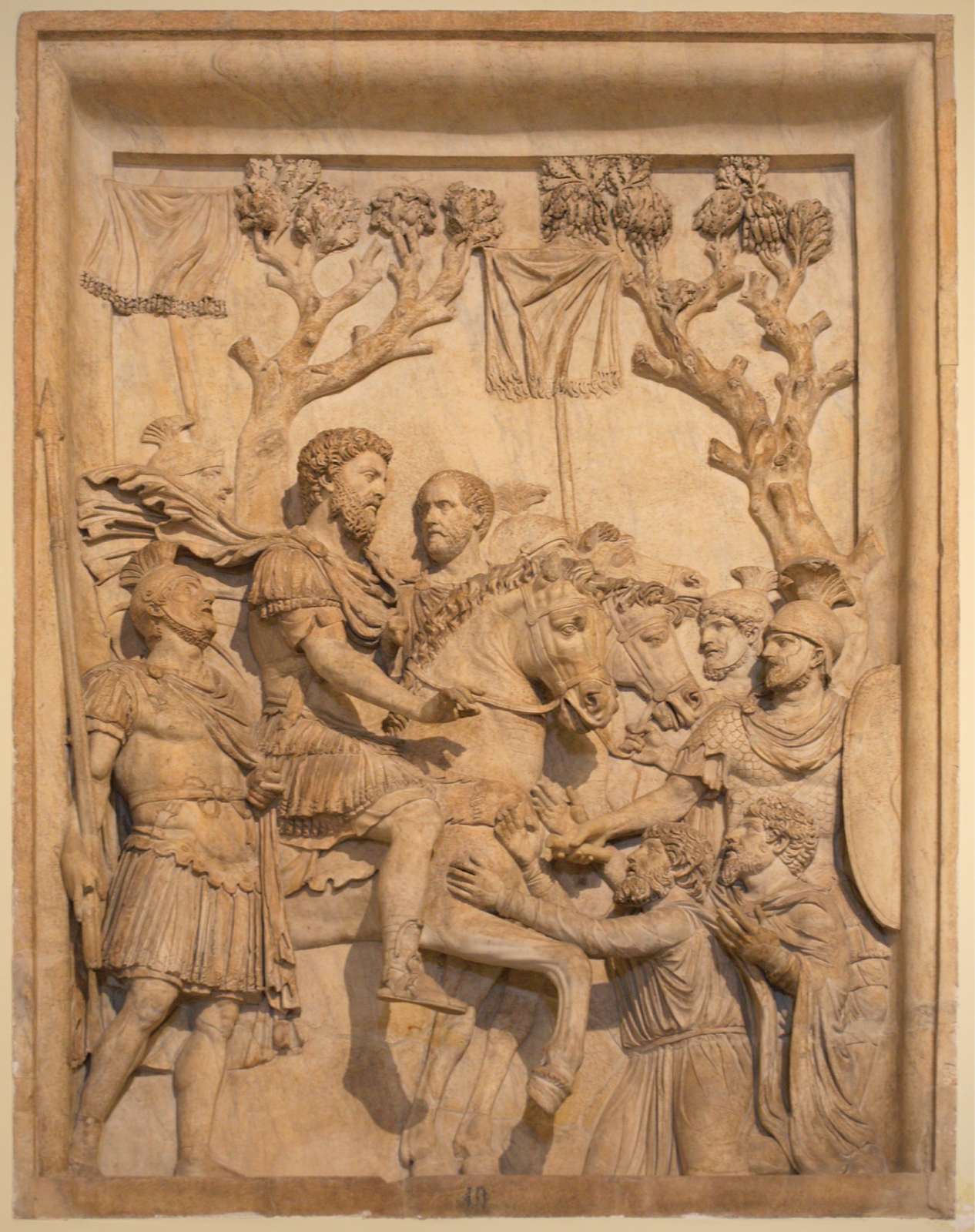
Furthermore, Aurelius commissioned reliefs to show him as a competent, “conscientious military leader” and honorer of posterity, such as through the Trajanic motif of being depicted with officers before adoring soldiers on his Column (see Bartoli’s rendition in fig. 6) (51). He also sought to be seen as a judge capable of both clemency and wrath toward the barbarians, especially on the Arch relief in which “the dutiful emperor evokes the subjugation of the barbarians” as they, also bearded, plead for sympathy (51). This relief (fig. 7) echoes Piombo’s Portrait (fig. 5), for both pontifices maximi raise their hand in clement benediction, sparing their invaders, whilst sporting Stoic, enervated, and bearded countenances. To boot, Aurelius's gesture, before it was restored, “originally probably had its palm turned up in a gesture of welcome and goodwill toward the barbarians” (52), closely mirroring the pope’s gesture to the imperialists. Hence, Clement VII invoked Aurelian precedent by using facial hair to project inner virtue and respect for posterity and diplomacy.
Consequently, through the choice to portray themselves with beards, the Renaissance popes Julius II and Clement VII responded differently to their forefathers’ portrait conventions, much like Caracalla and Marcus Aurelius, for primarily militaristic, successory, or diplomatic reasons. Moreover, both sought to employ facial hair as a means to accentuate certain virtues of their characters through emulation of either their Roman or papal predecessors. Although these decisions may not have been as macroscopically apparent as Julius II’s planned tomb or Clement VII’s futile attempts to restore Rome’s artistic glory after the Sack of Rome, they reveal the persistent, pervading presence and subtle influence of the ideals of Roman governance well into the early modern period, especially as a means for the papacy to legitimize their temporal rule over Rome. Furthermore, this fact illustrates the immense power of political portraiture to convey underlying ideological narratives through simple choices in personal presentation, especially via the incorporation of symbols with a resplendent, storied, and ancient past.
(Cover Image: Raphael Sanzio da Urbino, Portrait of Pope Julius II, Oil on Poplar Panel, 108.7 x 81 cm, London, National Gallery, 1511, Image: Wikimedia Commons.)
Notes:
Bibliography:
Borne, Lotte van den. “Visualizing the Enemy: The Visual Languages of the Columns of Trajan and Marcus Aurelius and their Artistic Representation of Rome’s Barbarian Enemies,” MA diss. Utrecht University, 2017, https://studenttheses.uu.nl/handle/ 20.500.12932/27138.
Boschung, Dietrich. “The Portraits: A Short Introduction.” In A Companion to Marcus Aurelius, edited by Marcel van Ackeren, 294–304. Oxford: Wiley‐Blackwell, 2012, https://doi.org10.1002/9781118219836.
Boschung, Dietrich. “The Reliefs: Representation of Marcus Aurelius’ Deeds.” In A Companion to Marcus Aurelius, edited by Marcel van Ackeren, 305–314. Oxford: Wiley‐Blackwell, 2012, https://doi.org10.1002/9781118219836.
Chastel, André. The Sack of Rome, 1527. Translated by Beth Archer Brombert. Princeton: Princeton University Press, 1983.
Connell, William J. Society and Individual in Renaissance Florence. 1st ed. Berkeley: University of California Press, 2002, https://doi.org/10.1525/9780520928220.
Fishburne, James Eynon. “Casting an Ecclesiastical Prince: Portrait Medals of Pope Julius II,” PhD diss. eScholarship, University of California, 2014, https://escholarship.org/ uc/item/8fq6j2zs.
Martellotti, Giovanna. “Reconstructive Restorations of Roman Sculptures.” In History of Restoration of Ancient Stone Sculptures, edited by Janet Grossman, Jerry Podany, and Marion True, 179–190. Los Angeles: J. Paul Getty Museum, 2003.
Niederhuber, Christian. Roman Imperial Portrait Practice in the Second Century AD: Marcus Aurelius and Faustina the Younger. 1st ed. Oxford: Oxford University Press, 2022, https://doi.org/10.1093/oso/9780192845658.001.0001.
O’Grady, Anne. “The Public Image of the Later Severans: Caracalla to Alexander Severus.” MPhil diss. University of Queensland, 2015, https://espace.library.uq.edu.au/data /UQ_370243/s4075641_mphil_submission.pdf.
Partridge, Loren W., and Randolph Starn. A Renaissance Likeness: Art and Culture in Raphael’s Julius II. Berkeley: University of California Press, 1980.
Setton, Kenneth M. The Papacy and the Levant, 1204–1571, vol 2. Philadelphia: American Philosophical Society, 1976.Siecienski, A. Edward. Beards, Azymes, and Purgatory: The Other Issues That Divided East and West. New York: Oxford University Press, 2023.
Soykut, Mustapha. “The Ottoman Empire and Europe in Political History through Venetian and Papal Sources.” Cultural Encounters Between East and West, 1453–1699, edited by Matthew Birchwood and Matthew Dimmock. Newcastle-upon-Tyne: Cambridge Scholars Press, 2005, https://books.google.com/books?id=U5zTAHQfI4MC&q.
Warnock, Timothy Michael. “Barba: A History Of Facial Hair As Cultural Symbol In The Roman World.” Ph.D diss. University of Pennsylvania, 2022, https://repository.upenn.edu/handle/20.500.14332/32118.
Zucker, Mark J. “Raphael and the Beard of Pope Julius II.” The Art Bulletin 59, no. 4 (1977): 524–33. doi:10.1080/00043079.1977.10787478.
Cara explores how Natalia Goncharova redirects the ambitious, often technologically oriented rhetoric of Russian avant-garde abstraction toward an intimate and playful subject: domestic cats.
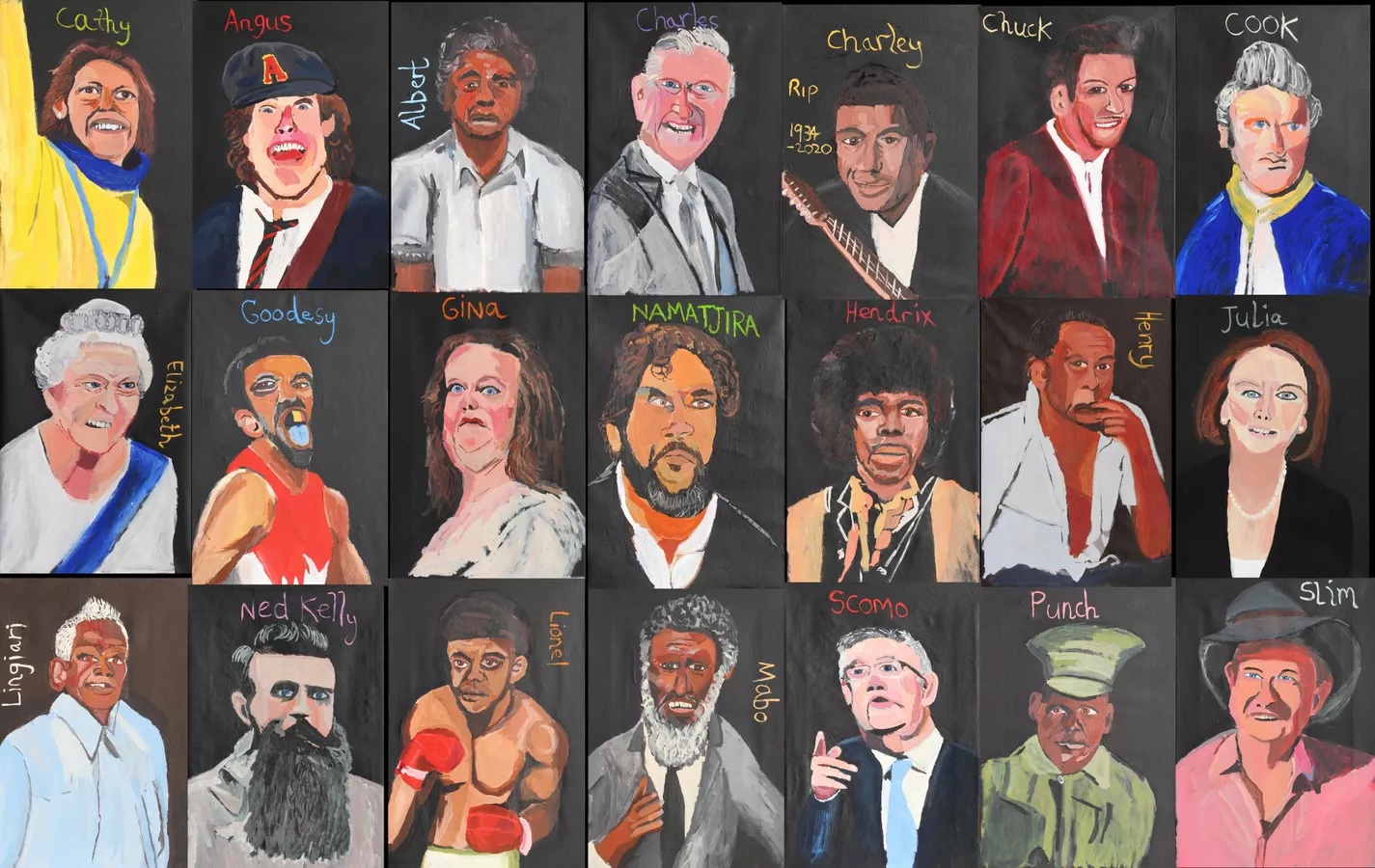
Kate explores how Australian artist Vincent Namatjira redefines portraiture to confront the legacies of colonialism while envisioning a more inclusive future—one expansive enough to embrace all Australians.

Clarke Reynolds (Mr. Dot) talks with the Art Review about interactive art, changing the narrative around blindness, and creating a world where art is more accessible for all.