May 1, 2026
Opinions
Opinions
Cara explores how Natalia Goncharova redirects the ambitious, often technologically oriented rhetoric of Russian avant-garde abstraction toward an intimate and playful subject: domestic cats.

When a group of Ethiopian artifacts went on special display at the V&A in 2018, they reopened an 11-year debate about the state of these objects and their repatriation. As the V&A faced mounting pressure to confront its colonial legacy over the return of the Mäqdäla Crown—an artifact bound to a defining moment in Anglo-Ethiopian history. Adapted from a seminar paper the author wrote for HIST0150K: Curators, Hoarders, and Looters during the Spring 2024 semester at Brown University.


It was the dawn of an ill-fated spring morning in April 1868 at the Arogye plateau on the route to the mountain fortress of Mäqdäla. About 13,000 British and Indian troops marched through northern Ethiopia’s rough terrain with one goal in mind: retrieve the hostages captured by the Ethiopian king, Tewodros II. After a devastatingly successful victory, which claimed the lives of 700 Ethiopians and their King, the Anglo-Indian party proceeded to destroy the King’s mountain fortress and loot Mäqdäla’s treasures. Among such treasures was a three-tiered, cylindrical, solid gold crown decorated with images of the evangelists that dates to the eighteenth century. While many call this Crown “the V&A Crown,” this moniker undermines its rich Ethiopian history and origins, reinforcing narratives of colonial ownership. Hereafter, any references to this object shall be through "the Crown." In this article, I argue that the looting of Mäqdäla’s golden sacerdotal Crown is a clear, relevant example of the politics of British plunder in the second half of the 19th century that plays into issues of display and collecting in the museums of the European colonial powers. In tracing this object’s complicated history, which examines a significant period in Anglo-Ethiopian history, I explore the Victoria and Albert Museum’s (V&A) response to calls for decolonization and modern disputes on the Crown’s repatriation.
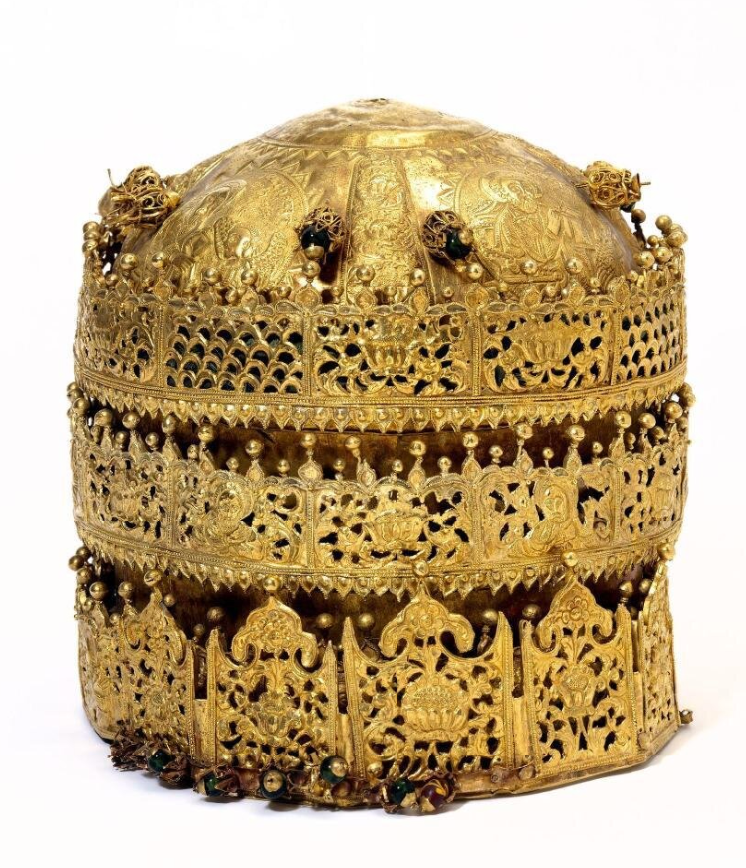
Of course, the Crown’s story does not begin with its April 1868 pillage. Though it was initially believed to have been Tewodros’s royal crown, a recent study by Jacques Mercier revealed that the Crown was commissioned during the first half of the 18th century by Empress Mentewab and her son King Iyyasu II. A Chalice looted along with the Crown at Mäqdäla has a Ge’ez inscription detailing its offering as a gift to the Church of Our Lady of Qwesqwam during Iyyasu II’s reign (1730-1755), thus bolstering speculation that the Crown was made sometime in the 1740s and was given “as part of the same dedication.” It was held in the Church until 1855, when Tewodros II was crowned Emperor and many objects were moved to the royal treasury.
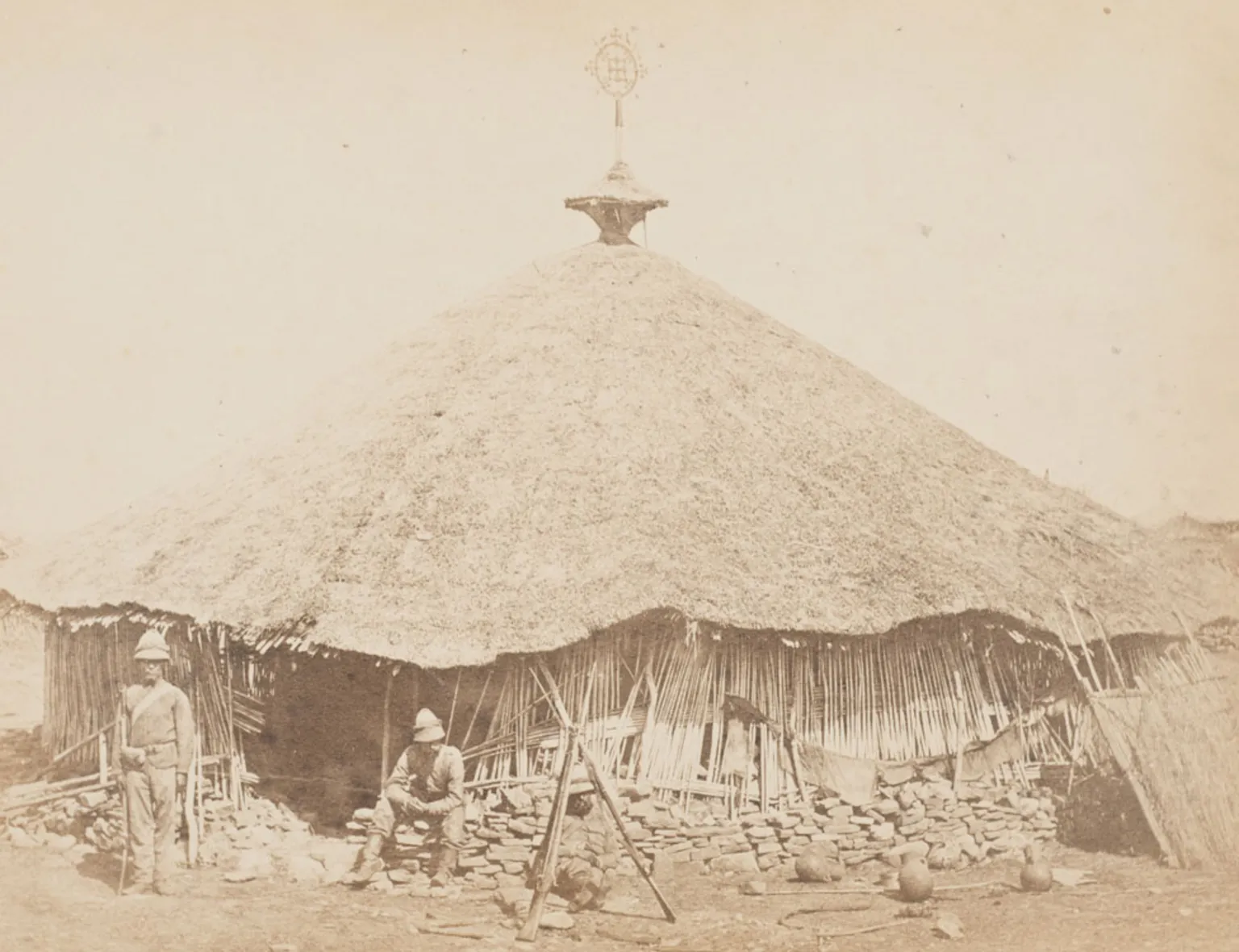
When Mäqdäla was pillaged during Lord Napier’s punitive expedition on 15 April 1868, Sir Richard Holmes, the expedition’s archaeologist and Assistant in the British Museum’s Department of Manuscripts, recalled how he bought both the Crown and Chalice off a British soldier, who was carrying them out of the fort, for £4. Two days later, the Anglo-Indian forces laid siege to Mäqdäla once again, burning the entire fortress, and city, to the ground. The Mäqdäla treasures were relocated to the Dalanta Plain, where a grand auction was held to raise funds for the army. In terms of the scale and importance of the auction, Henry Morton Stanley remarked that “Bidders were not scarce. Every officer and citizen desired some souvenir of Ma[q]dala.” Between 20 and 21 April, the auction raised “5,000l” which was further divided to “a trifle over four dollars” each. Stanley does not mention the fate of the Crown, even as he recounts how Holmes was the recipient of “many interesting articles.” After the auction, a July 1868 article in The Illustrated London News reported that “the Royal treasures from Abyssinia,” including robes, two crowns, slippers, and three seals, were “open to the inspection of the public at the South Kensington Museum, by command of Her Majesty.” It appears that the Crown and the Chalice were split from the original group of loot and instead placed in the collection of the British Museum in June of 1868, nearly two months after they had been looted from Mäqdäla.
The subject of the 30 June 1871 Parliamentary Debate was to discuss whether or not the Nation should purchase the “Abyssinian Abanas Crown” and Chalice. The official record notes that Holmes was sent by the British Museum to “collect any article of worth to add to [their] collection,” and after he succeeded in purchasing the Crown and the Chalice, he wanted to retain the objects rather than giving them up as part of the auction. Napier then sent a letter to the Trustees of the British Museum, declaring that the objects were to be sold for £2,000. At the time, the Museum did not have the funds to pay for the loot, so they applied to the Treasury. But with no response from the Treasury for 19 months, under the excuse that the Government had not taken notice of such a letter, their Lordships “declined to authorize the purchase.”
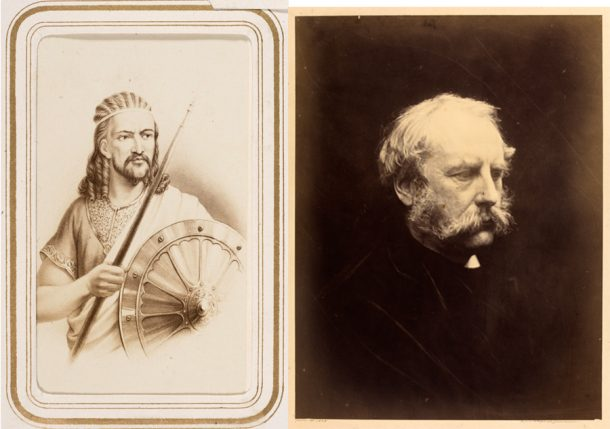
In his argument that the Trustees of the British Museum must pay the full £2,000, Sir Stafford Northcote believed that these items were of “considerable historical value and antiquarian interest,” underscoring that their place was indeed at the British Museum, not at “the Museum at South Kensington [the precursor to the Victoria and Albert], an institution merely for the promotion of art and of taste.” Those against the motion argued that, according to “competent authorities,” the Crown and the Chalice were “not fit objects to be purchased for the British Museum,” as they were “large masses of gold” and “barbaric spoils of war.” At the end of the debates, the Prime Minister, William Gladstone, promised to “look into the matter and endeavor to settle it.” The objects were never sold to the British Museum, but “deposited” at the V&A “by H.M. Treasury in 1872” on long-term loan, and were only “officially entered” into the collection with the passing of the National Heritage Act 1983. The Crown, and Chalice, has remained on display ever since.
With the V&A being intimately, and innately, connected with British colonial history, it has become part of a wider group of European museums whose collections have joined growing calls to decolonize the museum and for the restitution of cultural heritage looted during the imperial age. Perhaps the most famous statement relating to the V&A’s efforts to “decolonize the museum” was made by the museum’s director, Tristram Hunt, who, in a 2019 article published in The Guardian declared that “for a museum like the V&A, to decolonise is to decontextualise.” Such a bold statement, which implies that a return of Ethiopia’s cultural heritage takes them out of their ‘original,’ English context, was met with much confusion and anger from Hunt’s contemporaries, including Dr. Kwame Opoku, a former United Nations Legal Advisor. In his own reaction to Hunt’s provocative essay, Opoku defines “decolonization” and “decontextualization” and highlights the very contradictions in and invalidity of Hunt’s statement, ultimately categorizing it as “a bad joke.”
For the sake of this article, I decided to find my own definitions of “decolonization” and “decontextualization” as defined by modern dictionaries. The definition of “decolonization,” according to the Merriam-Webster Dictionary is “to free from the dominating influence of a colonizing power, especially to identify, challenge, and revise or replace assumptions, ideas, values, and practices that reflect a colonizer's dominating influence and especially a Eurocentric dominating influence.” The definition of “decontextualize,” according to the Merriam-Webster Dictionary, is “to remove from a context.” An even better definition for “decontextualize,” from the Collins English Dictionary is “to consider (something) in isolation from its usual context.”
While many people believe that processes of decolonizing the museum must attend directly to the repatriation and restitution of a museum’s entire collection, Laura Van Broekhoven suggests that it is as simple as "acknowledging the historical, colonial contingencies under which collections were acquired; revealing Eurocentric ideology and biases in the Western museum concept, discourse and practice; [and] acknowledging and including diverse voices and multiple perspectives."
In fact, such a process can commence through a series of smaller-scale projects including, but not limited to, label writing, public engagement, cataloging, and marketing, which can then slowly build up to the restitution of cultural heritage via long-term loans or permanent returns. The process of decolonization, therefore, is not necessarily a top-down strategy. At its most basic level, it can be initiated by the curators who write exhibition labels and even the PR teams who bring publicity to the museum and build global relationships with museum-goers.
However, the V&A has notyet engaged with these strategies to dismantle the colonial narratives that loom over their objects. As of May 2024, On the museum’s digital collections webpage, there is no section that records the Crown’s provenance, which forces scholars to individually search for mentions of the Crown in correspondence, travel diaries, newspapers, and Hansard (an edited verbatim record of what was said in Parliament) from the 19th century. It is ironic, then, that Hunt commits to “tracing [the objects’] origins and then confronting the difficult and complex issues which arise,” when Alexandra Jones Watson, a former curator at the V&A, notes that the museum “entirely omit[ted] the Maqdala provenance of its Ethiopian collections in their interpretative texts” (Jones, “Maqdala and the South Kensington Museum,” 74).
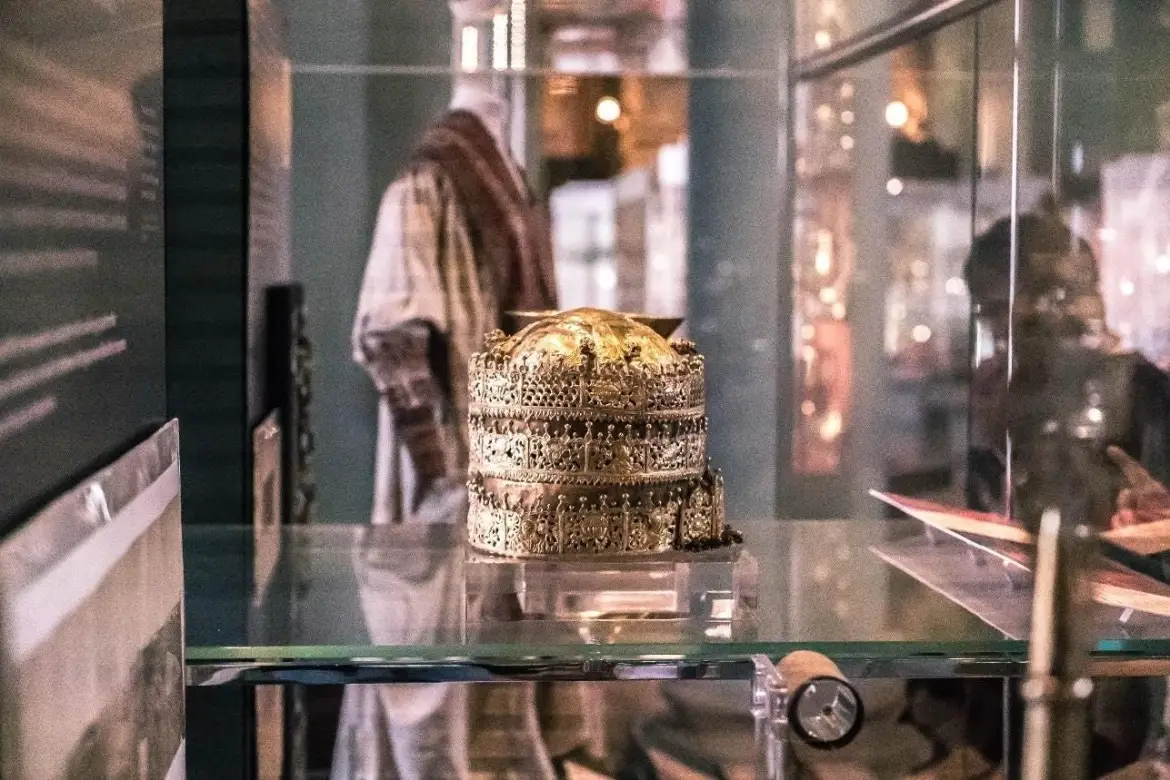
In the V&A’s more recent attempts to “confront and interrogate the colonial histories of their collections,” the most notable example is their Maqdala 1868 exhibition. In this fourteen month exhibition, which ran from 5 April 2018 to 30 June 2019, the museum told the story of Lord Napier’s Abyssinian Expedition by displaying the Crown, among other pillaged Ethiopian artifacts (Jones, “Maqdala and the South Kensington Museum,” 71). Since the museum did not previously acknowledge the objects’ controversial history, it was up to curators to “reflect on [the object’s] living meaning” without separating them from their “violent provenance” and recognizing that they were initially the “spectacle of the remains of a defeated enemy” (Jones, “Maqdala and the South Kensington Museum,” 74). In the process of curating the display, which marked the 150th anniversary of the Mäqdäla siege, Jones relied on a “focus group” of Ethiopian and Rastafarian community leaders, historians and activists along with input from the Ethiopian embassy in London to guide the purpose and essence of the exhibition (Jones, “Maqdala and the South Kensington Museum,” 75-76). The main takeaways from the meetings were that (1) the museum not “‘shy away’ from controversy,” (2) the objects’ provenance was “presented openly and honestly,” and (3) the exhibition must “stand out” (Jones, “Maqdala and the South Kensington Museum,” 76).
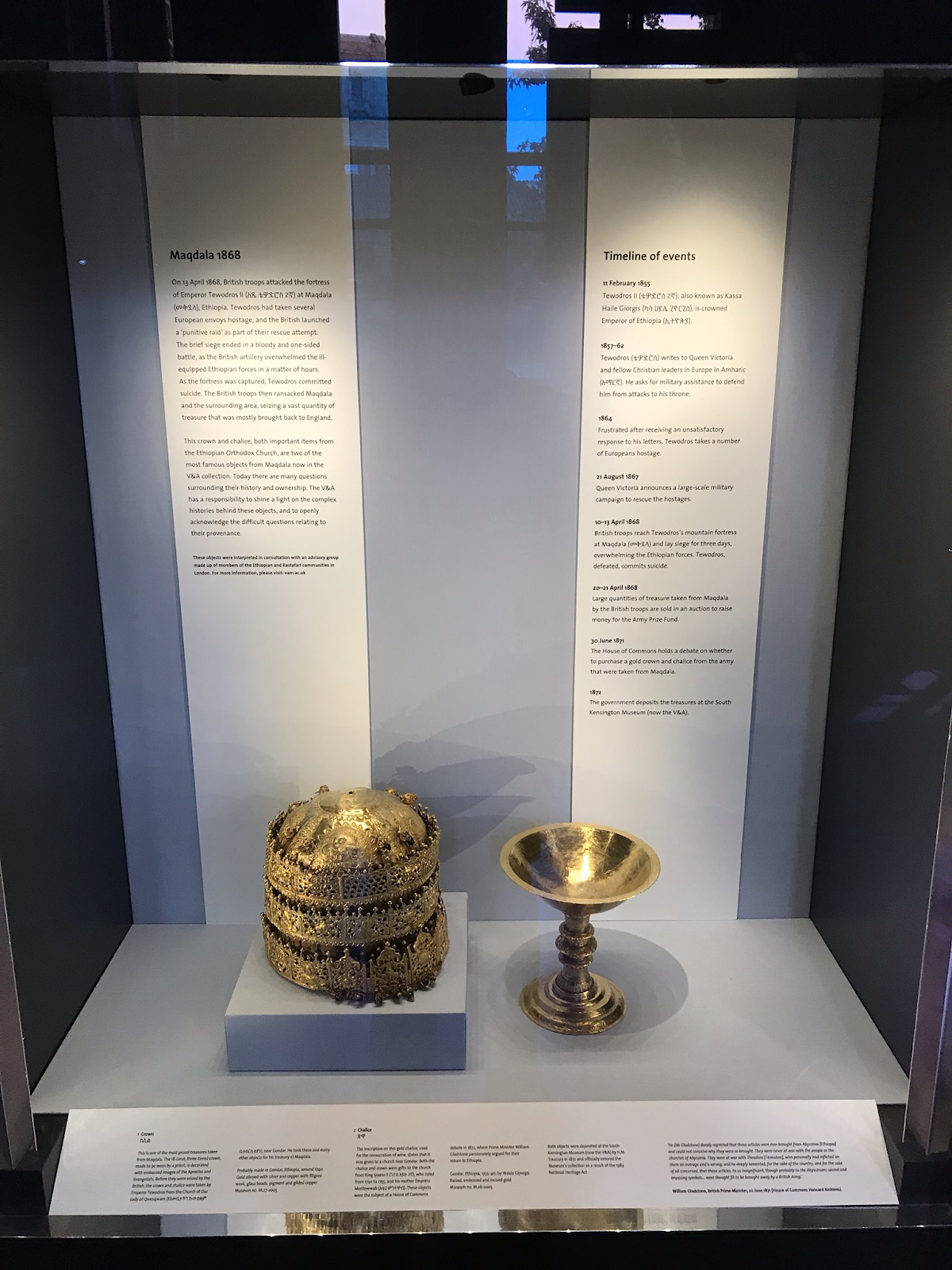
Interestingly enough, during the writing process for the interpretative text labels—including both traditional museum text and focus group commentaries—Jones notes that “several parties” in the museum were “reluctant to use” the word loot in their labels “for fear of inflammatory connotations,” but that the focus group commentaries had no regulations (Jones, “Maqdala and the South Kensington Museum,” 78). The only mention of “loot” in the entire exhibition was in a label created by Samuel Berhanu, a focus group member from the Ethiopian Orthodox Church, who called the objects “Maqdala loot” (Jones, “Maqdala and the South Kensington Museum,” 79). Though Jones indicates that the V&A “has become less reluctant to use such language” in the labels of following exhibitions, this begs the questions: Is the museum really committed to their goals of being transparent in “telling the full story of objects on display or in storage” and “engaging with these important debates”? What does the V&A risk if they present themselves as a “knowledgeable, trustworthy and unbiased…primary source of information on the objects”? (Jones, “Maqdala and the South Kensington Museum,” 78)
Reactions to Maqdala 1868 were fairly positive, as many were surprised that the V&A “appeared willing to confront the controversial background behind the artefacts.” Reviews for the exhibition called attention to the “questions of ownership, cultural property, and the way communities are engaged through exhibitions,” with some even praising the museum for “putting the objects again in context” and its “showcase full of voices” that linked Ethiopian and non-Ethiopian perspectives (Jones, “Maqdala and the South Kensington Museum,” 80). But while some found the exhibition to be a significant improvement in decolonizing the museum’s Ethiopian art collection, it was also criticized from the restitutions and repatriation standpoint. Most comments addressed that the display was “not explicit enough in confronting the question of repatriation” and compared it to the British Museum’s Parthenon marbles panels that directly engage with the ongoing restitutions debate (Jones, “Maqdala and the South Kensington Museum,” 81).
While the exhibition indeed contributed to “an ongoing dialogue about the history of these objects and their place in our national collection today,” the outpouring of such comments and requests for the all-encompassing restitution of the Mäqdäla treasures opened the door to more fervent conversations of their return. Calls for the restitution of the Mäqdäla treasures began in 1872, a mere four years after The Abyssinian Expedition, when Emperor Yohannes IV sent letters to Queen Victoria asking for their stolen property to be returned. While this movement was met with great resistance by the British, many men did not share the same feelings of “interest and admiration.” In fact, one 19th century reaction to the looting described it as “the collector of curiosities [Holmes] had put the soldiers up to doing something very near robbing a church.” William Gladstone echoed such sentiments, for he “deeply regretted that those articles” were stolen “and could not conceive why they were so brought.”
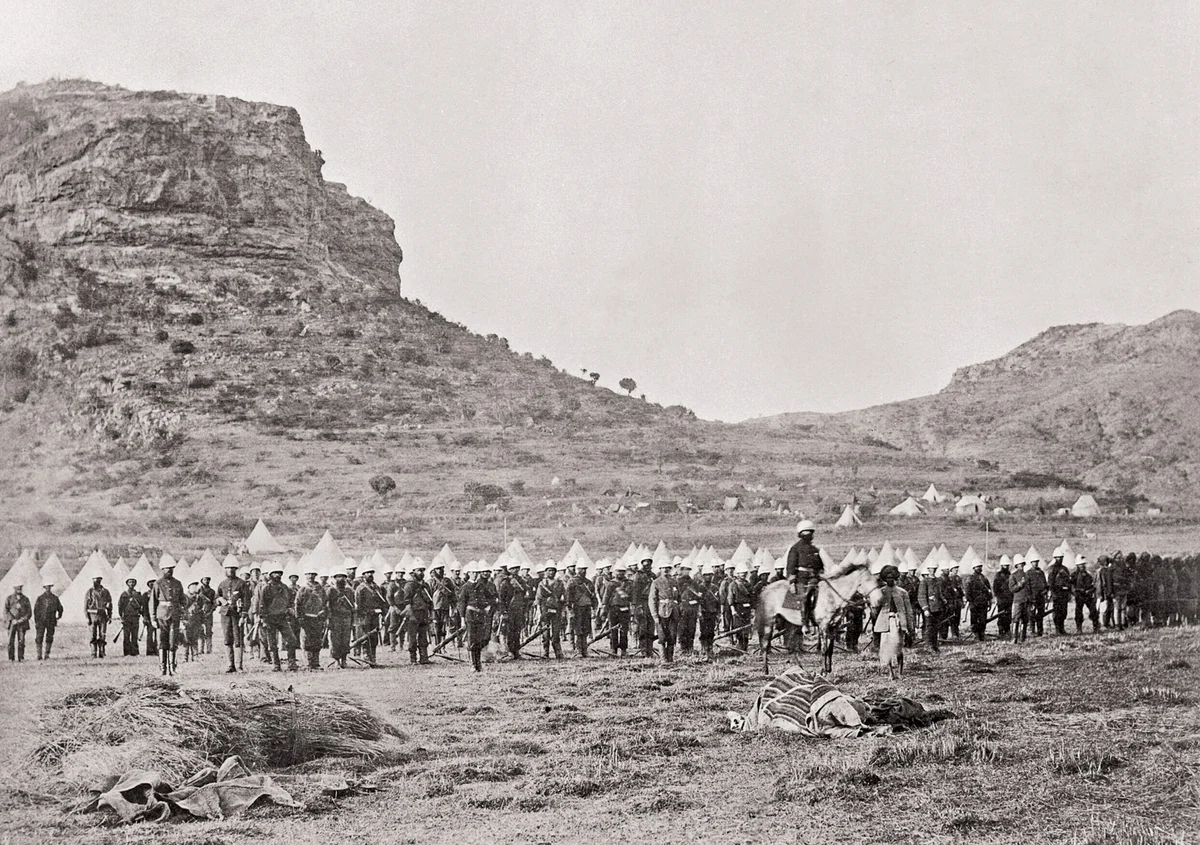
In 1924, when Ethiopian Regent Ras Tafari Makonne visited England, the British Government presented her with one of Tewodros’ silver crowns. Forty years later, Queen Elizabeth II returned Tewodros’ cap and imperial seal to Emperor Haile Sellassie, but there was no discussion about the status of the Crown and Chalice. In 2008, the Ethiopian government made a formal restitutions request, including the Crown, but none of these requests were granted. Though Ethiopians and Britons alike campaign for the restitution of the Mäqdäla treasures, as of February 2022, the UK government has not “made a policy decision to return these objects.”
In turning to British statute, however, things are not as clear cut as they may seem. The English National Heritage Act 1983 (NHA), which governs the V&A and its Trustees, prohibits the deaccessioning of an object unless there are duplicates, it is “unsuitable for retention in their collections,” it is sanctioned under the Museums and Galleries Act 1992, or has become “useless for the purposes of their collections by reason of damage, physical deterioration, or infestation by destructive organisms.” While the British Museum, which is governed by the British Museum Act 1963, cannot “deaccession an object if it was created before 1850,” there is no such criterion for the V&A and Lauren Bursey points out that this provision is “unlikely to apply to colonial-looted objects.” As the V&A is not considered a charity museum, it is not subject to the Charities Act 2011, which allows the Trustees to repatriate an object “on moral grounds.”
In this case, then, ensuring the restitution and repatriation of the Mäqdäla treasures is not as simple as putting forth a formal restitution request. Rather, in order to do so, the entire NHA must be amended, as Hunt proposed in an interview with the BBC Radio 4 Today program in 2022. Nevertheless, given that the Lords are keen on “repeat[ing] outdated concerns about deaccessioning and repatriating cultural heritage,” including third-world countries’ inability to ‘protect’ their objects, and the current Heritage Minister’s declaration that there are “no current plans to amend this Act,” it seems that a reevaluation of the legislation is off the table for now. In terms of a solution that both adheres to the NHA and appeases the Ethiopian community, the V&A commented that, “throughout the process of organizing Maqdala 1868, there have been a number of discussions about further collaboration, including a long-term loan.” Nevertheless, the Ethiopian ambassador denied this solution, asserting that “only the full return with ownership rights and display in Ethiopian museums would be satisfactory.”
The controversies surrounding the decolonization of the V&A along with the restitution and repatriation of the Crown underscore that the relationship between decolonization and repatriation is tightly governed by UK ‘power politics.’ As of right now, since the NHA can only be changed by Parliament, the only way cultural heritage can be “accessible” is through “a long-term loan agreement.” Thus, the best way to begin the restitution and repatriation process is to work through the “multiple different avenues through which return could be facilitated,” including, but not limited to, the proposed long-term loan, finding loopholes in the NHA, and lobbying to Parliament to amend this Act. For as Bursey writes, “the return of cultural heritage is but one avenue in the ongoing work to decolonize modern societies.” In terms of how the museum can better address the notion of decolonization as it relates to the history of collecting, they must be open about the problematic histories and provenances of their objects. While Maqdala 1868 was a “significant first step towards the eventual return of these treasures [to Ethiopia],” the V&A must “[focus] on the history and legacy of its colonial past” (Jones, “Maqdala and the South Kensington Museum,” 80-81).
While notions of “decolonizing the museum” and repatriation are not impossible to execute in the museum sphere, it is clear that there is still much work to do. In spite of the harsh legislative boundaries that prevent an immediate deaccessioning and repatriation of the world’s most sensitive cultural heritage, both parties must meet in the middle and work together to meet the goals of repatriation and restitution. For it is these efforts that will end up being critical in assisting transparency and guiding other international museums to embrace restitution and repatriation claims as methods through which the world’s cultural heritage is honored and its dignity respected.
(Cover Image: The Mäqdäla 1868 Display at the V&M, Alex Watson Jones via Research Repository St. Andrew’s).
Cara explores how Natalia Goncharova redirects the ambitious, often technologically oriented rhetoric of Russian avant-garde abstraction toward an intimate and playful subject: domestic cats.
Kate explores how Australian artist Vincent Namatjira redefines portraiture to confront the legacies of colonialism while envisioning a more inclusive future—one expansive enough to embrace all Australians.

Clarke Reynolds (Mr. Dot) talks with the Art Review about interactive art, changing the narrative around blindness, and creating a world where art is more accessible for all.