May 1, 2026
Opinions
Opinions
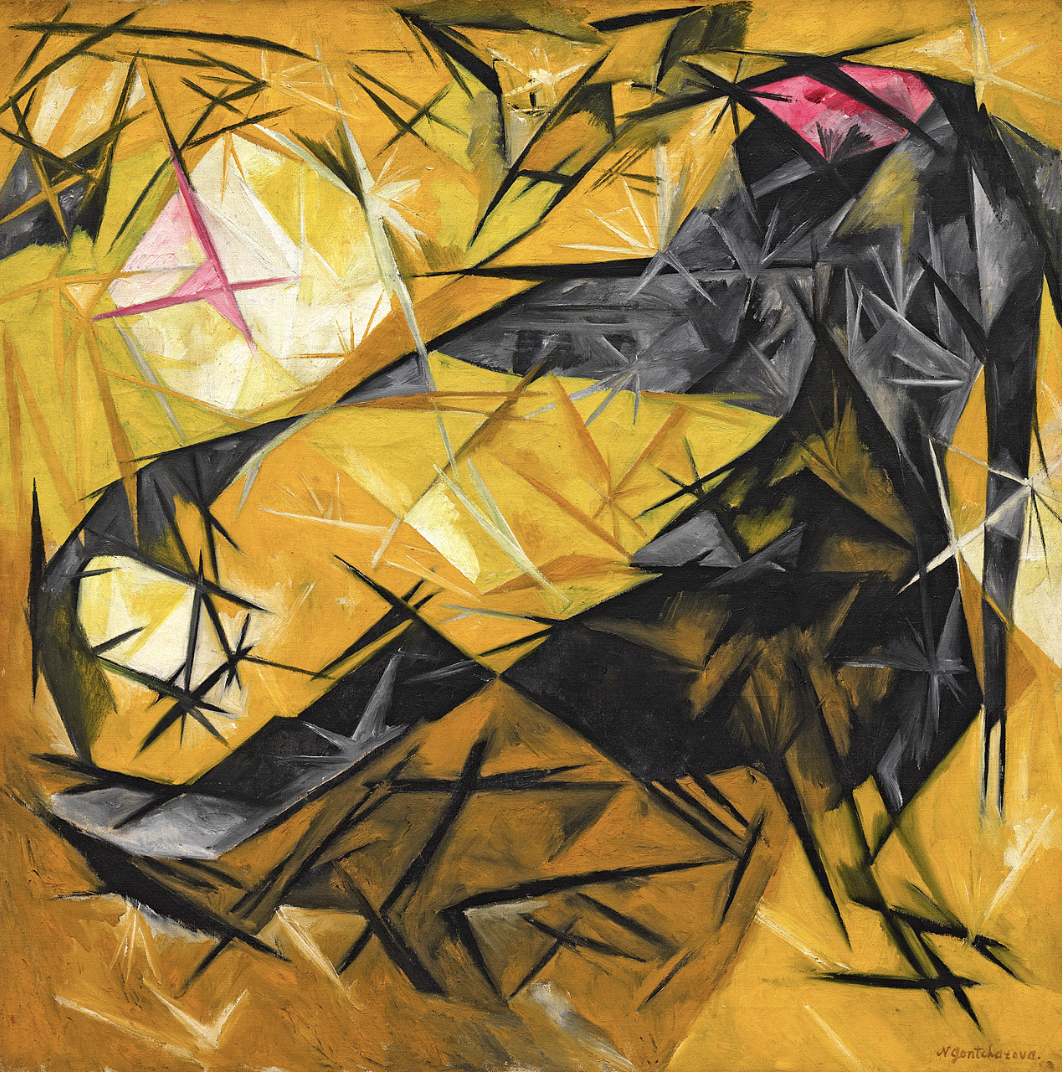
Cara explores how Natalia Goncharova redirects the ambitious, often technologically oriented rhetoric of Russian avant-garde abstraction toward an intimate and playful subject: domestic cats.

Adam discusses the presence of the sciapod within medieval illustrations, examining it in light of St. Augustine’s views on the subject of monstrous races in The City of God and Camille’s modern view of marginal illustrations.


One-footed humanoid creatures (such as the figure that lies down in the cover image) have been known historically as sciapods or monopods. These sciapods and their proposed existence are attested to in ancient writings, such as in the great theological work The City of God by St. Augustine, the focal text of this article. Inspired by the literary tradition of these creatures, medieval illuminators found meaning in their inclusion in works like the Marvels of the East (the source material for this article’s cover image), religious and devotional texts, or bestiaries (animal/creature text collections). The purpose of their inclusion (and their meaning to the artists and the medieval readers) has been contested. I aim to argue that, based on the influence of St. Augustine’s works on medieval religious theology and philosophy, his particular view on the nature of sciapods, or other views like it that would have had an impact on medieval individuals, should be used as the basis of analysis for their inclusion in medieval illustrations.
St. Augustine, in Book XVI, Chapter VIII of The City of God, describes the sciapods as creatures that “lie down on their backs and shade themselves with their feet.” The visual parallel with the illustration from the Marvels of the East is clear. In this image, a sciapod lies on his back, placing his foot between the rest of his body and the sun. He rests in a wavy sort of uncertain terrain, posing his arms and hands and sporting seemingly common garb for the period. I would take this piece of clothing and the style of the sciapod’s hair as a form of humanization in the visual representation of the creature. Returning to the discussion of The City of God, Chapter VIII, titled “Whether Certain Monstrous Races of Men are Derived from the Stock of Adam or Noah’s Sons,” analyzes both the sciapods and other creatures in their context as creations of God. St. Augustine does not claim that the sciapods definitely exist, rather stating that “we are not bound to believe all we hear of these monstrosities.” He does, however, make it very clear that, if the sciapods and various other creatures do exist, if they are men, “that is, a rational, mortal animal, no matter what unusual appearance … no Christian can doubt that he springs from that one protoplast.” The question of whether they are descended from Adam, then, for St. Augustine, rests in whether they are humans, that is, animals having rational souls.
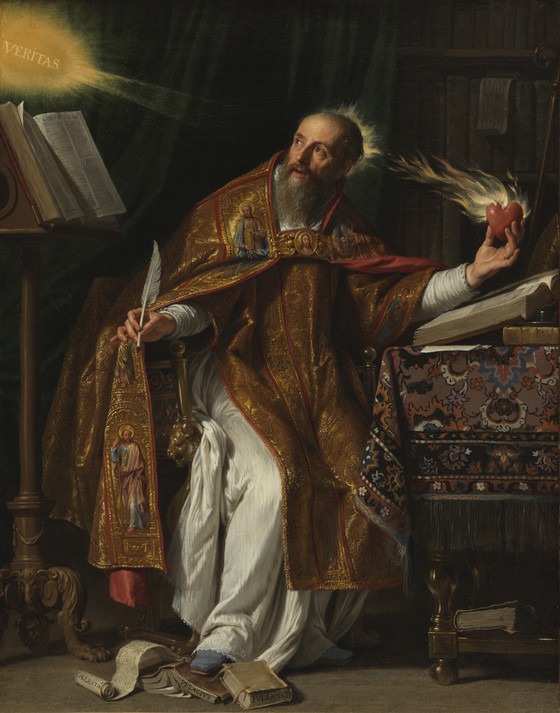
St. Augustine goes on to compare these creatures with those born with physical disabilities, claiming that “God, the Creator of all, knows where and when each thing ought to be, or to have been created, because He sees the similarities and diversities which can contribute to the beauty of the whole. But He who cannot see the whole is offended by the deformity of the part, because he is blind to that which balances it.” Thus, St. Augustine proposes that humans with physical disabilities and possibly-human creatures (if they are human) that differ from the “common human nature,” are created in a particular space by God as a means of contributing to the entirety of the beauty of His creation. This statement rests as a particular call on readers to witness the beauty of God’s creation in all human beings, regardless of appearance or disability. Consequently, the humanization of the sciapod of the Marvels of the East can be seen as a response to this call, an inclusion of the imagined creature in humanity, a form of respect for God’s diverse creation. St. Augustine even goes on to suppose that God may have “seen fit to create some races in this way, that we might not suppose that the monstrous births which appear among ourselves are the failures of that wisdom whereby He fashions the human nature.” In this supposition, the possibly-human creatures like the sciapods could thus serve as a way for God to further encourage the acceptance of every human being as His purposeful and beautiful creation. So, a text that would have been widely influential in the period saw sciapods and other creatures as assurances of the beauty of God’s creation.
In 1992, Michael Camille released Image on the Edge: The Margins of Medieval Art. In this work, Camille argues that marginal illustrations, in a medieval context, were spaces for rebellion and even ostracization. Camille aimed to show that this proposed space of rebellion in the margins was the means by which medieval illuminators attempted to undermine the system they lived within. In a discussion of the Psalter world map (Figure 2), Camille draws on Bronisław Geremek (a Polish politician and social historian) in claiming that the exterior spaces, where a sciapod (and other classical creatures) can be seen, serve as “a space for ejecting the undesirable - the banished, outlawed, leprous, scabrous outcasts of society.” While Camille presents this idea from a very real visual cue of the exterior or outer position of the sciapod, I believe that the idea as a whole, in the context of St. Augustine’s theological influence, is misplaced. Camille, who references Geremek here, intends to create an example of the sciapod as an image of the “dangerous” world outside of a medieval individual’s home. This raises the question, however, of whether exteriority necessitates a representation of fear and ostracization. I would say that it does not, even if it is true that some medieval individuals may have had a general fear of the unknown or the different that lied beyond the known or existed in one’s own local community (this difference being found in those with physical disabilities). Rather than this, I believe that the exterior nature of the sciapods intends to show a form of wonder, an investment in the diverse beauty of God’s creation that exists even in unknown areas or with the differently-appearing, rather than a projection of the fears of that which was known and close to home. Looking back to the cover image, one can see an example of a clear attempt by a medieval illuminator to highlight the humanity of a sciapod, a participation in the rational existence. Camille even states that “the edges of the known world were at the same time the limits of representation.” Thus, the artists would naturally fill this gap of knowledge with an imagined reality that is foreign to them, but always based in an understanding of the ordered and beautiful nature of God’s creation, despite any possible feelings of fear or hesitance surrounding this unknown. Other views of creatures like the sciapod may have influenced medieval thought in the period beyond St. Augustine’s, but the influence of St. Augustine cannot be denied, and thus his view and views like his (supporting the idea of sciapods as exemplifying God’s diverse creation) should be centralized, especially when considering a religious work like a psalter.
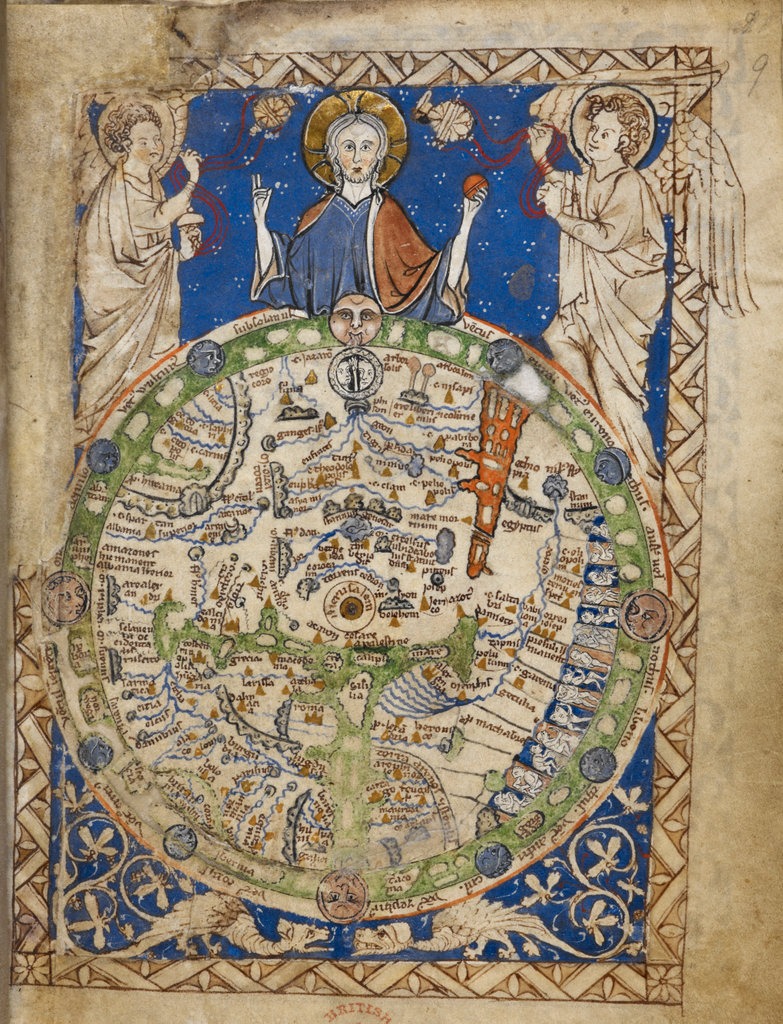
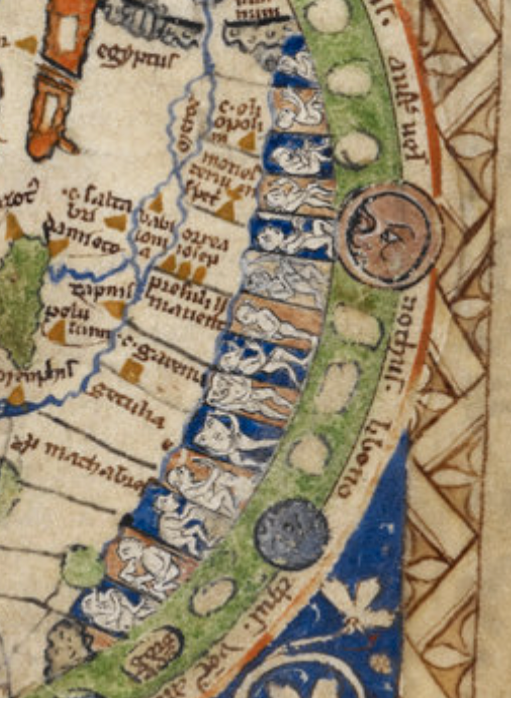
I believe that Camille falls short in his analysis of the external nature of the sciapods, claiming that it is a way of showing fear and undesirability rather than wonder in the diverse creation of God, because he did not take into full account the intellectual formation of individuals in the period. In seeking to determine the meaning of a medieval illustration to its artist or contemporary reader, one should view the image in light of the theological and philosophical influences on the common thought of the time. For the sciapods in illustrations, St. Augustine’s commentaries on the importance of rationality rather than appearance in determining humanity and the capability of creatures like sciapods to assure the beauty of the entirety of God’s creation are a better means of finding an accurate representation of medieval intent. Thus, I would claim that, with St. Augustine’s views in mind, the medieval artist of the Psalter world map likely placed the sciapod on the edge of the map as a means of filling in lacking knowledge and using that space as a place to wonder, imagine, and reflect on the beauty of God’s varied and diverse creation. Moving forward, medieval art historians should account for the theological and philosophical systems of thought that would have influenced a medieval understanding of the unexplored world, with its possibly-existing sciapods.
(Cover Image: Unknown Artist, Marvels of the East, Illuminated Manuscript (Parchment), Oxford, University of Oxford, Bodleian Libraries, 12th century (middle), via JSTOR.)
Cara explores how Natalia Goncharova redirects the ambitious, often technologically oriented rhetoric of Russian avant-garde abstraction toward an intimate and playful subject: domestic cats.
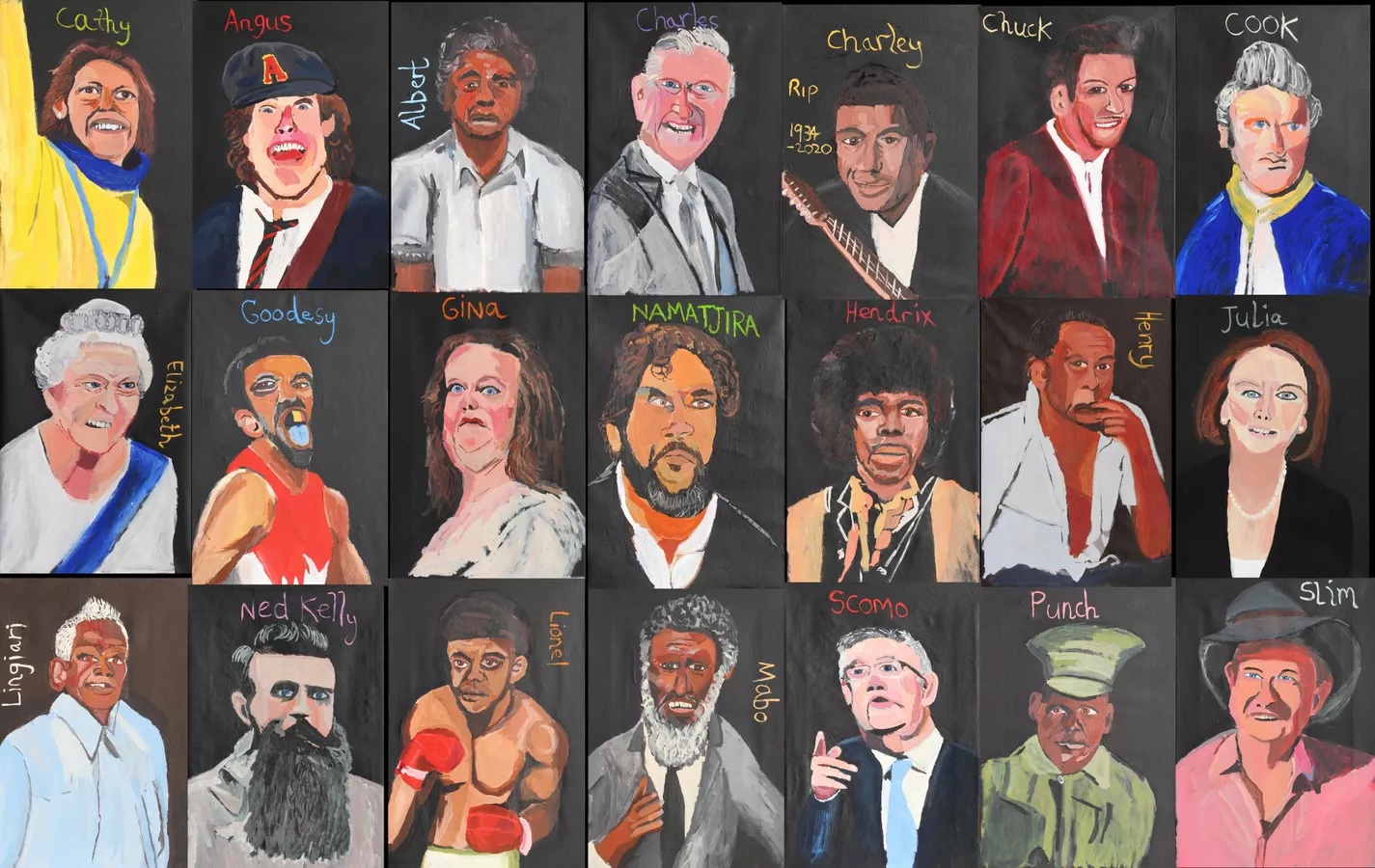
Kate explores how Australian artist Vincent Namatjira redefines portraiture to confront the legacies of colonialism while envisioning a more inclusive future—one expansive enough to embrace all Australians.

Clarke Reynolds (Mr. Dot) talks with the Art Review about interactive art, changing the narrative around blindness, and creating a world where art is more accessible for all.