May 1, 2026
Opinions
Opinions
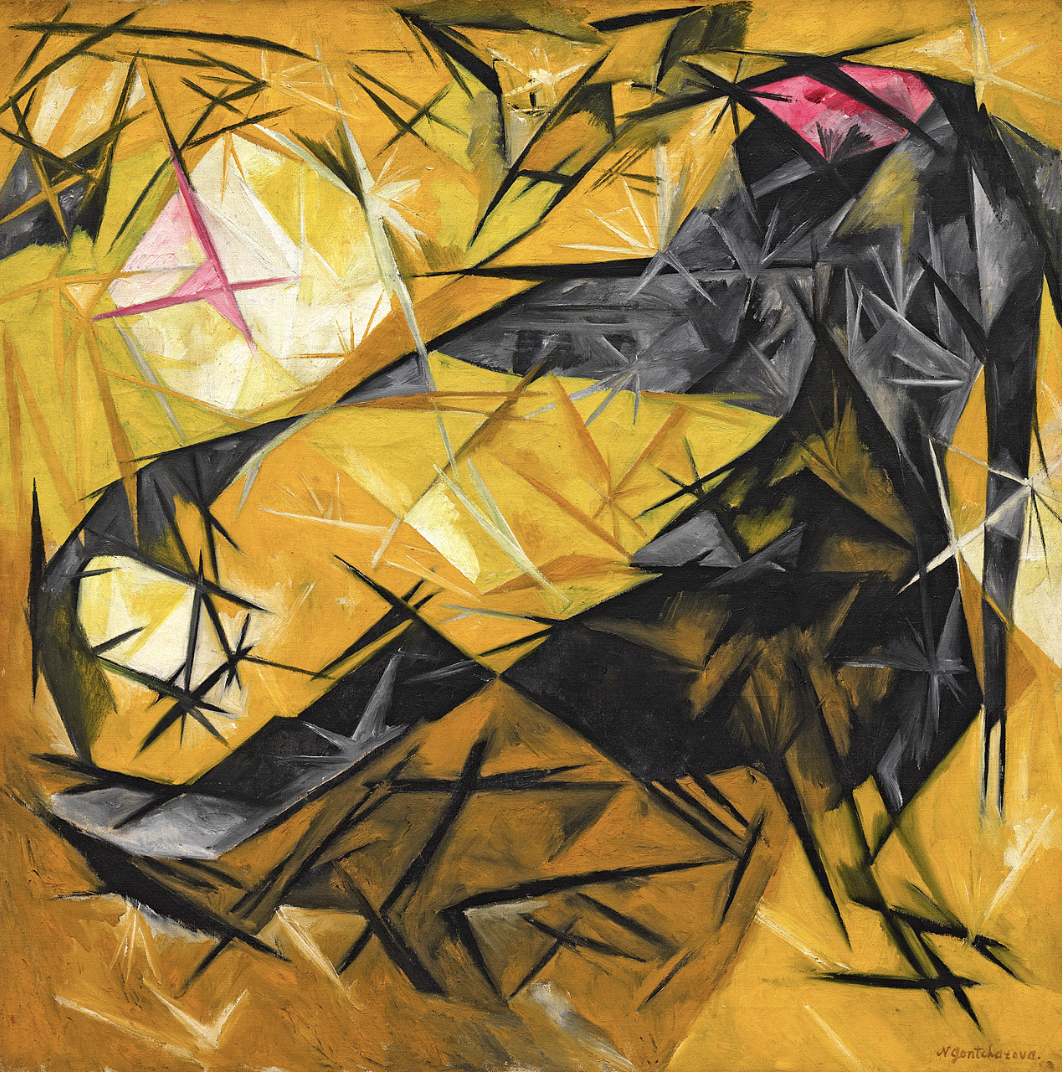
Cara explores how Natalia Goncharova redirects the ambitious, often technologically oriented rhetoric of Russian avant-garde abstraction toward an intimate and playful subject: domestic cats.

Rena visits the “Planetarity: Frictions, Fossils, and the Future" exhibition, which was on view at the Gelman Gallery until January 11, 2026.

The sky was an infinite shade of periwinkle blue, the kind you’d expect to find only on a painted canvas or in a half-remembered childhood advertisement. I was walking to the opening of an art show, down the track I usually take on afternoon runs. The same corner turn brought an unsurprising street and a lamp that stood by it alone, the same windows to shops that never seem to be in business on weekdays. At this point, it was a little past 6 o’clock; I was running late. The careless wind typical of east coast weather in the firsts of November scratched at my cheeks like the soles of my shoes did the cold, hard sidewalk cement beneath my feet. Somewhere between the cold’s creeping numbness and the rhythm of my steps, I lost track of the feeling in my own limbs, though I reckoned it as nothing more than the weather settling into me the way it always does.
Yet the curious periwinkle sky loomed on in the distance, seeming to gaze right back at me.
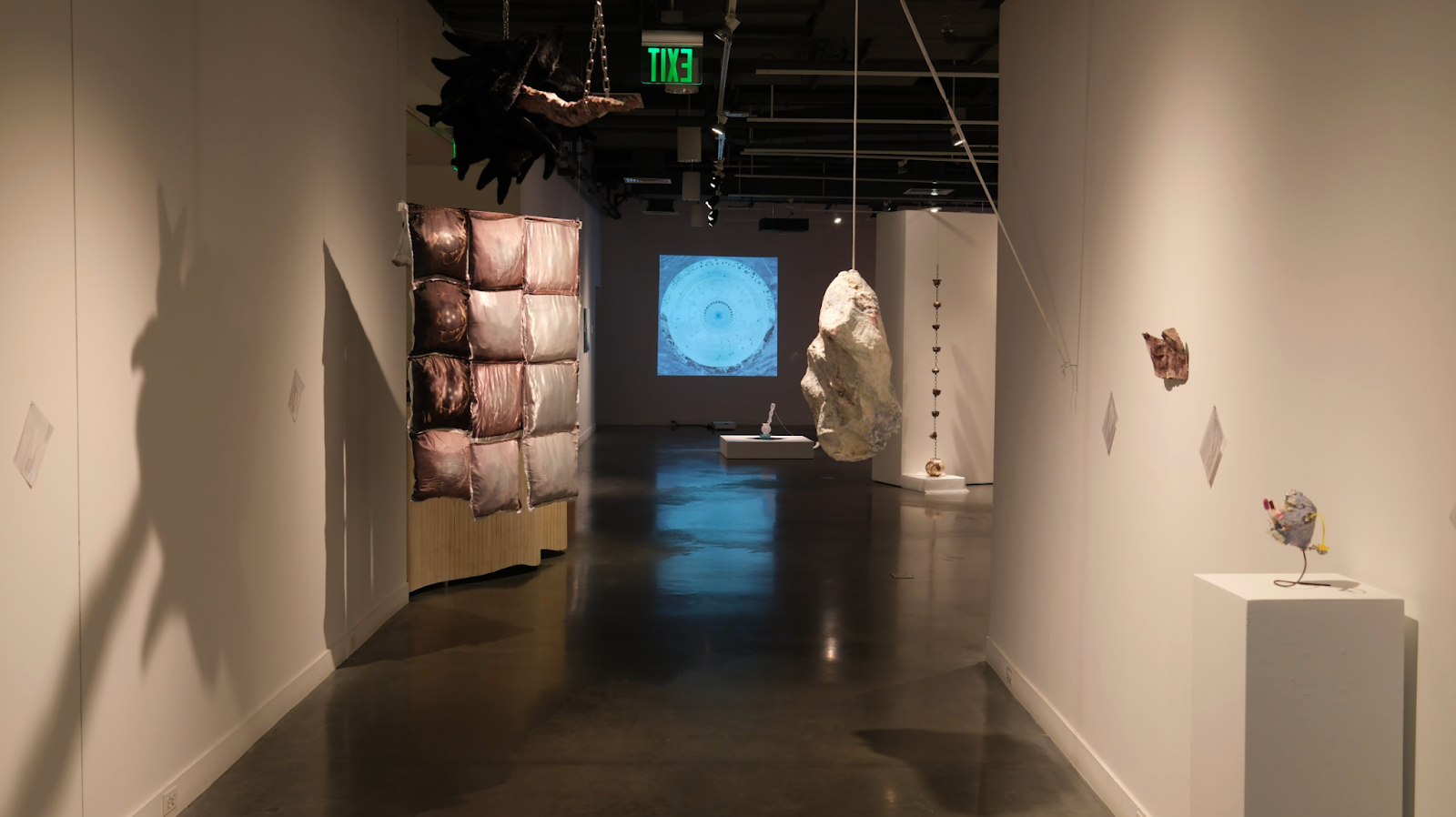
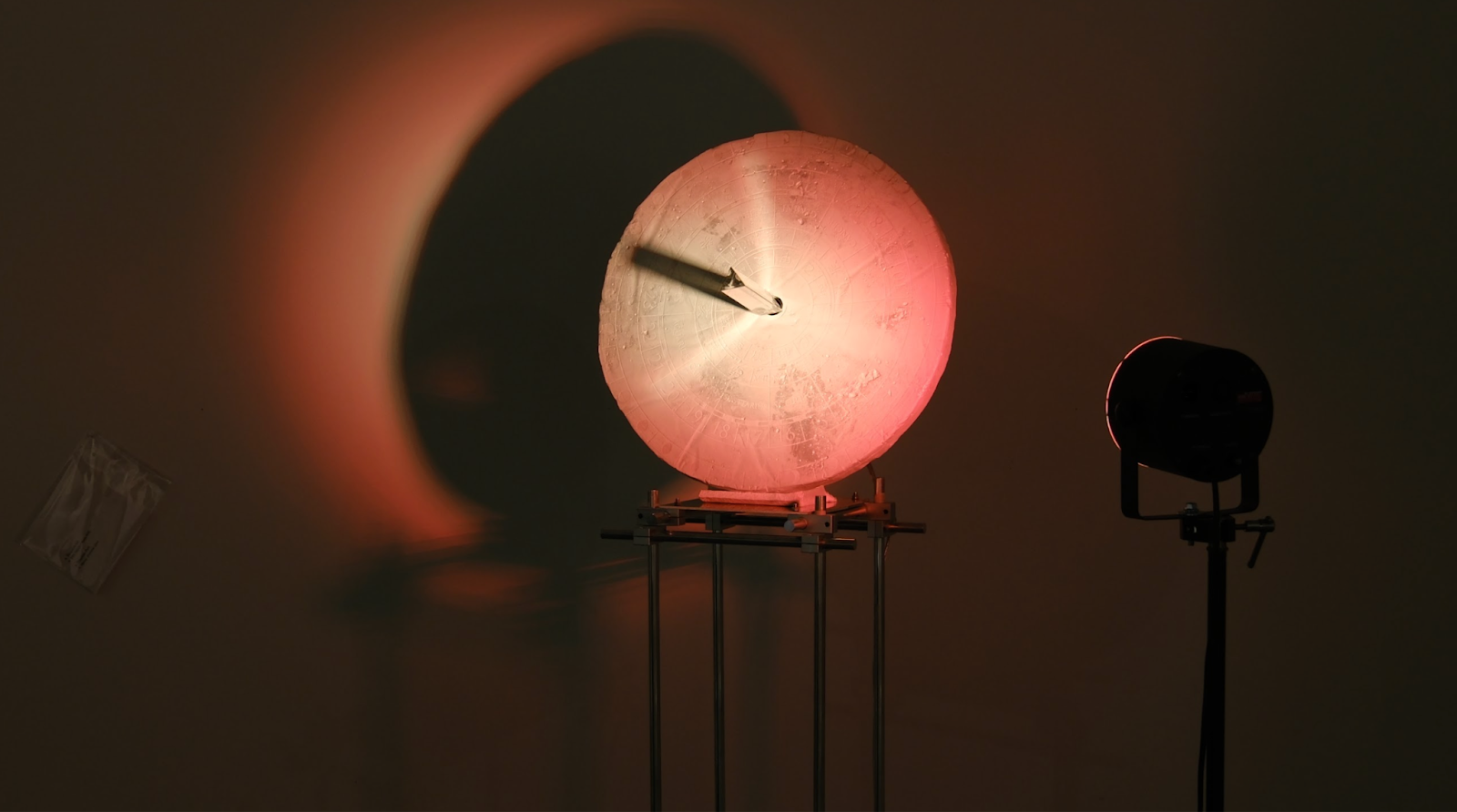
As I entered the Gelman Gallery, I was met immediately with the dim chatter of people, their overlapping vocabulary sounding familiar yet distorted and alien. White, bold words emerged from the moon-gray wall: “Planetarity: Frictions, Fossils, and the Future”. I was walking into a strange landscape where items of different sizes, materials, and compositions were juxtaposed next to each other. Trying to make sense of the seemingly arbitrary surroundings, I figured that perhaps their orientation represented the past, present, and future: a cocoon signaling becoming hung from the ceiling to my left, a caged empty tortoise shell resembling Renaissance cabinets of curiosities of the past rested on my right; a monstrous creature of the future with dark spikes and a long tongue hovered above. Venturing further into the exhibition, my conception of time as I knew it slowly became scattered and muted by these sensations; I was entering the cocoon of something far greater than what humans have seemingly captured in their watches and clocks.
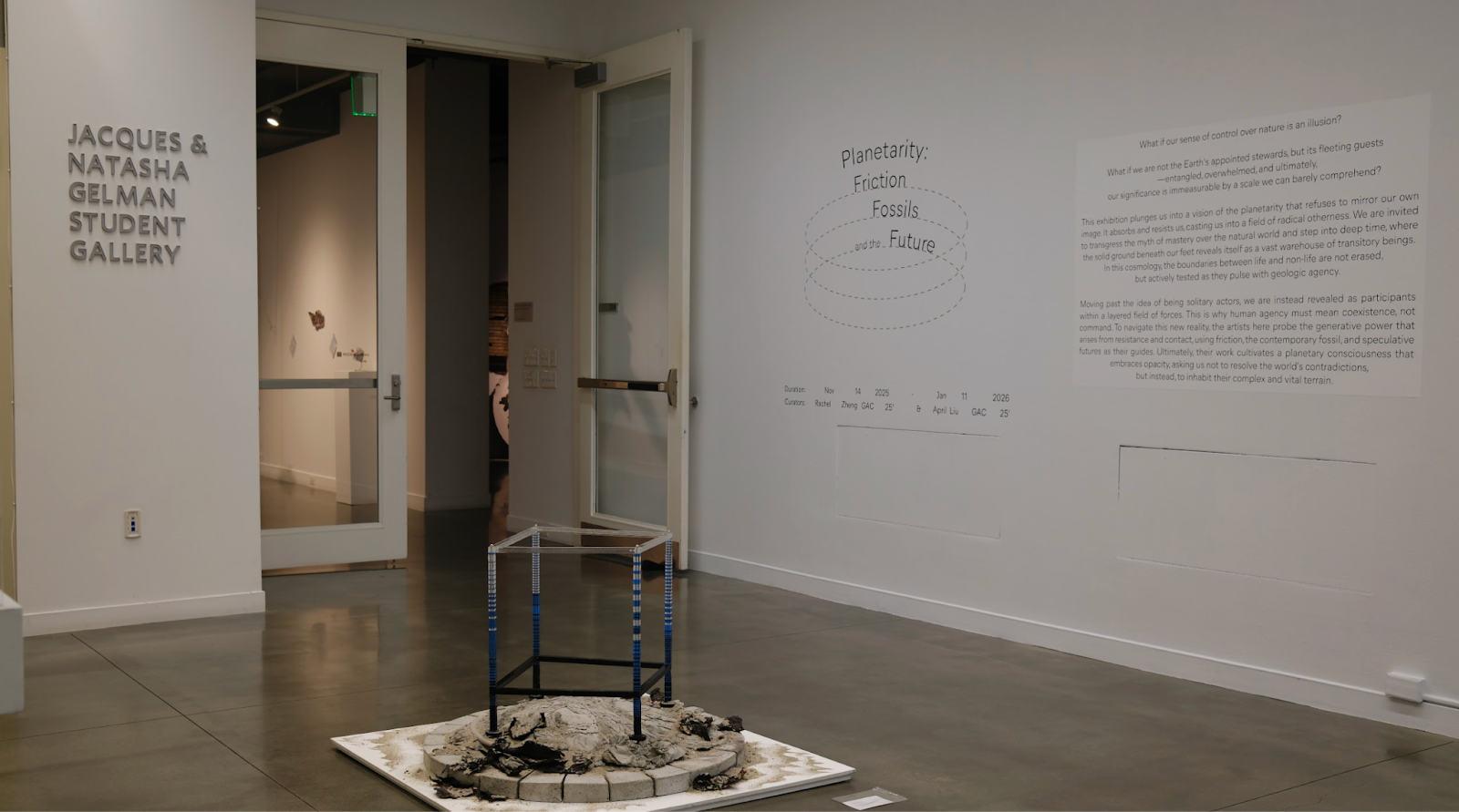
The show’s theme, “Planetarity”, was first introduced by Gayatri Chakravorty Spivak as an alternative to the concept of “globalization”. In her essay, she argues that the global world—with its economic systems, digital networks, and managerial thinking—treats the Earth as something measurable, ownable, and fully knowable. She claims that, in contrast, the planet represents what exceeds human comprehension: unknowable, irreducible. It is not shaped by human timelines, instead owning its own geological timescale - a term known as Deep time - vast and nearly incomprehensible. The millions and billions of years over which the Earth formed, shifted, eroded, and transformed, long before humans existed, dwarf human history. If all of Earth’s 4.5 billion years were condensed into a single day, human civilization would appear only in the last few seconds. Therefore, Planetarity is not about achieving perfect knowledge of the nonhuman world. Instead, it is about acknowledging our partial understanding and cultivating sensitivity, humility, and imagination toward what we cannot fully grasp. The periwinkle sky above now assumed an even darker hue, its massive wings bestrewed with the lightest traces of starlight.
The curators of the show, April Liu ( GAC ‘25) and Rachel Zheng (GAC ‘25), have both experienced the epiphany of Deep Time, engaging with it in a meaningful way before the term was introduced to them formally. With both having had archeological backgrounds during their undergraduate studies (April in ancient Chinese bronzes and Rachel in collaboration with Chinese dinosaur fossil archaeologists), they came across Spivak’s essay on creating “Planetarity” together in their required first-year graduate course at RISD in Global Art and Culture. Their chance encounter with each other, as well as their shared fascination with Earth’s vast geological timescale, was “a coincidence (they) considered to be a response that transcends (their) own experience.” The two, brought together by the unknown yet powerful force of fate, wish to share their experience with the world.
Rena Zhang:You invoke “deep time” — the idea that we exist within geologic scales beyond comprehension. How did you translate that temporal vastness into spatial or visual experience for viewers here in the Gelman gallery?
Rachel Zheng: This exhibition transforms the gallery space into a topography and a timescale, where matter, memory, and imagination continually interact. The spatial design follows a three-chapter structure—friction, fossils, and the future—unfolding from subtle movements to physical objects, and finally to states of time. Within these chapters, the design adopts a geological metaphor: each spatial layer compresses the previous one while opening to the next. The visitor’s movement becomes a kind of sedimentation and erosion, constructing, compressing, and releasing meaning through contact. Each section is both thematic and experiential, forming encounters that guide visitors through different densities of time, matter, and imagination. In the entrance corridor, for example, artworks are no longer confined to the walls but are “aggressively” disrupted, forcing visitors to navigate around one another and inviting chance encounters.
April Liu: We wanted viewers to feel deep time rather than simply see it represented. Many of the participating artists engage in a kind of time-traveling through their materials — working with fossils, residues, and imagined futures that collapse linear chronology. The exhibition design mirrors this movement by emphasizing slowness, layering, and shifts in scale, allowing visitors to navigate the space as if tracing the artists’ own temporal journeys through sediment, memory, and possibility.
So often do we try to contain the universe and concept of time that we forget it is not something we can even begin to capture. It is that same eagerness to make sense of it all that leaves us feeling an endless emptiness and loss of wonderment. We forget that this ever-flowing, primordial river carries us within its gentle currents instead.
Still trying to grasp the vast, infinite concept of Deep Time because of a sense of insignificance creeping slowly into the safety of my own existence, I asked the curators for answers from the bottom of a deep, ominously empty pit. I was hoping for some sort of clarity that would serve to pull me out of it. I did not realize, however, that the concept never existed to serve a human purpose in the first place.
RZ: Do you see planetarity as a response to current ecological collapse narratives — or as an alternative to them?
AL: Neither. Planetarity isn’t a counter-narrative or a remedy—it operates on a different register altogether. It refuses the human-centered agency and instead invites a quieter awareness of coexistence. Rather than framing the planet through crisis or salvation, it asks us to listen, to recognize entanglement without assuming mastery or redemption.
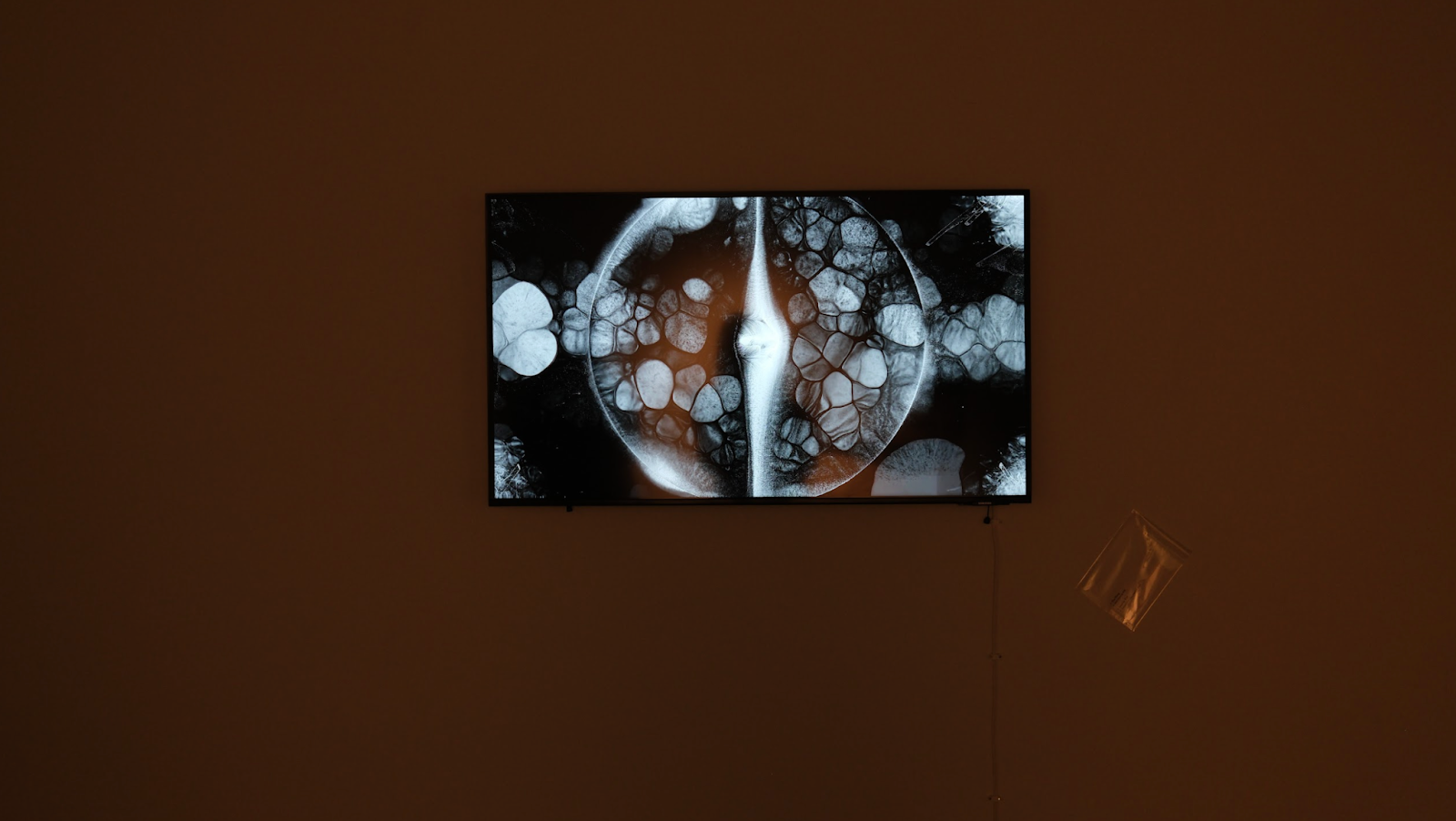
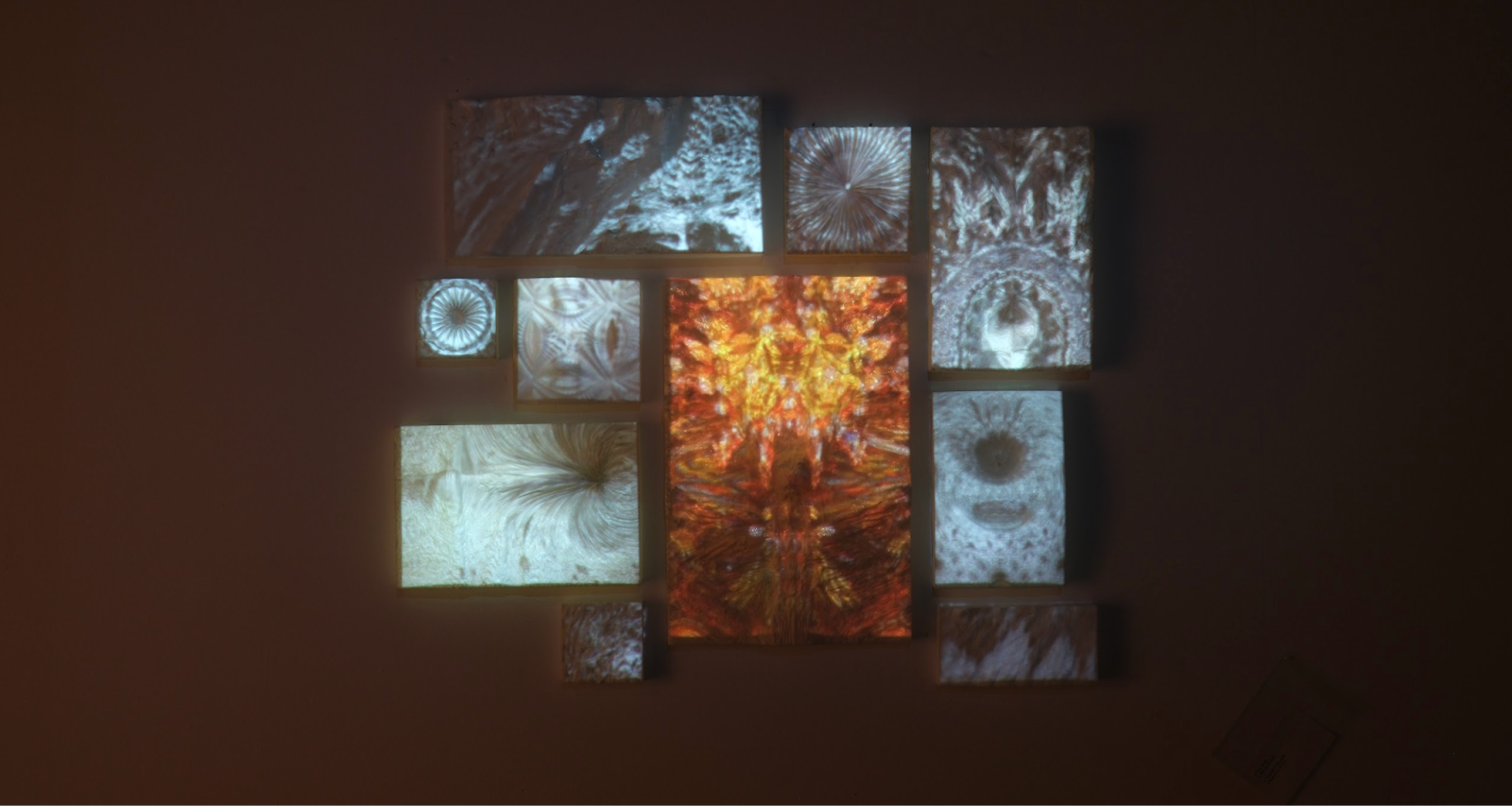
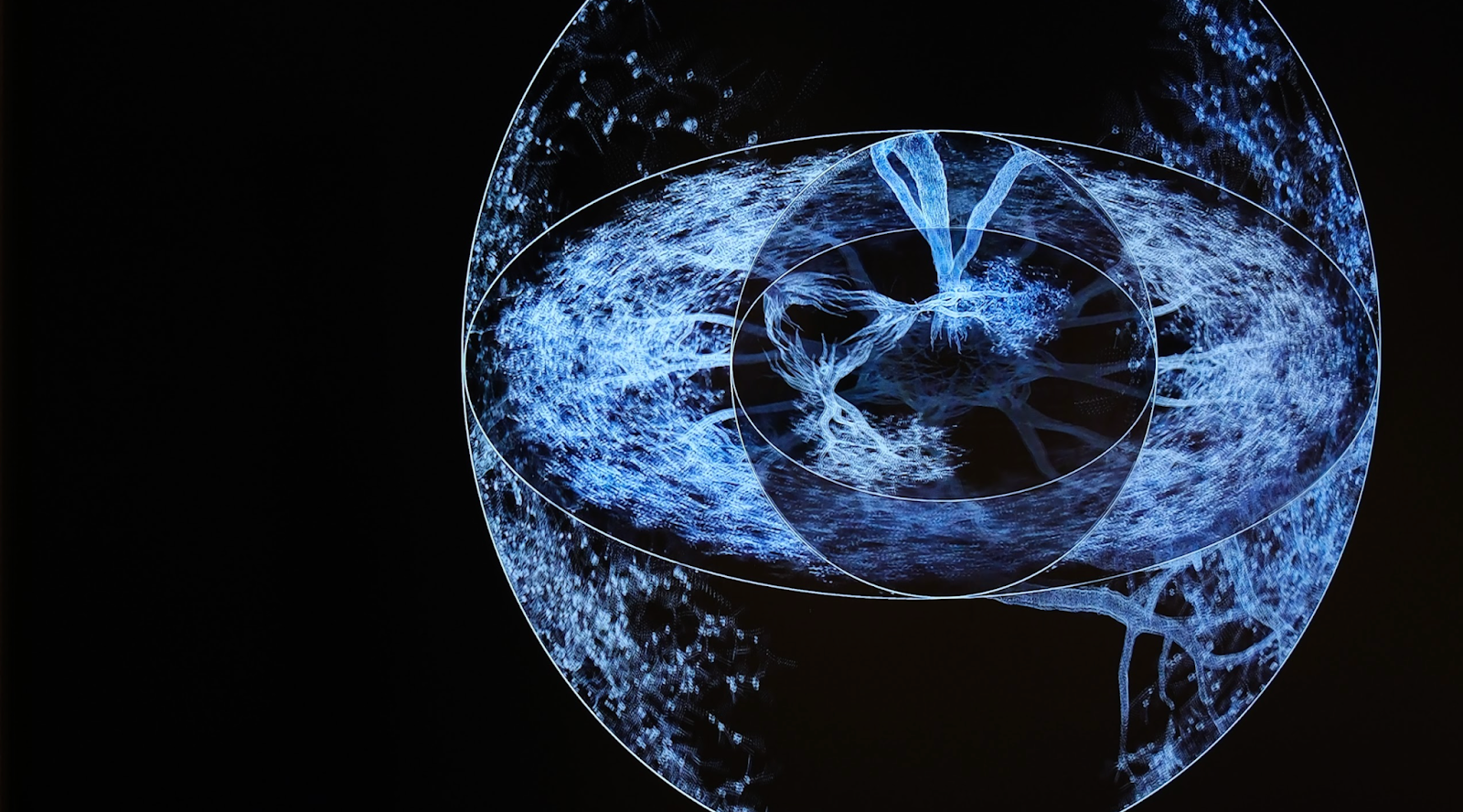
There it was - an answer that dissolved the walls of the endless hole I’d fallen into. I was floating in a space completely open on all sides, with millions of possibilities and chances of collisions. Trying to make sense of all these encounters now seemed extremely absurd. Why construct a hole when there was none to start with? Why define the procession of experience through numerical scales, minute and hour hands, when all it causes is anxiety and a fear of the End? We have flown into cages of our own devise by trying to make sense of it all.
As consciousness came back to my body from an unknown place above, the luminescent periwinkle screen above had already turned dark. A wrinkle in time had somehow teleported me to a moment where my watch now pointed to 8 in the span of what seemed more like seconds. Perhaps I’d entered a brand new dimension in the Gelman Gallery, or at least my mind had wandered into it accidentally with its steps unhurried yet certain of its destination. This was the magic of the show and the space that enclosed it: a completely different dimension and universe, one where the laws of physics, time, and spatial relationship become foreign concepts that do not yet have a name or measure given by the Anthropocene. Amidst the possibility and opacity of that unknown dimension, contradictions could coexist harmoniously. I was within and without, conscious and dreaming, mystified yet enlightened, lost and found all at once. I had lost track of linear time, like a pebble in a river, no longer feeling the slow, persistent friction of the current wearing away its surface. Yet in that unmoored state, the concept of time was more prominent than ever; the vastness of Deep Time came into focus.
At that point, there was a certain wondrous numbness to what had once been my limbs, a sensation that made me question whether, for a moment, I had forgotten I was still in this container of flesh and bone made of but tiny yet immensely fascinating particles. My body is made of them—these dancing particles—no different from the dust that settles on the gallery floor, the bodies moving around the gallery space, the passing strangers on the sidewalk outside, the concrete that lines the city’s veins, the stars burning quietly above, this pedestrian planet we call home, orbiting an unremarkable star in the suburbs of an ordinary galaxy. We were all just granular matter colliding against each other in chance encounters.
As we pushed open the door of the gallery, we took one last glance at it. Here we were, at the crossroads of the now and then, on the threshold of the present, looking out from the gallery of our past. We feel a sense of familiarity to the same gallery door that we had entered earlier, now a culmination instead of a beginning.
As our body exited, a breeze of cool wind and the silence of looming trees enticed us into the starlit, unknown night.
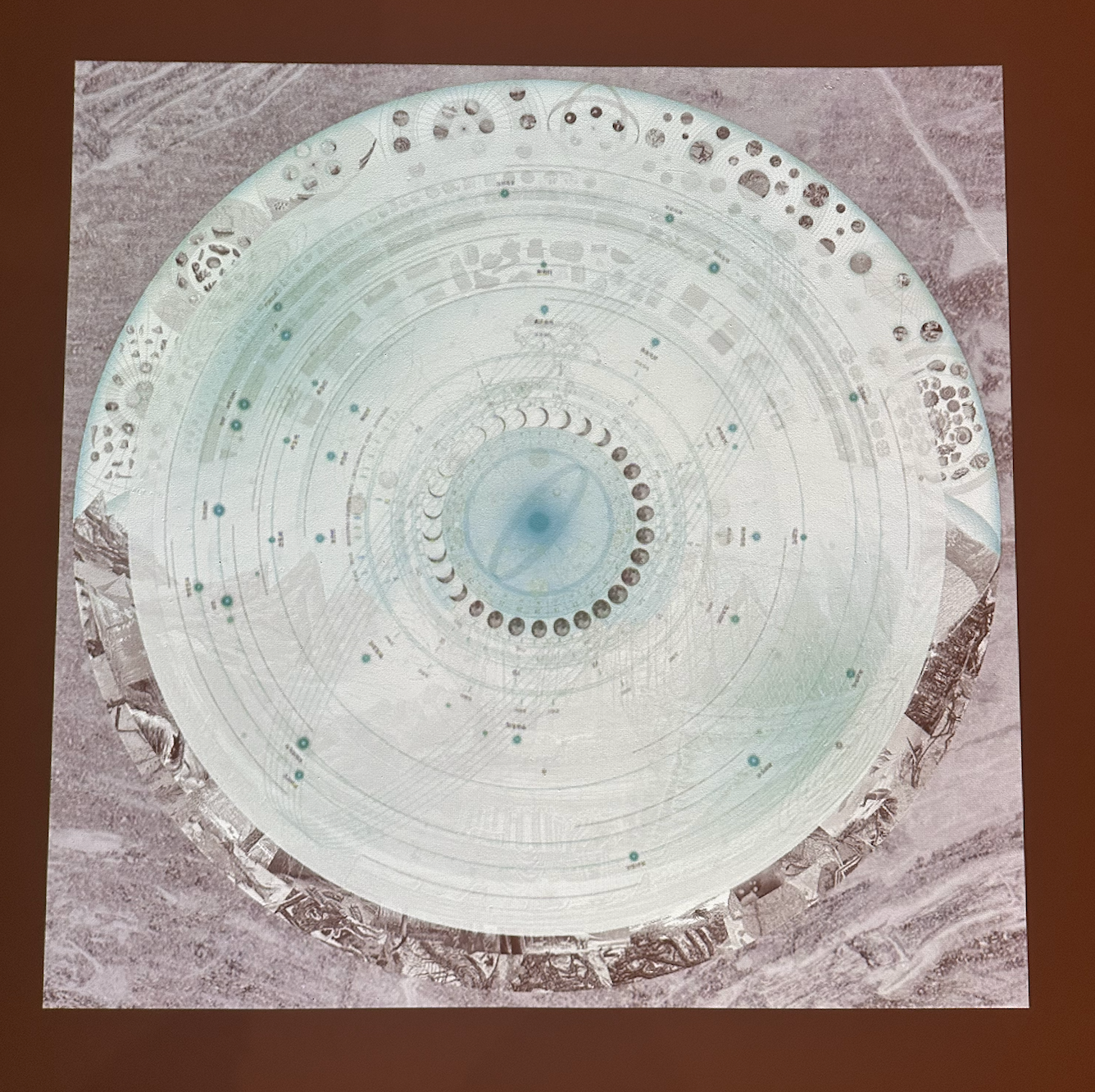
* Special Thanks to curators Rachel Zheng and April Liu for putting together the wonderful show. Congratulations to all these artists for their extraordinary creations: Yuqi Liu, Louise Ma, Nahom Ghebredngl, Leah Liu, Ran Pang, Mitchell Poon, Jungeun Park, Jennifer Choi, Chao Chao, Echo Yan, Tiantian Yu, Lori Lu, River Wang, Meri Sanders, Fiona Lan, Eldoris Cai, Pablo Cazares, Xiaofan Liu, Talha Shams, Natasha Du, Tom Tang, Yanhan Pan, Xuanming Chen, Matthew Brown, Liam Lin, Zayn Compton, Yinghan Zhang, Wuu, Maha Mohan, Tim Zhang.
Cara explores how Natalia Goncharova redirects the ambitious, often technologically oriented rhetoric of Russian avant-garde abstraction toward an intimate and playful subject: domestic cats.
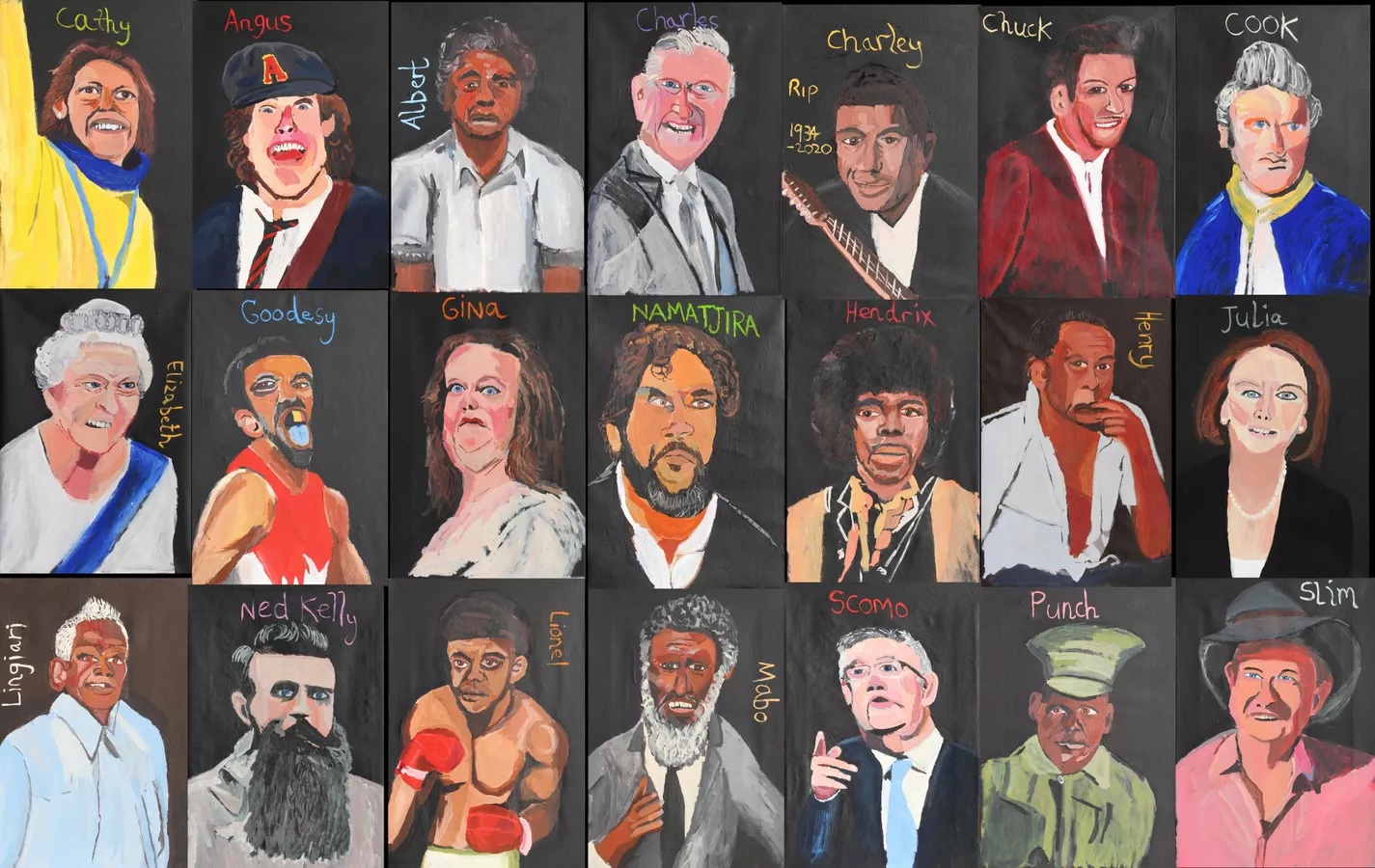
Kate explores how Australian artist Vincent Namatjira redefines portraiture to confront the legacies of colonialism while envisioning a more inclusive future—one expansive enough to embrace all Australians.

Clarke Reynolds (Mr. Dot) talks with the Art Review about interactive art, changing the narrative around blindness, and creating a world where art is more accessible for all.