May 1, 2026
Opinions
Opinions
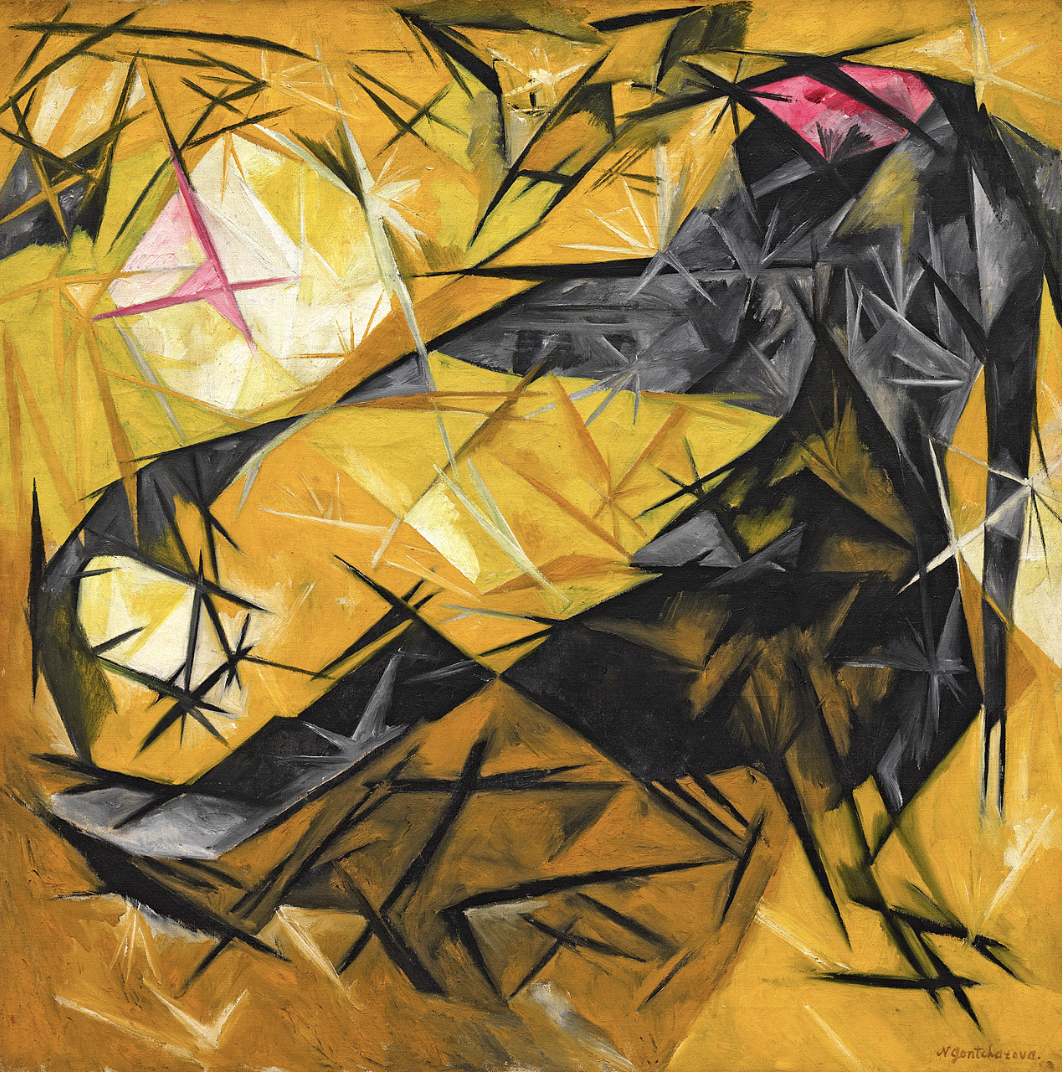
Cara explores how Natalia Goncharova redirects the ambitious, often technologically oriented rhetoric of Russian avant-garde abstraction toward an intimate and playful subject: domestic cats.

Vanni’s painting of The Virgin and Child Appearing to Saint Francis of Assisi guides the viewer through a theatrical ultra-reality showing Saint Francis’s spiritual experience and the beauty of the divine.


Francesco Vanni’s 1599 painting of The Virgin and Child Appearing to Saint Francis of Assisi (Figure 1) is a dramatic work that displays a theatrical view of an important spiritual story. The composition of the piece guides the viewer’s eye along a strategic path. The initial entry point is the bright light that emanates from behind the Virgin’s head, allowing the otherworldly atmosphere to become visible. Then, the viewer is brought to contemplate Mary as she floats in the sky in strikingly vibrant clothes. Following Mary’s gaze, their eyes are then brought downward to the figure of Saint Francis, as he sits in a dark and ominous world, entranced by the baby Jesus in his arms. The earthly realm both connects with the viewer (especially in the figure of Saint Francis’s companion, who lies asleep on the turf to the left) and also creates a greater theatrical contrast to the divine. All in all, this oil on canvas work is a dramatic interpretation of Saint Francis’s spiritual experience that provides viewers with a heightened reality and a deeper longing for the beauty of the divine.
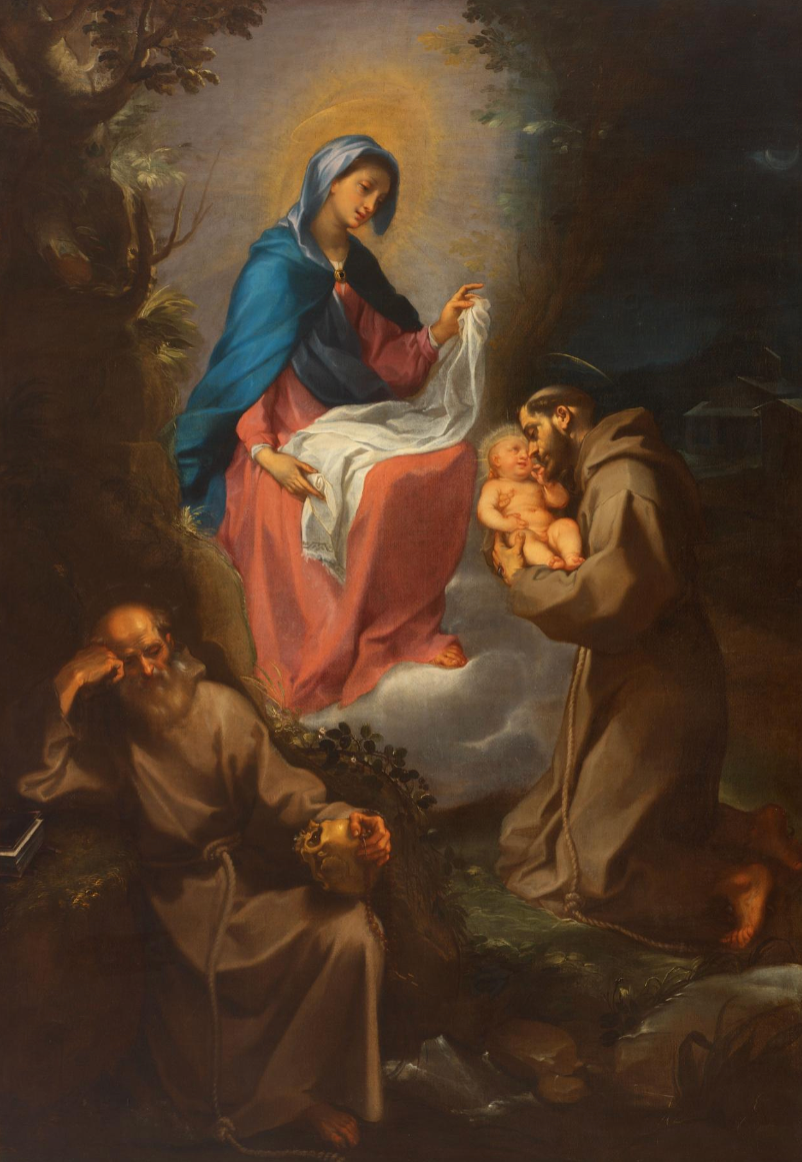
The primary entry point of Vanni’s painting is the golden halo that radiates outwards from behind Mary’s head, acting as a source of divine light to guide the viewer through the scene. It is an organic oval shape, tilting clockwise along with the bend in Mary’s head as she faces downward towards her son, Jesus. This source of light is formed by many small ringlets of color, with the lightest tints right around Mary’s head and also at the edge of the circle. The light’s radial expansion appears similar to the sun. These beams are directed upwards and out, lighting up the backside of the trees that frame this scene, which ultimately condenses the picture. The light behind the trees allows them to remain dark in front, which creates a natural, contrasting boundary to the action. However, this beam of light also acts as the main light source that allows for this scene to be visible, shining down on Saint Francis and Jesus and giving viewers a clear picture of the Virgin. Mary’s face is right in the center of this glowing light, and her skin appears to match its golden hue, fitting perfectly into the gradient that surrounds her. This central point of light is unnatural, not belonging to the sun or moon. It is divine, coming out of the mother of God. This theatrically expresses a supernatural reality that is not apparent in everyday life.
This light highlights Mary; thus, she is the next subject of this work that the viewer is drawn to, as she defies worldly laws, radiating in her atmospheric seat with a relaxed and content expression. She gazes downward, with a natural tilt in the neck to properly view her child. Her cheeks and lips are rosy, suggesting her liveliness and real presence. She is enveloped in her signature blue cloak, which glimmers in the divine light. The many folds of her cloak seem to blow behind her in a light breeze. This cloak is fastened by a simple golden clasp at her chest, with a blue center. Under it, she wears a salmon-colored dress. This dress is the most vibrant color in the painting, which draws attention to the Virgin as she brings colors into the work that don’t exist in the world below her. She also holds a stark white cloth on her lap, the fabric that previously swaddled Jesus. The way she grasps it is quite interesting; her left hand almost seems to be in a blessing position, as it is raised up toward the viewer, and the cloth billows down from her fingers into her right hand at the edge of her lap. Another notable detail is the fact that Mary sits upon a cloud, elevated from the rest of the painting. There is no clear surface that she is sitting upon, and only the tip of her foot is seen resting on the billowing dark clouds. Mary evades the rules of the mortal world in Vanni’s work. She doesn’t need a worldly object as a seat, and is seemingly situated both on earth and heaven at the same time, bringing the firmament into the world with her.
The world below and on the sides of Mary is the next point of interest, which shows a sublime expression of Saint Francis’s spiritual experience. Vanni creates a dark forest background with sprawling trees and shrubbery that serve as a backdrop to the human action taking place. The forest does not attract the viewer's attention, but allows the viewer to see the actions of Saint Francis more clearly. Francis is shown underneath Mary’s gaze, to the right of the painting. He is kneeling, cradling the baby Jesus. His drab hazel robe envelops him with its many draping folds. Long tassels hang weightily from his belt, connecting him with the barren earth below. His hand appears strong, with large fingers and veins visible as he holds on to the Son of God, but is also afflicted with a purple wound in the center, echoing Christ’s Passion and the suffering that He endured to bring about everlasting life. Yet, Saint Francis is seemingly not interested in or worried about this wound, fully focused on Jesus. His face is nestled close to the baby, and his eyes seem closed as Jesus happily stares at him. Saint Francis doesn’t even seem to notice the presence of Mary above him. Even in her shining glory, Saint Francis only sees the baby Jesus, and the Virgin is contented by this. She is a viewer of Francis herself, as she watches the saint hold her son with joy in her eyes. In contrast, the man on the left sleeps, completely detached from all that is happening. He slumps on his right hand, his body enveloped in the same humble robe as Saint Francis. In his left hand is a skull, a common symbol of Saint Francis, which shows his connection to the saint. As the only figure positioned outward, he connects with the viewer. This reflects sentiments on man’s struggle to have faith in an omnipresent divine. The Catholic church teaches the constant presence of God, yet, in reality, it is a hard truth to fully practice, and Saint Francis’s comrade shows this. In choosing to add him to this painting as an empathetic, contrasting presence, Vanni further emphasizes the beauty of the divine in a fallen world.
In conclusion, Vanni’s work, The Virgin and Child Appearing to Saint Francis of Assisi, is composed in a theatrical way that emphasizes a spectacular, divine reality. The large painting directs viewers to witness Saint Francis’s spiritual vision. The divine light emanating from behind Mary’s head is the entrance point into the work. Its vibrance is what allows this scene to become visible, and it radiates out in a vibrant glow. Then, the painted depiction of Mary counters worldly laws; she sits on a cloud, bringing the firmament into the plane of Saint Francis. She is also shown in bright clothes that contrast greatly with the drab world below her. And finally, the earth and Saint Francis are set in a darker and more sublime light. The viewer is drawn to meditate on how Saint Francis responds to this worldly darkness, as he intensely interacts with the baby Jesus. The struggles of the earthly world are also symbolized through Saint Francis’s sleeping acquaintance, who is shown facing outward, relating with the viewers. In culmination, Vanni’s work is a dramatic expression of the importance of faith in the world; he uses a theatrical composition to emphasize the glory of Mary and Jesus and how they can provide light in the midst of humanity’s darkness.
(Cover Image: Francesco Vanni, The Virgin and Child Appearing to Saint Francis of Assisi, 1599, oil on canvas, 266.1 by 182.9 centimeters, Rhode Island School of Design Museum, Providence, Rhode Island.)
Cara explores how Natalia Goncharova redirects the ambitious, often technologically oriented rhetoric of Russian avant-garde abstraction toward an intimate and playful subject: domestic cats.
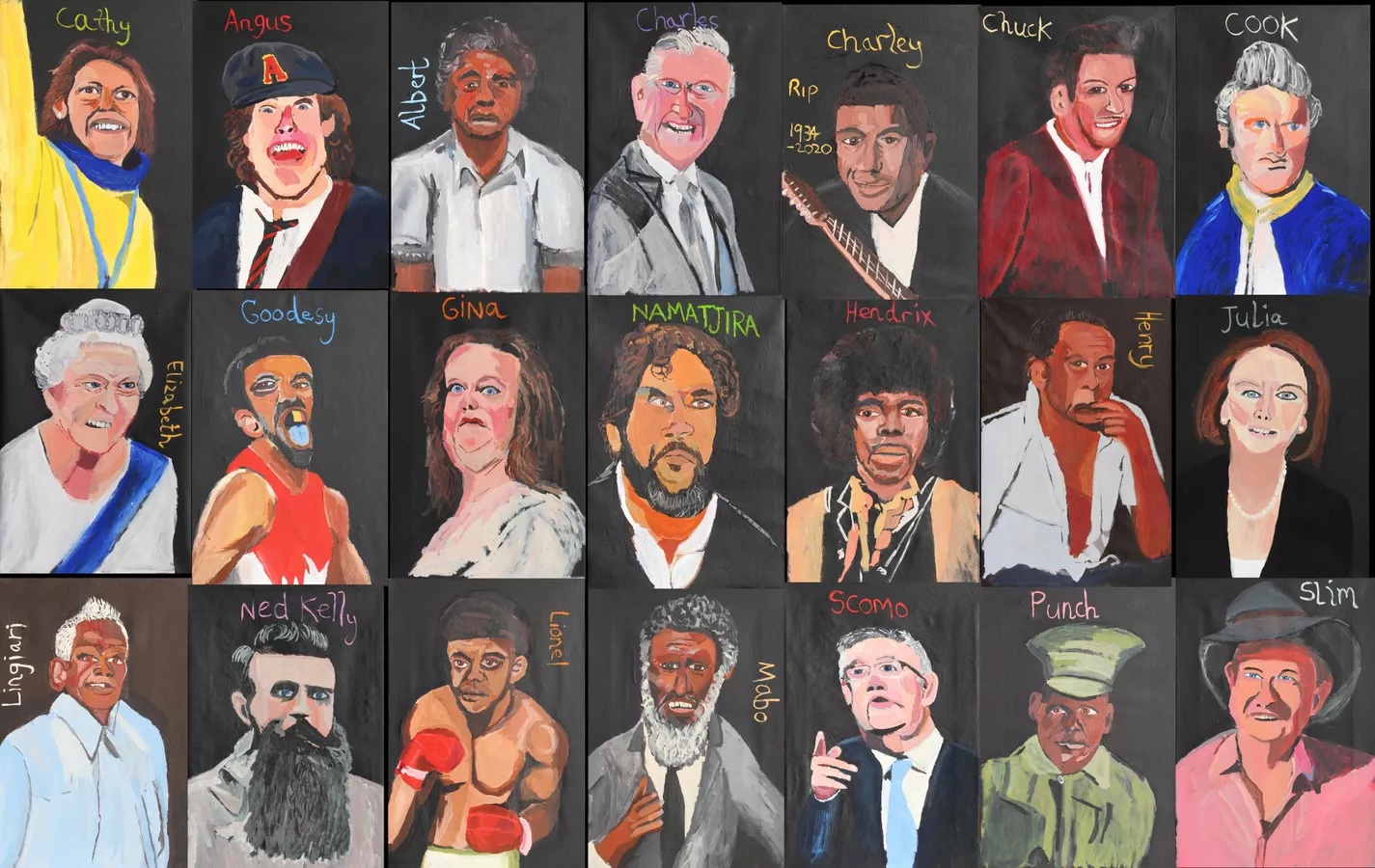
Kate explores how Australian artist Vincent Namatjira redefines portraiture to confront the legacies of colonialism while envisioning a more inclusive future—one expansive enough to embrace all Australians.

Clarke Reynolds (Mr. Dot) talks with the Art Review about interactive art, changing the narrative around blindness, and creating a world where art is more accessible for all.