
May 1, 2026
Opinions
Opinions
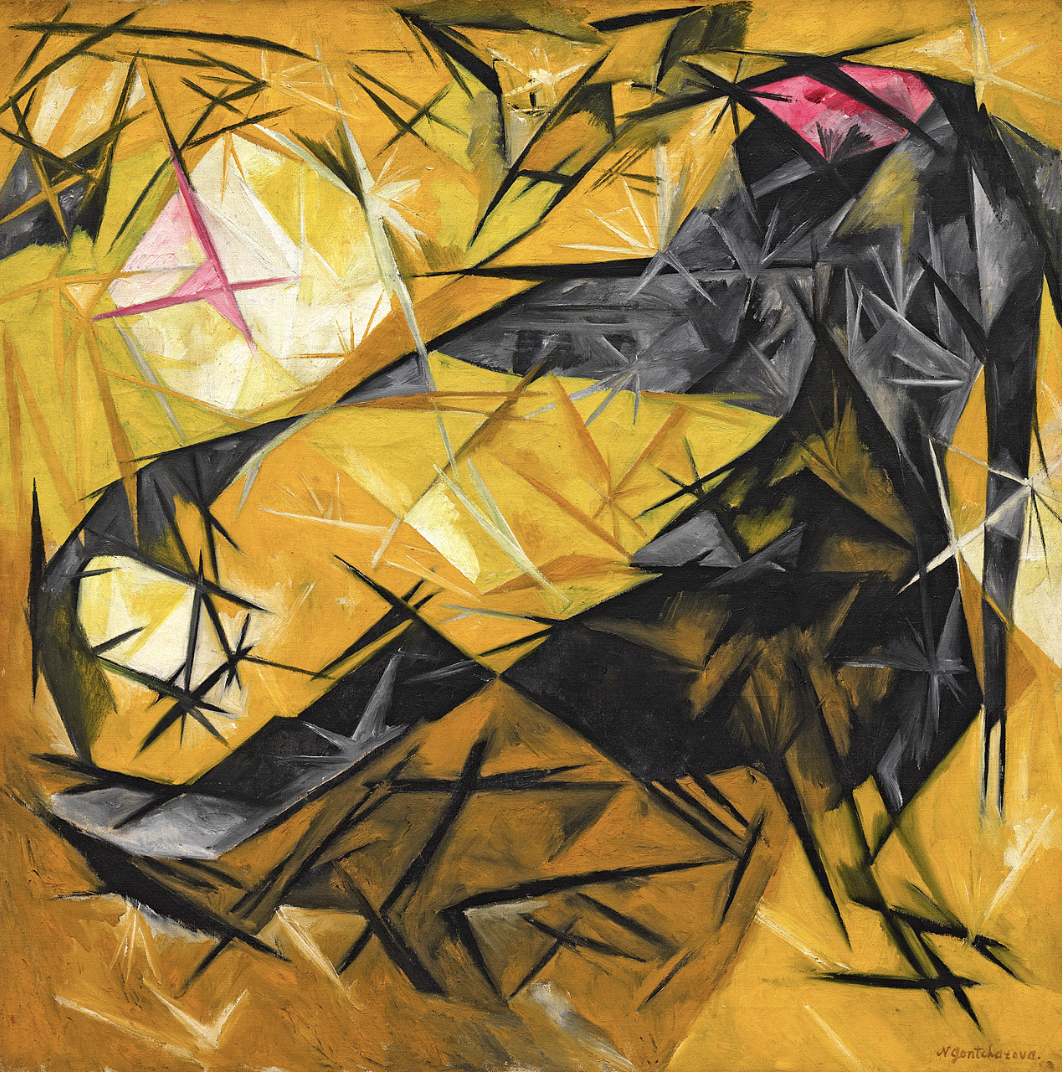
Cara explores how Natalia Goncharova redirects the ambitious, often technologically oriented rhetoric of Russian avant-garde abstraction toward an intimate and playful subject: domestic cats.

Brady deconstructs Barbier-Walbonne’s presentation of the Cults of the Republican Motherhood and Fatherhood in his seminal portrait in the RISD Museum, examining how the artist both adheres to and challenges the Imperial ideals of the Salon of 1806.

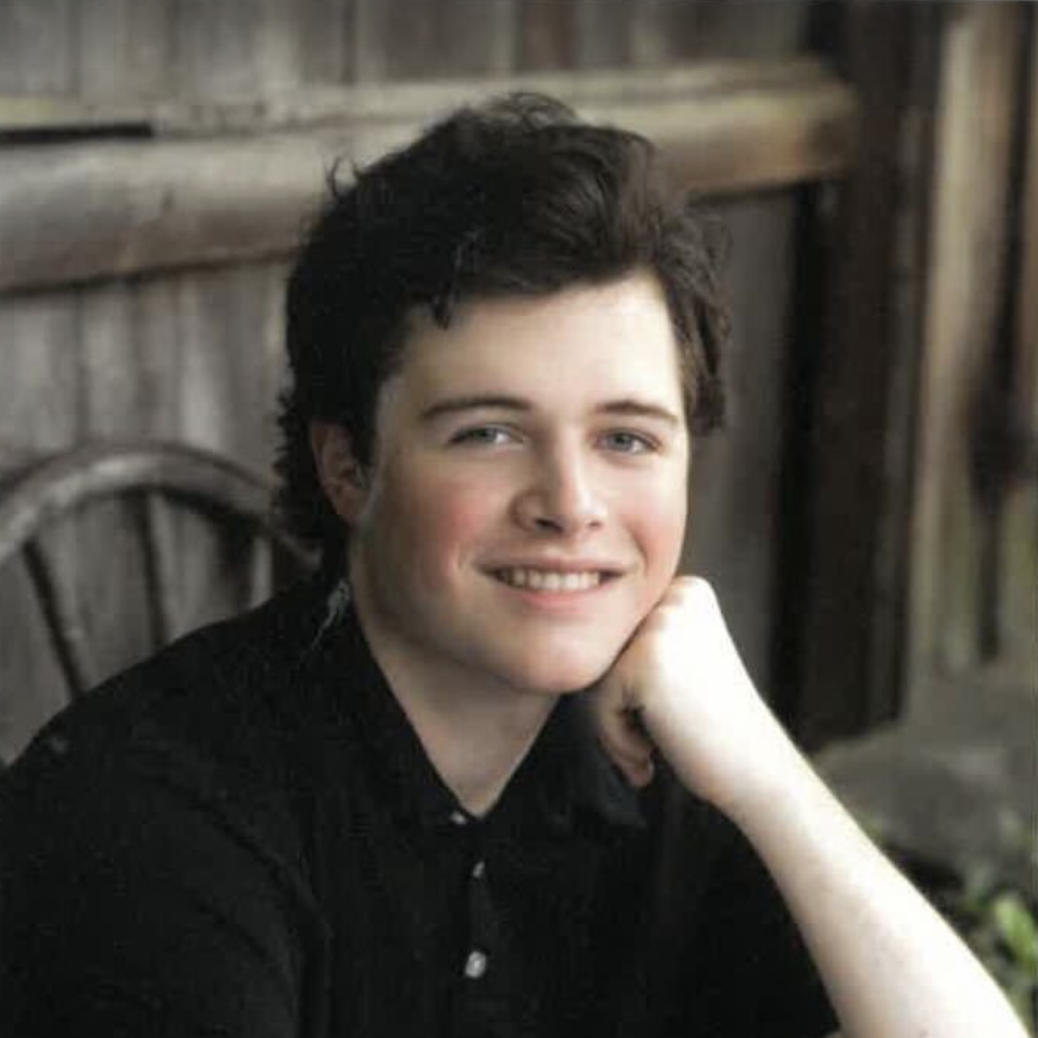
French painter Jacques-Luc Barbier-Walbonne’s 1806 Portrait of Antoine-Georges-François de Chabaud-Latour and His Family in Nîmes is a 221 x 174 cm oil painting on canvas in the RISD Museum. Through the work, Barbier-Walbonne masterfully executes an homage to the virtue of the French family, intertwining the duties of the Republican Motherhood and Napoleonic Fatherhood to lay the foundation of the nation’s future. By guiding the viewer’s gaze through the figures’ sightlines, the artist constructs a hierarchy, stressing the role of the patriotic patriarch as eminent in the French household, with women taking a submissive role as the affectionate protector of her children, who, by the influence of past patriarchal republican examples, lead the nascent nation to its future glory. Although in separate spheres, Barbier-Walbonne argues, the parents share their role as bulwarks against license and advocates for moderation: the Napoleonic blueprint. Thus, I will visually examine each figure group—the father, the children, the grandfather, and the mother with her child—according to this juste-milieu, and cohesively as the cornerstone of patriotism, albeit not without some internal ideological tensions.
However, as it is important to note, these values did not exist in an artistic vacuum. The historical record of the 1806 Salon shows a concerted artistic effort to incorporate Napoleonic symbolism (in a balance of militarism and civility) to advance his ideological goals. Moreover, the children’s expressions signify more than libertine temptation: the daughter, Rosine, rebelled against such idolization of civic virtue in the opposite direction, inspiring the revival of French Protestant values. Further, the painting’s internal ideological tensions (the aloof gazes and palpable unease) may reflect Barbier-Walbonne’s own artistic rebellion against Napoleon’s censorial standards. In turn, the painting evinces not a homogeneous ideology with fractious undertones but the onset of discord between the artist, critic, and censor at the Salon of 1806.
Manifestly, the father commands the composition as the head of the family. His gesturing hand lies at its center, emblematizing how this Roman oratorical, instructional pose guides the children and the viewer. The artist amplifies this fatherly association with his facial features, as he possesses the same windswept, tousled hairstyle, prominent brow, aquiline nose, and campaign-tanned skin as Napoleon, the proverbial Father of the French Nation. The slight looseness of his buttons, red patch evoking militaristic bravery and sacrifice on his lapel, the discoloration of his breeches’ tassels, and his hardy riding boots in conjunction with his stately manner, fashionable Napoleonic era waistcoat (without ostentatious cuffs), top hat (without a dandy feather), and a delicately rendered cravat via subtle, visible brushwork, exude both the courage of a military man and the poise of subdued high society. Barbier-Walbonne continues this thread in his physical interaction with his children; whilst he affectionately holds his daughter, he balances this sensibility with the civic gesture in his lesson, as he proverbially and literally supports them. Thus, the father typifies moderation and restraint—between affection and instruction, militarism and civility—serving as the preeminent leader in the French household, modeled after the preeminent Emperor of France.
He hence reflects the new Cult of the Republican Fatherhood, which emerged alongside the Napoleonic Code. In wake of the Great Terror, French lawmakers and Napoleon himself began to see fathers and their household authority as a microcosm for the state and its nationwide authority, making familial relationships a cause for legislative concern (1). Particularly, legislators sought to “reinstate the authority of fathers” due to their capacity to inaugurate an era of “civic restructuring” and the “rehabilitation of family values” in the aftermath of the Revolution’s “detrimental effects on public happiness” (2). This was for an “entirely artificial and self-interested manner,” with Napoleon professing himself the fundamental “artificiality of family relationships”: “‘Is it not understood that, in the social state, it is the law that makes fathers?’” (3). Indeed, the Consulate praised the “reinforc[ement] [of] family bonds” as paramount for the cohesion of the social order (4). Thus, it is fitting that the Portrait strives, at least superficially, to portray a concordant family amidst a pastoral idyll in which the father’s civic lesson commands attention, according to Napoleonic domestic ideals.
Expectedly, contemporary Salon critics challenged the authenticity of the portrayal. In Pierre Jean-Baptiste Chaussard’s Le Pausanias français: Salon de 1806, the author highlights the scarcity of such a virtuous father and son duo, going so far as to call it an “all-too-rare spectacle” (5). Although he concedes that it was among the best portraits of the Salon of 1806 (6), Chaussard further laments the unnaturalistic brightness of the painting, from the earth, sky, and even to Chabaud-Latour’s boots, questioning why, in their “seduction” by a pleasing effect, “the common folk of Amateurs and Public leads” never inquire whether a depiction is true (7). Finally, Chaussard’s classification of the subject of the painting, Antoine, as “M. N….” and his presentation of the title as “Tableau de Famille” with a nondescript, vague subtitle (“L'Auteur n'a point donné d'autt'e explication”) (8) suggest that Barbier-Walbonne provided no information about the identities of the sitters (besides the grandfather) to the audience. It is hence evident that the painting sought to serve an experiential purpose: any given person at the Salon could have seen themselves as the idealized patriarch, matriarch, children, and/or honorer of posterity. Chaussard alone observes all of these Napoleonic cultic ideals (9). In so proclaiming the rarity of this familial order, he does not seek to highlight the familial disorder that the Revolution caused but rather the state-feigned convalescence of familial values through the hand of Barbier-Walbonne.
Following the father’s sightline leads the viewer to his daughter, and from her gaze, the son. Her luscious hairstyle bears a striking resemblance to the son’s, perhaps signifying an idealized, republican equality of the sexes. However, the limits to this are apparent in her distinctively feminine dress, contrasting his boyish clothes, whose tricolor arrangement in blended brushwork rings of the French republican flag. Although listening to her father, the viewer can trace her gaze slightly off the canvas instead of toward the inscription; this aloofness could suggest a tension between her obedience and the childhood threats of boredom and rebellion. A bored, ruminating gaze guides the son’s eyes generally upward toward the grandfather’s bust but more so, aloofly, to the heavens, through the leaves, in a longing for something greater. Similarly, as she clutches her dress’s tassel before her, the painter exhibits a sense of unease, determination, and desire for independence; her off-kilter gaze could thus symbolize a yearning for a future unfettered by past models. Thus, the children typify the youthful dichotomy between obedience and disobedience, whilst nevertheless representing France’s future and their imperative to enrich it with virtue.
Curiously, although the bored (at best) or rebellious (at worst) aspirations of the Chabaud-Latour children seem antithetical to this end, the autobiography of the daughter, Rosine, casts light on her reaction against the Revolution’s worship of civic idols, or what Chaussard himself calls her father’s “present[ation] for veneration” of the grandfather’s statue (10). Instead of rebelling in a licentious sense, she shrinks from the overtly civic virtue of her father. The Old Regime and the later Restoration rulers, like Napoleon, professed “the authority of the paterfamilias” and “the king as ‘father’ of the French” but disputed the latter’s reign as “illegitimate” and not of their “familial nature” (11). Their explicitly Catholic agenda further distinguished the Bourbon monarchical regimes from Napoleon’s secular, speciously republican reign. As with the Bourbons, Rosine similarly advocated for a return to traditional ideals, but on the basis of a Protestant religious revival (the Réveil) (12). Consequently, Rosine’s aloof yet determined gaze may prefigure her revivalist resolve or signify her character as a vehicle to convey the counter-cultural ideals of Barbier-Walbonne.
Following the children’s general sightlines leads the viewer to the familial bulwark of tradition: the statue of the grandfather. Likewise depicted with Napoleonic features, resembling his son and the Emperor, the sculpture radiates with neoclassical idealization in its lack of color (whereas an actual Roman Imperial bust would have been originally painted) and the visual continuity between the grandfather and Roman heroes. Embodying his role as a source of inspiration, resplendent light radiates from behind him, illuminating the family, as if his portrait and funerary epitaph, “He lived and died without approach,” serve a didactic and motivationally affective purpose: a testament to tradition as their moral foundation.


According to this ideal, many of the artists and critics of the Salon of 1806 attempted to endorse Napoleon’s reign and values through the artistic repetition of imperial motifs and favorable reviews of such artworks. Since the Salon of 1806 had the official theme of “[m]ilitary conquest” with Bartolini’s laurel-crowned, “‘colossal[,] and heroic bust of His Majesty’” (13) at the entrance , the Napoleonic features and genteel militaristic clothing of Antoine Chabaud-Latour and, again, the statue of the grandfather (whose facial features quote Bartolini’s original via his defined chin, prominent brow, aquiline nose, and tousled hair) fit into the ideological context. Furthermore, Chabaud-Latour’s gesture toward his grandfather’s statue mirrors Pauline Bonaparte’s gesture to her brother’s laurel-crowned bust (again quoting Bartolini) in Lefèvre’s painting from the same Salon.


Even Chaussard, a former Jacobin and supporter of Napoleon as a “Republican military commander” and the one who criticized the Napoleonic idealism of Barbier-Walbonne’s work, responded under the “repressive censorship” of Napoleon’s regime with glowing reviews of nearly all of his portraits, save for Ingres’ (fig. 4), which he condemned for its lack of characteristic Bonapartist mobility and unfavorable portrayal (14). Truthfully, perhaps Chaussard’s criticism of the Barbier-Walbonne painting for its lack of “sacrifices” refers not only to its excessive grace (15) but also its lack of explicit sacrificial militaristic mobility and symbolism. For, although Napoleon lauded this sacrifice as the “renunciation of domestic comfort and the yielding of one’s own body for the greater good of the nation” (16), both of which are absent from Barbier-Walbonne’s estate-conscious and sartorial-minded figures. Finally, two caricatures from the Salon of 1806 reflect the emergence of these discordant free press and pro-censorship factions.

In “Artistes voilà vos Juges” (“Artists, Behold your Judges!”; fig. 5) and “Le Grand Chiffonier-Critique du Salon de 1806” (“The Great Ragpicker-Critic of the Salon of 1806”; fig. 6), the critical judges of the Salon are portrayed as senseless animals at the command of an unseen despot’s cracking whip or the words of a malicious parrot, snake, and turkey, symbolizing the Bonapartist regime’s restriction of the freedom of press. In the latter, the Ragpicker’s criticisms are progressively carping and contrary to Napoleonic morality; thus, the viewer is left to question whether they serve as a criticism of Napoleon-installed judges, who were commonly accused of ‘“repeating one another’” (17), like parrots, or of strawmanned seditious critics. Therefore, the Portrait reveals the divide between the Salon’s intellectual factions and the increasing propagation of propagandistic artistry.
Following the statue’s sightline leads to the mother and her child, who evoke the Madonna with Child, as she cradles him in a blue mantle (a color of the Virgin) whose fine textile details emphasize her floral innocence and elegance. Her dress’s ribbon is worn high, another symbol of the Virgin, furthering this objective; the white of the dress (along with that of her child, a type of cherubic, rosy Jesus) allegorize her purity. Her pearl earrings indicate her wealth, but there appears to be a shadow on her neckline from an expunged necklace, perhaps as a latter alteration to limit her ornamentation and portray her moderation, retaining humility in poise. As if to break the sightline pattern, the mother looks not at the child but seemingly beyond the viewer, symbolizing, as with the daughter, a desire to break free from patriarchal restraints, to cast off the societal chains and even the portrait’s conventions, like her babe, but the cult of the Republican Motherhood and the Napoleonic Josephinic idol (evidenced by her curls and garb) have proven too strong for her.
On April 6, 1808, civil servant Monsieur de Baune wrote a letter to Philippe Picot de Lapeyrouse, a patron of the natural sciences and politician, arguing that “‘Only botany has the privilege of making imperishable medals’” (18). Daszkiewicz argues that this letter evinces the Napoleonic “politicization of botany” (19), under which botanists “demonstrat[ed] victory and political domination” by sending French plants for cultivation in conquered territories, like Prussia (20). I argue that the painter purposefully includes symbolic botanical imagery, namely poppies, in this painting, likewise to elevate the Imperial Cults of the Napoleonic Fatherhood and Republican Motherhood. In the painting appear floral hallmarks of Antoine’s paradoxically elegant militarism, a balance of the Roman simplicity and more exotic Pharaonic undertones of the Retour d’Égypte style (21). For instance, the poppy thicket (fig. 7) likely alludes to the Napoleonic preference for its shade of red, which was “derived, apparently, from the seeds of Egyptian field poppies Napoleon’s men brought back in their boots from the Nile” and also the perception of cockscomb red as the “color of immortality” (like the grandfather’s enduring memory and poppy) (22).

The lion, a symbol of Imperial military triumph, accentuates the poppy’s bellicose connotation in his staredown with its pistil (23). Likewise, the Republican Mother’s florid quality mirrors the other poppy in the thicket, for, unlike Antoine’s, which points erectly outward in a standoff with a lion, hers bows toward the earth. This “bowed head” seen in some flowers (usually violets, “hence the term shrinking violet”) was seen as “emblematic of modesty” (24), and her flower’s deeper red may symbolize ‘“the crimson glow of modesty,’” which grows in intensity with the humility of the blushing maiden (25). To further signal the restraint of the sitters, their expansive picturesque estate is dotted with bundles of shepherd’s purse (fig. 8), as well as daisies and wildflowers (fig. 9), which signify humble rurality, as opposed to the immoderate urbanity of Parisian city life.


Consequently, Barbier-Walbonne especially uses botany, an instrument of Imperial propaganda, to convey the Chabaud parents’ moderation. However, I am left curious about how Napoleon’s opponents used botany as a political tool, especially given such British satirical prints as Cruikshank’s 1815 “Peddigree [sic] of Corporal Violet,” which portrays Napoleon’s journey from a “Consular Toadstool” birthed from a “Corsican Dunghill,” to an “Imperial Sun Flower,” to an “Elba Fungus,” and finally to a “bunch of Violets” arranged in royal bust formations (fig. 10). The exploration of this dialectic between Napoleonic botanists and the great Regency Era British satirists would make for a superb avenue of future research.

Ultimately, Barbier-Walbonne’s Portrait serves as an homage to the Republican Motherhood, Napoleonic Fatherhood, and familial fidelity in his delicate brushwork renderings of its members; nevertheless, through aloof gazes and visible unease, he questions the stability of this foundation in every French family, allowing childlike rebellion, feminine independence, and even boredom to confront these ideals. Despite his construction of a hierarchy from the father (the didactic patriarch), to the children (the future of France), to the grandfather (tradition) to the mother with her child (the domestic matriarch), he, upon closer examination, adds a flair of ambivalence to the piece, notwithstanding these foundational principles of republican virtue, with the parents serving the civic cause within their own separate spheres via classical iconographic symbolism. In this vein, his Portrait illustrates the codification of the Cult of the Republican Fatherhood and Motherhood as tangible Napoleonic propaganda, the onset of opposing ideologies between the civic and religious or the artist and censor, as well as the proliferation of sycophancy in the imperial motifs of Napoleonic portraiture. Through its conversation with other paintings and busts of the period, critic reviews and caricatures, as well as Napoleon’s legislative policies, the Portrait becomes revelatory of not only the ideal of familial fidelity but also the often contradictory and combative signaling of artists in the Salon. Such inconsistencies serve only to remind us of the intensely human, flawed, and ideologically modulating principles of these artists, whose decisions ring across history by their words and live on eternally in their portraiture.
Notes:
Bibliography:
Chabaud de Latour Juillerat-Chasseur, Suzanne. Un épisode de l'histoire de la Terreur à Nîmes, extrait des souvenirs personnels de Madame Juillerat-Chasseur née Suzanne Chabaud de Latour. Montbéliard, 1902.
Chaussard, Pierre Jean-Baptiste. Le Pausanias français, ou, Description du Salon de 1806. Paris, 1806, https://gallica.bnf.fr/ark:/12148/bpt6k1147873/f213.item.r=princess.zoom.
Daszkiewicz, Piotr. “Pyrenean Plants for the Botanical Garden of Berlin: Botany as a Symbol of Power during the Napoleonic Era,” Archives of Natural History 42, no. 1 (2015): 171–173.
Haverly, Ciara Mireille. “Flowers as Representations of Female Virtue in Nineteenth-Century Emblems and Emblematic Works.” MPhil thesis, University of Glasgow, 2020. https://theses.gla.ac.uk/81871/.
Horne, Alistair. The Age of Napoleon. Random House, 2006. Google Books.
Heuer, Jennifer Ngaire. The Family and the Nation. Cornell University Press, 2005, https://ebookcentral.proquest.com/lib/brown/detail.action?docID=31191175.
Martin, Xavier. “The Paternal Role and the Napoleonic Code.” In Paternity and Fatherhood, edited by Lieve Spaas, 27–39. Macmillan Press Ltd., 1998.
Porterfield, Todd and Susan L. Siegfried. Staging Empire: Napoleon, Ingres, and David. Pennsylvania State University Press, 2006, https://books.google.com/books/about/ Staging_Empire.html?id=CWAEAhgle0gC.
Shaw, Philip.“Napoleon as Philoctetes: Military Masculinity, Sacrifice and the Image of the
Wound.” Journal for Eighteenth-Century Studies 41, no. 4 (2018): 559–577, https://browzine.com/libraries/95/journals/1419/issues/ 191284554?showArticleInContext=doi:10.1111%2F1754-0208.12571.
(Cover Image: Jacques-Luc Barbier-Walbonne, Portrait of Antoine-Georges-François de Chabaud Latour and his Family, Oil on Canvas, 221 x 174 cm, Providence, RISD Museum, Salon of 1806, via the RISD Museum.)
Cara explores how Natalia Goncharova redirects the ambitious, often technologically oriented rhetoric of Russian avant-garde abstraction toward an intimate and playful subject: domestic cats.
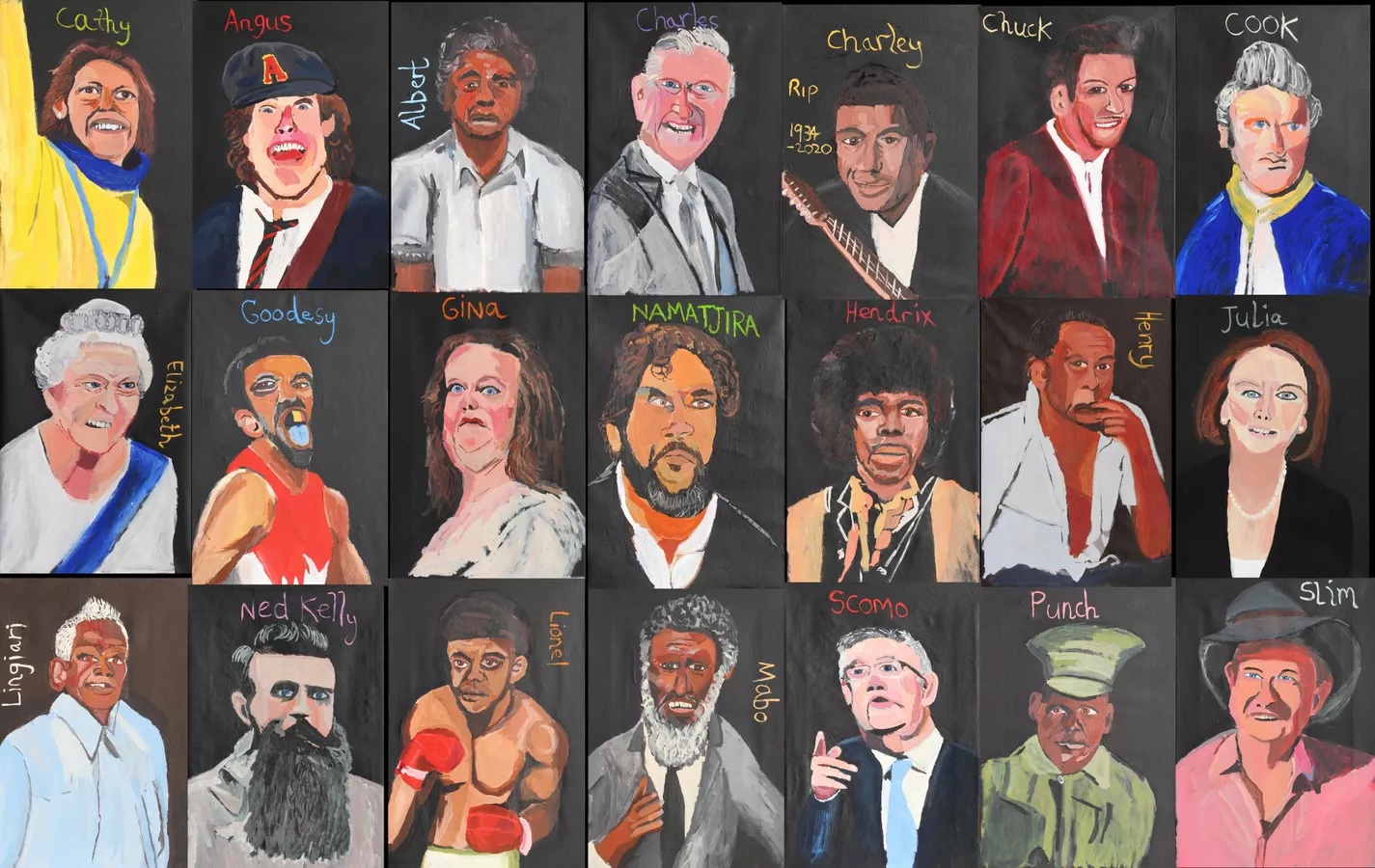
Kate explores how Australian artist Vincent Namatjira redefines portraiture to confront the legacies of colonialism while envisioning a more inclusive future—one expansive enough to embrace all Australians.

Clarke Reynolds (Mr. Dot) talks with the Art Review about interactive art, changing the narrative around blindness, and creating a world where art is more accessible for all.